Overview
Dublin’s The Brazen Head—often billed as the city’s oldest public house—has long been a magnet for tourists, musicians, and history buffs. Recent coverage of the venue has highlighted a persistent folklore claim: the spirit of 19th‑century Irish rebel Robert Emmet is said to linger in its dimly lit corners. While the tale is rooted in documented events from the 1803 uprising, the pub’s management and patrons describe a mixture of cold spots, faint whispers, and occasional visual impressions that keep the legend alive. The story, featured in a April 1, 2026 post on the Moon Mausoleum website, illustrates how Dublin’s historic sites continue to blend fact and folklore.
Historical Background
The Brazen Head’s origins are contested. Some sources trace the building to a 1198 monastic inn, while architectural studies place its current structure around 1754, when it operated as a coaching inn for travelers along the River Liffey. Over three centuries, the establishment has hosted poets, outlaws, and political dissidents, cementing its reputation as a “living museum” of Irish social life. Its stone walls and low‑ceilinged rooms have survived the Great Fire of 1592, the 1916 Easter Rising, and numerous renovations, making it a rare continuous thread through Dublin’s turbulent past.
The Emmet Legend
According to the Moon Mausoleum article, the most chilling episode linked to the pub dates to 1803, when Robert Emmet—born 1778 in Dublin and executed on 20 September 1803—allegedly convened with fellow rebels inside The Brazen Head. Emmet’s brief but dramatic insurrection aimed to end British rule, but the effort collapsed after a premature attack in Dublin’s streets. Historical records confirm Emmet’s capture on 25 August 1803, his trial for treason, and his public hanging on Thomas Street. What remains uncertain is his final resting place; folklore claims his blood “ran down the hill” and stained the pub’s floorboards, binding his spirit to the location.
A verse attributed to Percy Bysshe Shelley, written while searching for Emmet’s grave, is frequently quoted in the legend:
“For who was he, the uncoffined slain, / That fell in Erin’s injured isle…”
The poem, though not a contemporary source, reinforces the romantic image of Emmet as a martyr whose “restless” presence haunts the city.
Contemporary Accounts
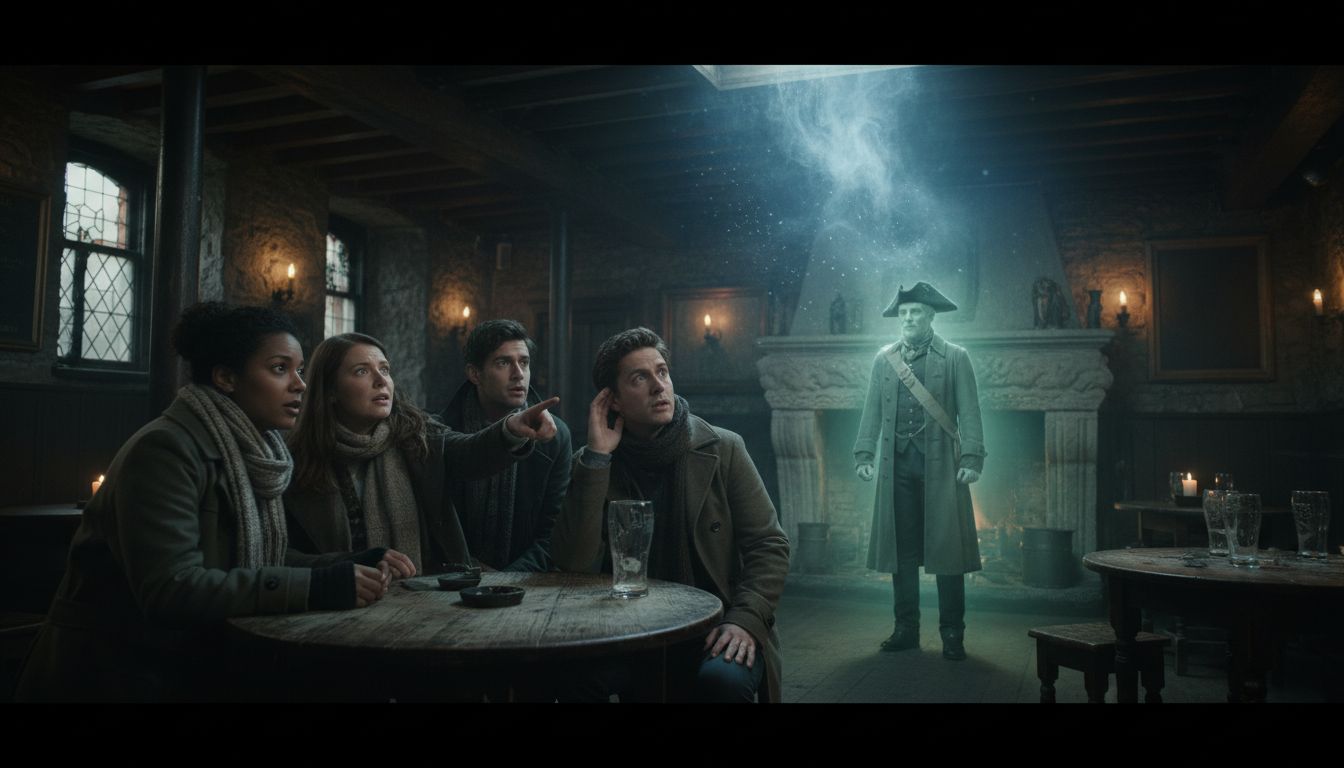
Patrons and staff at The Brazen Head report occasional anomalies that they associate with Emmet’s ghost. “There’s a cold draft that sweeps the back room just after the last call, and sometimes I hear a faint voice muttering in an old Dublin accent,” says regular customer Siobhan O’Leary, who has visited the pub for over a decade. The venue’s manager, Liam Murphy, cautions that “while we love the stories, there’s no scientific evidence of a haunting; the temperature changes are likely due to the building’s age and ventilation.”
Local historian Dr. Eoin Gallagher of Trinity College notes that “the Emmet narrative fits a broader pattern of Irish rebel folklore, where sites of political significance become focal points for collective memory. Whether the phenomena are paranormal or psychological, they reflect the enduring resonance of Emmet’s sacrifice in the public imagination.”
Cultural Impact
The Brazen Head’s ghost story contributes to Dublin’s tourism economy, appearing in guided tours, travel brochures, and social‑media posts that highlight “haunted pubs.” It also fuels academic discussions about how nationalist mythmaking intertwines with commercial heritage. As the Moon Mausoleum piece emphasizes, the legend is “nearly as strong as its title as the city’s oldest” establishment. Whether viewed as a genuine haunting or a compelling narrative, the Emmet story underscores the way historic venues serve as custodians of both documented events and the intangible folklore that shapes Irish cultural identity.