Overview
In a recent interview on the “Deception 2026” webcast, author‑filmmaker L.A. Marzulli discussed the accelerating public discourse surrounding UFOs and unidentified aerial phenomena (UAP). Speaking with host John Matarazzo, Marzulli linked recent government disclosures, such as the congressional UAP hearings, to biblical themes of deception and the Nephilim—figures described in Genesis as the offspring of “the sons of God” and human women. He warned that the growing cultural acceptance of extraterrestrials could become a “great deception” that draws believers away from traditional Christian doctrine.
Key Claims and Supporting Evidence
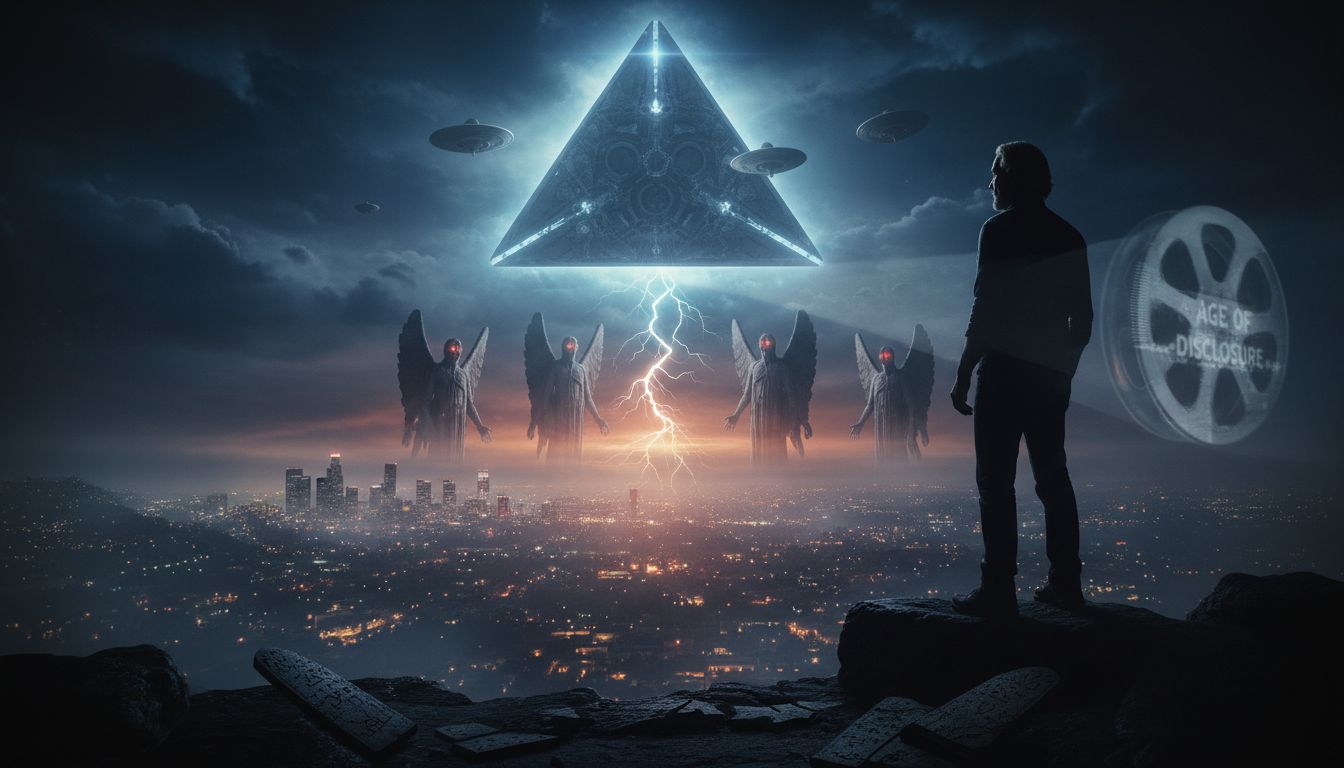
Marzulli characterized the current wave of UFO disclosure as a coordinated effort involving senior military officials, members of Congress, and mainstream media outlets. He cited the documentary Age of Disclosure as a showcase of testimonies from former generals, scientists, and whistleblowers who claim humanity is “not alone in the universe.” To illustrate what he described as “physical evidence,” Marzulli displayed a sealed vial containing an aluminum‑alloy sample allegedly recovered during a recent Roswell‑related expedition, stating that the material “does not match any known aerospace alloy.” He also referenced 1 Timothy 4:1, interpreting the verse’s warning about “deceiving spirits” as a scriptural parallel to contemporary UFO narratives.
Cultural and Scientific Context
The interview examined how popular media may shape public perception of non‑human entities. Marzulli pointed to the legacy of Steven Spielberg’s films—E.T., Close Encounters of the Third Kind, and an upcoming project whose trailer features a crucifix and a possessed news anchor—as evidence of a “cultural indoctrination” that presents aliens as benevolent or even divine. He further argued that the scientific hypothesis of panspermia, which suggests life on Earth could have been seeded by extraterrestrials, is being promoted as a substitute for the biblical creation account. While acknowledging the academic interest in interstellar objects, Marzulli invoked Harvard astrophysicist Avi Loeb’s research to illustrate how scientific speculation can be co‑opted by broader narratives.
Notable Events and Participants
Marzulli highlighted several recent developments that he believes signal a shift from fringe speculation to institutional focus. The congressional UAP hearings, now televised and documented, have moved the topic into the public record. He also referenced the “Deception 2026” virtual conference, scheduled for January 16–17, which aims to “equip the church” against what organizers describe as a coordinated extraterrestrial agenda. Among the speakers are researchers such as Gary Stearman, Mondo Gonzales, Timothy Alberino, Derek Gilbert, and Larry Ragland—figures known for work on prophecy and fringe phenomena. Additional voices mentioned include David Paulides, noted for his Missing 411 investigations, and George Noory of Coast to Coast AM, a long‑standing platform for UFO discussion.
Implications for the Christian Community
Marzulli’s central message was a call for discernment within the Christian faith. He urged believers to evaluate emerging UFO claims through a theological lens, warning that acceptance of “alien” explanations could lead to what he described as a “Great Falling Away” from biblical truth. “We must not let the excitement of discovery replace the certainty of Scripture,” he said, emphasizing the need for churches to address the topic proactively rather than reactively. While acknowledging the legitimate curiosity about unexplained aerial phenomena, Marzulli stressed that the narrative framing—whether scientific, governmental, or entertainment‑driven—should be examined for underlying spiritual motives.
Outlook
The interview concluded with a consensus that UFO disclosure is likely to become an even more prominent public issue in the coming months. Marzulli predicted that forthcoming announcements—potentially from political leaders or religious authorities—could cement extraterrestrials in the cultural mainstream. He urged both scholars and clergy to collaborate on a balanced response that respects scientific inquiry while safeguarding doctrinal integrity. As the dialogue between government agencies, media producers, and religious communities evolves, the “great deception” Marzulli


