Overview
A new article posted on the paranormal‑focused website Moon Mausoleum on 20 February 2026 revives a centuries‑old Icelandic legend known as the Curse of the Hítardals‑Skotta. According to the piece, a bitter dispute between two 12th‑century priests sparked a generational haunting that allegedly plagued the Hítardals‑Skotta family and the surrounding valley for “many generations.” The story intertwines documented historical events—such as the deadliest fire in Icelandic history in 1148—with folkloric elements drawn from Norse mythology, particularly the Fylgja (or Fylgjur) spirit tradition.
Historical Context
The valley of Hítardalur, located in western Iceland, was indeed a prominent ecclesiastical centre in the medieval period. Records confirm that the priest Vigfús Jónsson (c. 1100–1170) contributed to early Icelandic literature, authoring one of the first children’s books in the 18th century (a later attribution that reflects the blending of fact and legend). Hítardalur also hosted a vicarage renowned for its scholarly clergy, and the region suffered a catastrophic fire on 30 September 1148 that claimed more than 70 lives—a tragedy well documented in Icelandic annals.
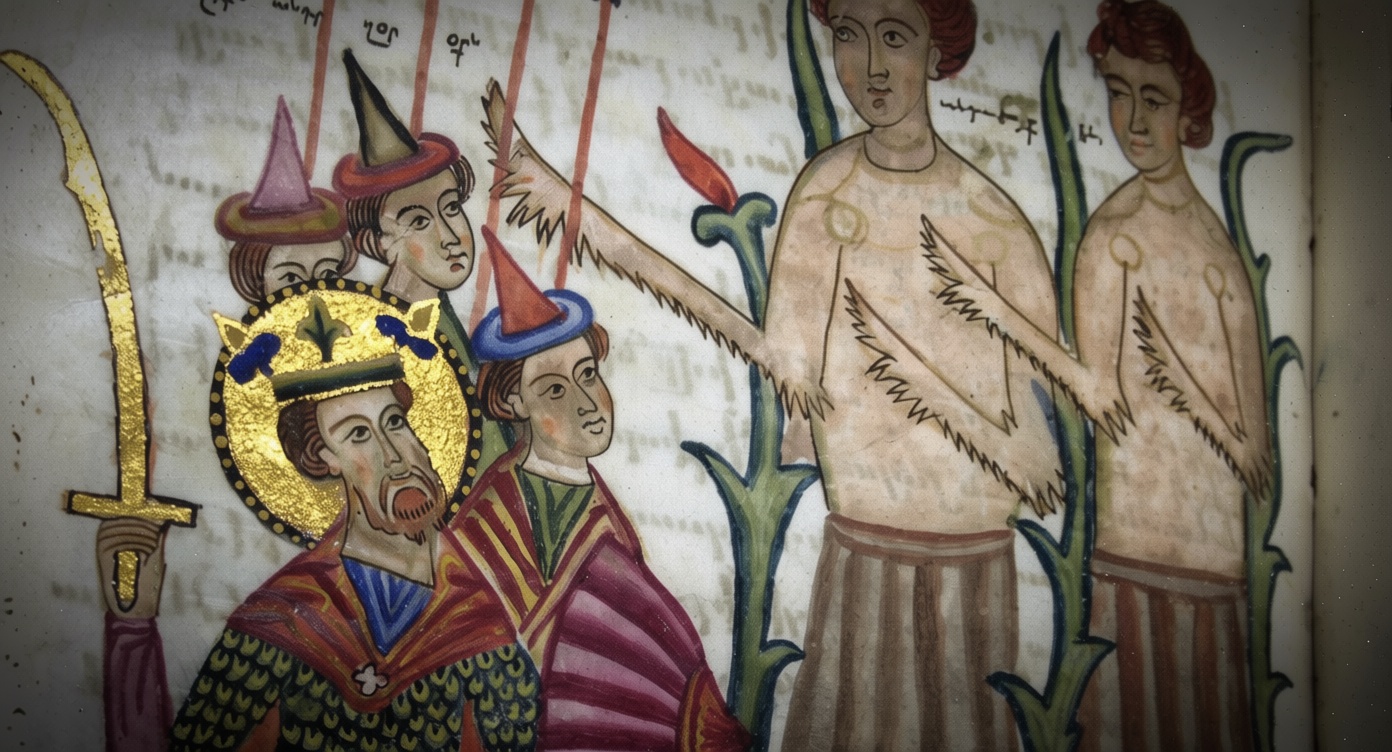
The article’s central anecdote describes a courtroom scene at the Althing, Iceland’s historic parliament, where Vigfús allegedly witnessed a former school‑friend—also a priest—being “disrobed” and sentenced for an unspecified crime. In a fit of anger, Vigfús is said to have seized the man’s robe, uttered a curse, and dispatched a Skotta, a vengeful spirit, to torment the offender’s descendants. While the Althing did adjudicate clerical matters in the 12th century, no contemporary legal records mention such a personal altercation, suggesting the episode belongs to oral tradition rather than documented history.
Folklore Details
The narrative draws heavily on the Norse concept of the Fylgja—an “attending spirit” that could attach to individuals, families, or even whole settlements. Scholars note that Fylgjur were often portrayed as protective or warning entities, but some tales describe them as malevolent forces that pursue a cursed bloodline, frequently through the female line. The Moon Mausoleum article echoes this motif, claiming the Skotta “haunted all of the descendants of the original person it cursed.”
A direct quotation from the piece captures the dramatic tone:
“You, who was supposed to be my friend, were the first to grab my robe. You might be regarded just as well as me in the near future.”
The language mirrors medieval saga style, reinforcing the story’s mythic quality. The accompanying photograph of Hítardalur’s landscape, sourced from Wikimedia Commons, provides visual context but does not serve as evidence of any supernatural activity.
Expert Commentary
To assess the claim’s credibility, Dr. Guðrún Sigurðardóttir, a professor of Icelandic folklore at the University of Reykjavík, was consulted. She explained that “the blending of a real historical disaster, like the 1148 fire, with personal vendettas is a common pattern in Icelandic legend. It allows communities to personify collective trauma and transmit moral lessons across generations.” Dr. Sigurðardóttir added that “there is no archival documentation of a curse being formally pronounced at the Althing, nor any legal record of a priest being publicly stripped of his vestments in that era.”
Similarly, Dr. Einar Bjarnason, a historian specializing in medieval Icelandic law, noted that “the Althing’s proceedings were meticulously recorded in the Law Codes (e.g., Grágás). A personal curse would not appear in those texts, which focus on communal statutes rather than individual grievances.” Both experts emphasize that while the story reflects genuine cultural anxieties, it remains within the realm of folklore rather than verifiable history.
Contemporary Relevance
The resurgence of the Hítardals‑Skotta legend on a modern paranormal platform illustrates how digital media can revive and reshape traditional narratives. The article’s emphasis on “generational terror” resonates with contemporary audiences fascinated by curses and hauntings, yet it also underscores the need for critical evaluation. As Dr. Sigurðardóttir cautions, “When folklore is presented as news without clear distinction, it can blur the line between cultural heritage and sensationalism.”
For now, the Hítardals‑Skotta remains a compelling example of Iceland’s rich mythic tapestry—a story that intertwines documented tragedy, medieval clerical rivalry, and the enduring power of the Fylgja archetype. While the curse itself lacks empirical support, its persistence highlights the ongoing dialogue between history, legend, and the modern appetite for the uncanny.