Overview
The dense spruce expanse of Finnskogen, straddling the Norway‑Sweden border, has long been a focal point for folklore that blends the region’s Finnish heritage with tales of curses and lingering spirits. Recent attention has centered on the abandoned Välgunaho farm, where a series of unexplained disturbances in the late 19th century allegedly forced the last residents to flee, leaving the property vacant for more than a century. While the story circulates in local legend, researchers are now examining the historical and cultural factors that may have amplified its mythic status.
Historical Context
Finnskogen’s name derives from the Finnish immigrants who settled the area in the mid‑1600s, seeking timber for agriculture. Over generations they developed a distinct linguistic and cultural identity, recognized today as a minority group in both Norway and Sweden. Their shamanistic traditions and ritual practices—often misunderstood by neighboring communities—have contributed to a longstanding perception of the forest as “other” and, consequently, as a place of supernatural significance. The region’s 240‑kilometre cross‑border hiking trail, which traces old logging routes, continues to draw visitors who encounter the same mist‑laden marshlands and quiet river bends described in historic accounts.
The Välgunaho Incident
Välgunaho (also recorded as Velgunaho) sits in the Röjden district on the Swedish side of Finnskogen. According to the Moon Mausoleum archive, the farm was inhabited by the Halinen and Saastainen families in the 19th century. In 1866, Henrik Halinen married Marit Olsdotter Saastainen, a woman eighteen years his senior who later became completely blind. Contemporary reports note that Marit “practised rituals, sometimes called witchcraft,” a description that aligns with the Finnish‑Finnish‑Swedish syncretic folk magic of the era.
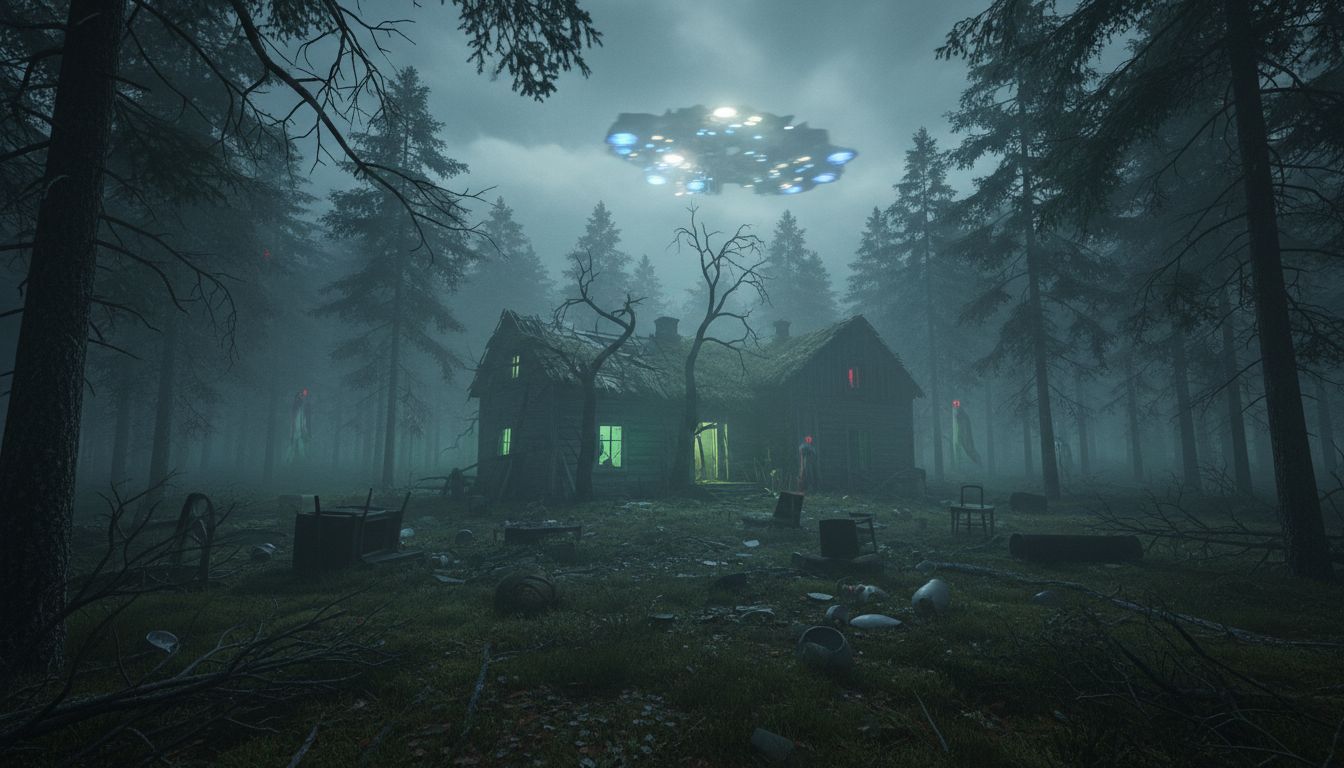
In the summer of 1900—referred locally as the “ghost summer”—neighbors reported a surge of unexplained noises, objects moving on their own, and intense feelings of dread emanating from the farmstead. The disturbances culminated in the families abandoning Välgunaho in either 1900 or 1901; the precise date varies among oral histories. The property’s name, originally “Valea aho” meaning “bright shack,” reportedly morphed into “Velguna ho,” or “ghost shack,” reflecting the community’s collective memory of the events.
Scholarly Perspectives
Dr. Ingrid Nilsen, a folklorist at the University of Oslo, cautions against interpreting the Välgunaho story solely as evidence of a poltergeist. “The 19th‑century Finnish settlers faced significant social pressure and marginalisation,” Nilsen explains. “When a family like the Saastainens engaged in ritual practices, it could quickly become a focal point for community anxieties, especially in a remote forest where everyday life was already precarious.”
Similarly, Swedish cultural historian Lars Pettersson points out that blindness and ritual activity often intersected in folklore, reinforcing stereotypes of “dangerous” or “cursed” individuals. “Marit’s visual impairment may have amplified the mystique surrounding her,” Pettersson notes, “but there is no contemporaneous documentation of violent phenomena—only later retellings that blend fact with narrative embellishment.”
Current Status and Preservation
Today, Välgunaho remains an uninhabited ruin, its timber walls weathered by centuries of snow and rain. The site is occasionally visited by hikers and paranormal enthusiasts, though access is unofficial and the forest authorities advise caution due to the terrain. Local heritage groups have begun cataloguing oral histories from descendants of the original Finnish settlers, aiming to preserve the cultural context that underpins the legend.
While the narrative of a violent poltergeist continues to capture public imagination, the emerging scholarly consensus frames the Välgunaho story as a confluence of cultural marginalisation, folklore transmission, and the natural isolation of Finnskogen. As researchers continue to disentangle myth from history, the forest’s reputation as a place of mystery endures—rooted as firmly in its cultural past as in the towering spruce trees that dominate its horizon.