Overview
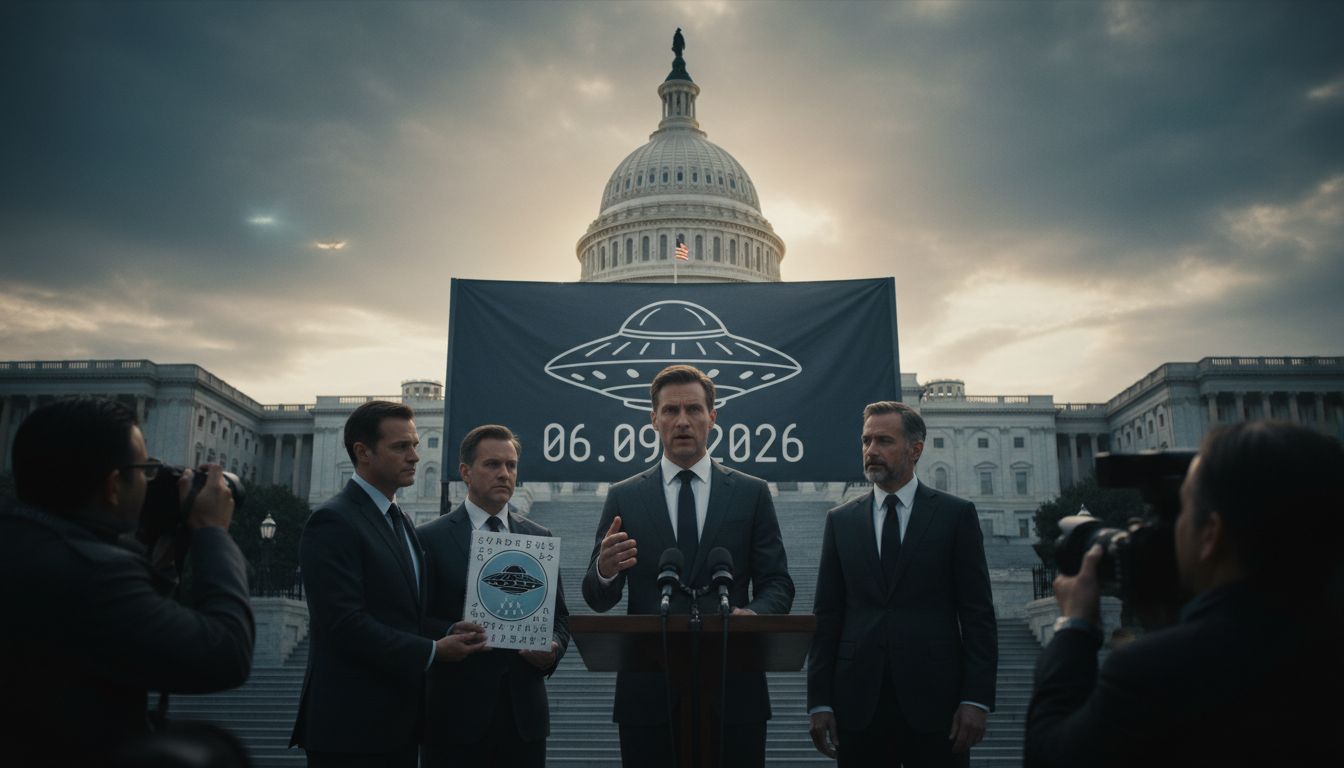
On June 9, 2026 the Capitol Steps UFO Caucus will hold a press conference that brings together whistleblower David Grusch, veteran journalists, and researchers to discuss the next phase of UAP disclosure. The event coincides with a new episode of the Need to Know podcast, where authors Bryce Zabel and Richard Dolan revisit their 2010 book A.D. After Disclosure and examine the cultural impact of Steven Spielberg’s forthcoming film Disclosure Day. Recent interviews with Grusch and investigative reporter Ross Coulthart add fresh detail on alleged non‑human biologics, intelligence‑agency secrecy, and the timeline for broader transparency.
The “Spielberg Effect” and Disclosure Day
Zabel and Dolan argue that Spielberg’s cinematic legacy—Close Encounters of the Third Kind, E.T.—has shaped public expectations of extraterrestrial contact. Spielberg’s upcoming project, Disclosure Day, dramatizes a scenario in which a private high‑tech firm called “Wardex” leaks explosive data about alien interaction. The hosts cite a 1983 anecdote in which President Ronald Reagan, after viewing E.T., allegedly told Spielberg that “only a handful of people in the room knew how true the story actually was.” While the story remains unverified, it illustrates how Hollywood narratives can blur the line between speculation and policy discourse.
Defining “Big D” Disclosure
A central theme of the podcast is the distinction between “small d” and “Big D” disclosure. Zabel offers a concise definition: “Disclosure is the formal public acknowledgment by legitimate human authority that humanity is interacting with one or more non‑human intelligences.” Small d refers to incremental releases—Pentagon video footage, congressional hearings, whistleblower testimonies—while Big D would trigger a comprehensive societal reckoning across political, scientific, religious, and legal institutions. The hosts stress that without a clear, authoritative statement, fragmented releases risk fostering mistrust and speculation rather than informed public dialogue.
Private Power Versus Government Authority
Since publishing A.D. After Disclosure, Zabel and Dolan have shifted focus from government secrecy to the role of “breakaway” entities—private corporations and military‑intelligence hybrids that operate beyond typical oversight. The Disclosure Day script’s Wardex motif reflects this concern: a corporate vault of alien‑derived technology allegedly shielded by legal and security barriers that even a sitting president could not breach. In recent interviews, Grusch hinted that “some of the most advanced material we’ve seen is being held by entities that are not subject to the usual congressional subpoenas,” echoing Coulthart’s reporting on non‑human biologics being studied in undisclosed labs.
Trust, Legitimacy, and the Fragmented Public Sphere
Both hosts acknowledge a growing credibility gap. Dolan warned that a “clean” presidential announcement would likely be dismissed as a “psy‑op” by sizable portions of the electorate, given today’s polarized