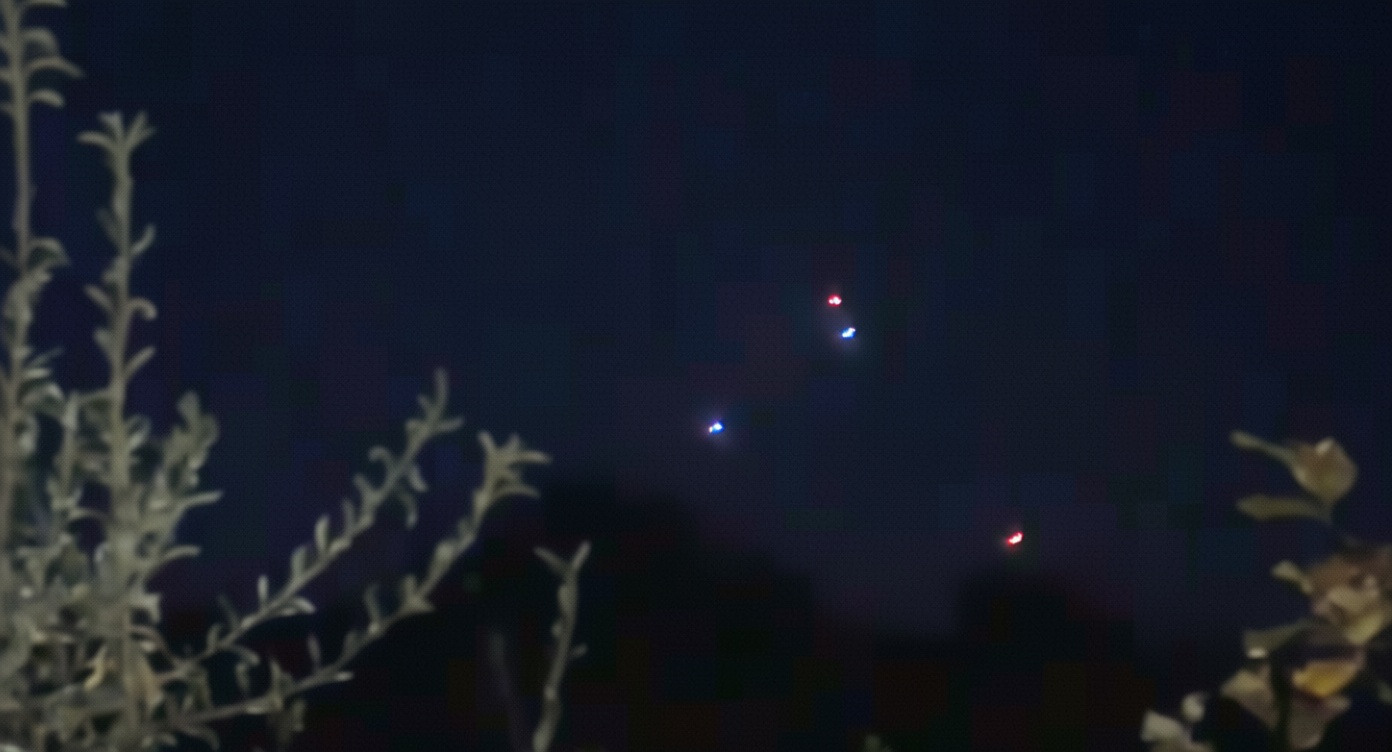
The mystery that first captured public attention in the summer of 1947—when a civilian pilot in Washington state reported a string of fast‑moving lights that would later be known as “flying saucers”—has been amplified repeatedly over the decades. Earlier, during World War II, pilots on both Allied and Axis sides described “foo‑fighters,” luminous objects that trailed their aircraft, hinting at a phenomenon that would resist easy explanation. The modern era of disclosure began in earnest on 16 December 2017, when The New York Times revealed a secret Department of Defense program that had been reviewing military reports of unidentified aerial phenomena (UAP). The story was accompanied by three Navy videos that quickly went viral, prompting a surge of congressional interest and the emergence of a dedicated online community known as “UFO‑Twitter.”
Since that watershed moment, academic researchers have turned to the sky itself for clues. A team based at Nordita, Stockholm University, in collaboration with colleagues at Vanderbilt University, has completed a systematic analysis of more than 106,000 short‑lived light flashes recorded on photographic plates taken during the early 1950s as part of the Palomar Observatory sky survey. The work, published in Scientific Reports and the Publications of the Astronomical Society of the Pacific, is part of the VASCO (Vanishing & Appearing Sources during a Century of Observations) project, which digitizes historic plates to identify transient sources that blink, vanish, or suddenly appear. “Today we know that short flashes of light are often solar reflections from flat, highly reflective objects in orbit around the Earth, such as satellites and space debris. But the photographic plates analyzed in VASCO were taken before humans had satellites in space,” explained Beatriz Villarroel, a researcher at Nordita. The studies found a statistically significant clustering of these flashes around the times of atmospheric nuclear tests and contemporaneous UAP reports, suggesting that some of the phenomena may have been related to high‑altitude detonations or other classified activities of the era.
One of the most striking historical coincidences highlighted by the research is the 1952 Washington D.C. incident, in which multiple observers reported a series of bright, reflective objects moving across the sky for several minutes. At the time, the United States had not yet launched Sputnik, and no known satellites existed to account for the sightings. The new analysis shows that similar flash patterns appear on plates taken at the same latitude and date, reinforcing the hypothesis that reflective objects—potentially experimental craft or test vehicles—were present in orbit before the advent of conventional spaceflight. While the researchers stop short of labeling the flashes as extraterrestrial, they argue that the data merit further investigation into classified aerospace programs of the early Cold War.
Legislative momentum that followed the 2017 disclosures has been uneven. The UAP Disclosure Act, introduced in multiple congressional sessions, aims to formalize reporting requirements, protect whistleblowers, and fund a centralized database of sightings. Despite bipartisan support, the bill has stalled in committee, hindered by concerns over national security classification and a reluctance to expose intelligence methods. Recent hearings—most notably the June 2024 Senate subcommittee on intelligence—have featured testimony from former military personnel who allege retaliation after reporting anomalous encounters. One whistleblower, speaking on condition of anonymity, described “a systematic effort to discredit and silence those who come forward,” a claim that has prompted calls for stronger legal safeguards.
The convergence of historic photographic evidence, statistical links to nuclear testing, and ongoing legislative debate underscores a growing consensus among scientists, lawmakers, and former service members that transparency is essential. As the VASCO team continues to digitize and analyze century‑old plates, they hope to refine the temporal and spatial patterns that could differentiate mundane artifacts from truly anomalous events. “Our goal is not to sensationalize,” said a Vanderbilt co‑author, “but to provide a rigorous, data‑driven foundation that policymakers can rely on when deciding how to address UAP.” Whether future disclosures will finally illuminate the “who, what, and why” behind these enduring skyward mysteries remains uncertain, but the mounting body of peer‑reviewed research is reshaping the conversation from speculation to systematic inquiry.