Overview
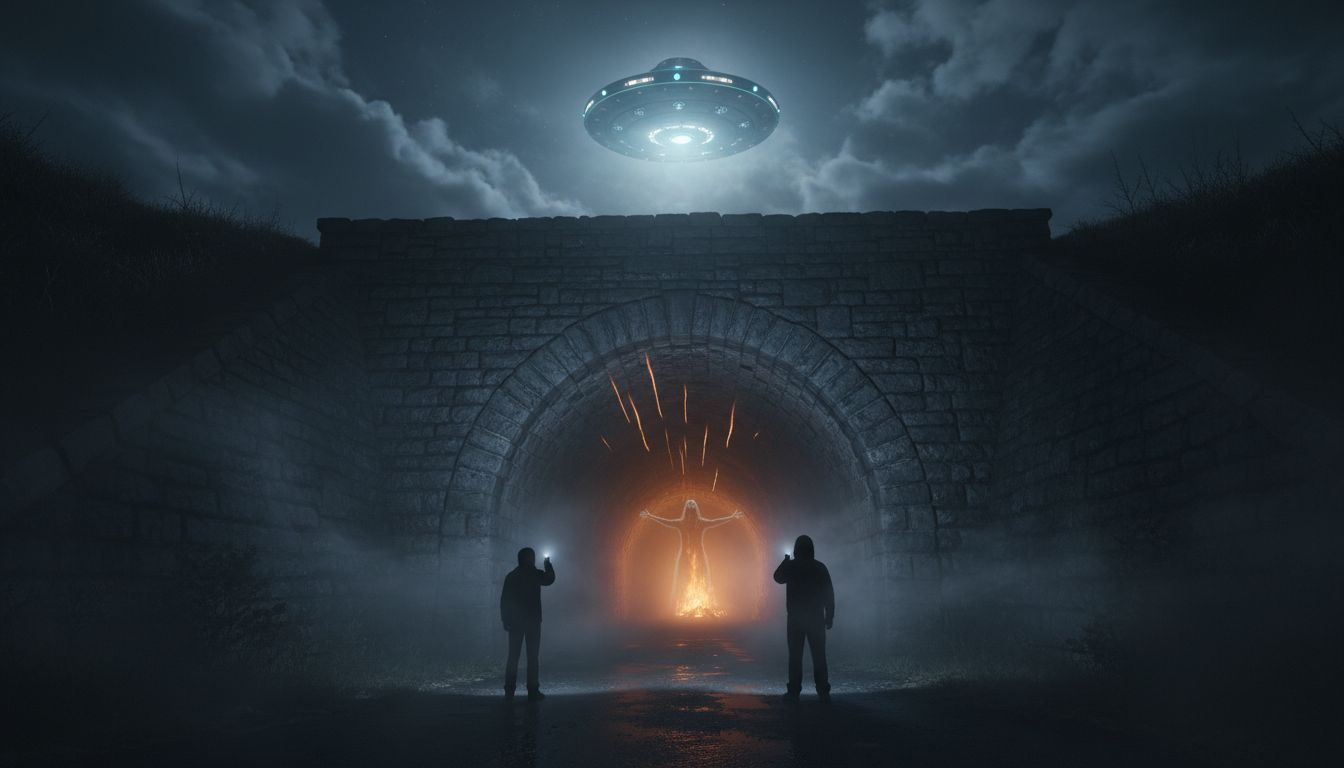
The limestone passage known locally as the Screaming Tunnel sits beneath the Canadian National Railway tracks just off Warner Road in Niagara Falls, Ontario. Measuring roughly 125 feet, the tunnel was originally constructed in the early 1800s as a drainage conduit for the Grand Trunk Railway line, not as a public thoroughfare. In recent years it has become one of Canada’s most frequently cited “haunted” locations, drawing curious tourists and paranormal investigators who claim to hear the anguished cries of a young girl and glimpse fleeting flames within its dark interior.
Historical Background
Built during a period of rapid railway expansion, the tunnel’s stone walls have survived more than two centuries of weather and traffic. Archival maps confirm that the structure runs parallel to the “Blue Ghost Tunnel,” another site steeped in folklore, leading some researchers to suggest that the shared rail corridor may have amplified local storytelling. The surrounding area once hosted a prosperous farm owned by a wealthy family in the early 1900s, a detail that forms the backbone of the tunnel’s most persistent legend.
The Legend
According to the story circulating on local folklore sites, a fire broke out at the family’s farmhouse one night. A young girl, described in oral accounts as “the daughter of the estate,” allegedly escaped the burning house only to stumble into the tunnel, still ablaze. The narrative holds that she attempted to douse the flames in the confined space, but the fire consumed her before help could arrive, leaving her “to die alone in the darkness.” While the tale is compelling, no contemporaneous newspaper reports, death records, or fire department logs have been located to verify the incident, and historians caution that the legend likely evolved from a blend of genuine tragedy and imaginative embellishment.
Visitor Experiences
First‑hand reports from visitors are consistent in describing an unsettling atmosphere. “When I walked through, I could smell a faint sulfur odor and heard a distant, high‑pitched wail that seemed to come from the walls themselves,” said Mark L., a Niagara tourism guide, who has led tours of the tunnel for the past three summers. A handful of paranormal‑research groups have recorded low‑frequency sounds that some interpret as “screams,” though acoustics experts note that wind turbulence and echo effects in limestone passages can produce similar noises. Photographs taken by hikers occasionally capture faint, flickering light near the tunnel’s far end, but image analysis suggests the effect may be caused by car headlights or camera lens flare rather than supernatural fire.
Expert Commentary and Context
Local historian Dr. Elaine Harper of Niagara University emphasizes the cultural role of such stories: “Haunted sites like the Screaming Tunnel serve as a kind of communal memory, preserving anxieties about industrial change and rural loss. The lack of concrete evidence doesn’t diminish their value as folklore, but it does mean we should treat the claims with a healthy degree of skepticism.” The Niagara Parks Commission, which oversees nearby attractions, has not officially endorsed the tunnel as a paranormal destination but acknowledges its popularity among tourists seeking “off‑the‑beaten‑path” experiences. The commission advises visitors to respect private property boundaries and to exercise caution, as the tunnel’s low clearance and uneven footing can pose safety hazards.
Conclusion
While the Screaming Tunnel continues to captivate imaginations with its haunting narrative of a girl’s tragic fire, the story remains unsubstantiated by historical documentation. The site’s blend of genuine 19th‑century engineering, natural acoustics, and community storytelling creates a compelling, if eerie, attraction for both casual tourists and dedicated paranormal enthusiasts. As interest grows, officials hope that responsible visitation will preserve both the tunnel’s structural integrity and the cultural heritage embedded in its whispered “screams.”