Overview
A centuries‑old tale from Iceland’s longest fjord, Eyjafjörður, has resurfaced online, describing a vengeful spirit known as the Eyjafjörður‑Skotta. According to the legend, the ghost was summoned after a group of Dutch fishermen were insulted by local women in the mid‑17th century. The story, posted on the paranormal‑focused site Moon Mausoleum on 4 February 2026, claims the specter tormented women along the fjord and was blamed for a series of unexplained cattle and human deaths. While the narrative reads like folklore, researchers note that such legends often reflect historical tensions between foreign traders and isolated Icelandic communities.
Historical Context
During the 1600s, the North Atlantic saw a surge of Dutch, German and French fishing enterprises that frequently anchored in Icelandic harbours such as Vöðluþing, a settlement on the northern shore of Eyjafjörður. Contemporary records confirm that Dutch crews were “bold” in their interactions with locals, sometimes courting women and, on occasion, provoking resentment. The Moon Mausoleum article suggests that a woman’s “mocking gestures and curses” sparked a retaliatory act: the Dutch allegedly hired a sorcerer to dispatch a female ghost back to Iceland. While no archival evidence supports the existence of a hired “ghost‑sender,” the episode mirrors documented frictions between itinerant traders and isolated Icelandic societies, where cultural misunderstandings could quickly become the seed of myth.
Folklore Elements
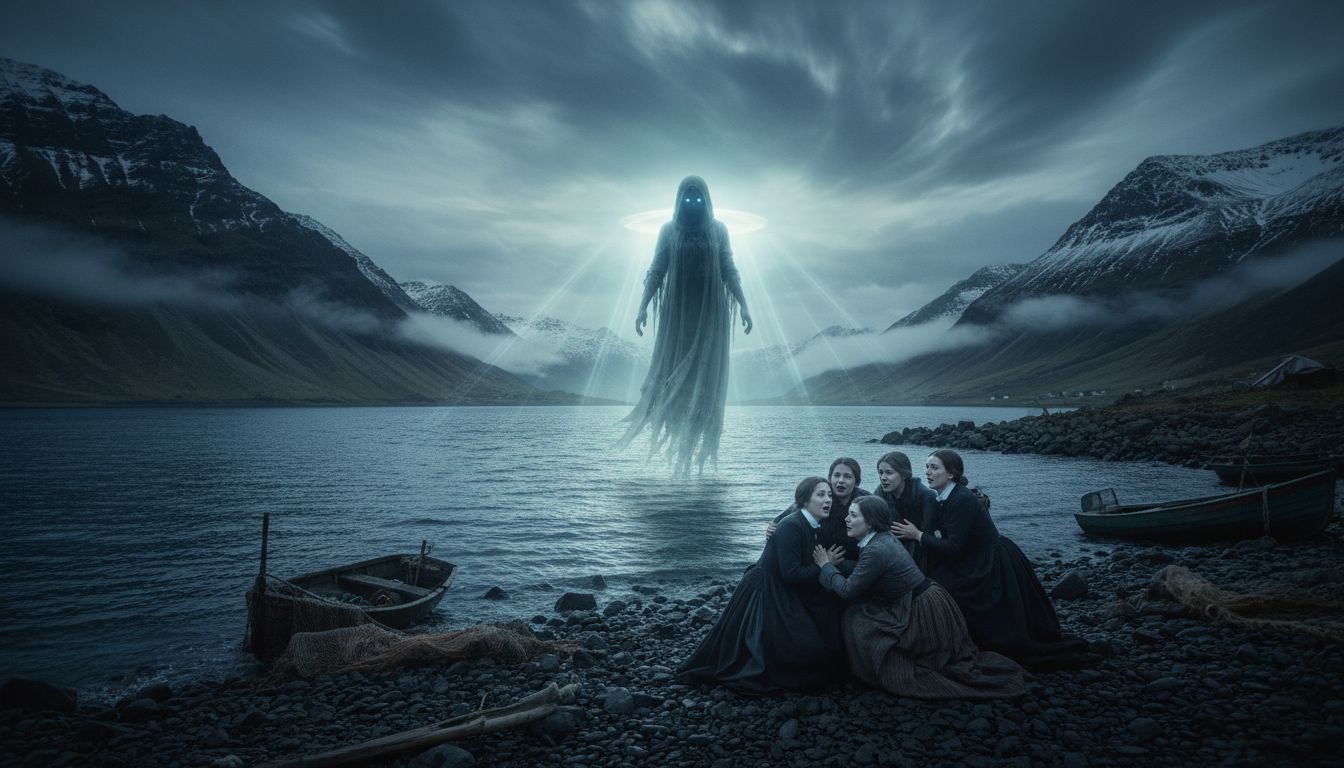
The legend draws heavily on the Norse concept of the fylgja (also spelled fylgjur), an “attending spirit” that, according to medieval Icelandic texts, could attach itself to individuals, families, or even entire settlements. The article describes the Skotta as a female‑type fylgja, capable of “raising someone from the dead to send on a revenge mission.” Such attributes align with the broader Scandinavian belief in draugr and other revenant beings that could influence the living world. Illustrations accompanying the story echo 19th‑century depictions of Icelandic ghosts, reinforcing the visual continuity of these motifs. Folklorist Dr. Ásta Björnsdóttir of the University of Iceland notes that “the gendered nature of many fylgja tales—often targeting the female line of a family—reflects longstanding social anxieties about lineage and inheritance.”
Contemporary Perspectives
Modern scholars treat the Eyjafjörður‑Skotta narrative as a composite of historical grievance, mythic tradition, and later internet‑age storytelling. The Moon Mausoleum piece, while rich in descriptive language, offers no primary sources beyond its own retelling, prompting caution among academics. “Online platforms can amplify regional folklore, but they also risk conflating oral tradition with invented detail,” says Dr. Magnus Einarsson, a cultural historian specializing in Icelandic oral literature. Nonetheless, the story continues to circulate in local tourism brochures and community gatherings, where it functions as a cautionary tale about hospitality, respect for outsiders, and the lingering power of ancestral curses.
Conclusion
The Eyjafjörður‑Skotta legend illustrates how historical encounters—here, between Dutch fishermen and Icelandic women—can evolve into enduring supernatural narratives. While the claim that a Dutch sorcerer “sent” a ghost to torment the fjord’s women lacks documentary verification, the tale resonates with authentic Norse beliefs in fylgjur and reflects broader themes of cultural conflict and communal memory. As the story spreads through digital channels, it offers both a window into Iceland’s rich mythic heritage and a reminder of the need for rigorous source evaluation when folklore enters the public sphere.
Source: Moon Mausoleum, “The Eyjafjörður Skotta Sent to Torture the Women of the Fjord,” published 4 February 2026 (https://moonmausoleum.com/the-eyjafjordur-skotta-sent-to-torture-the-women-of-the-fjord/).