Overview
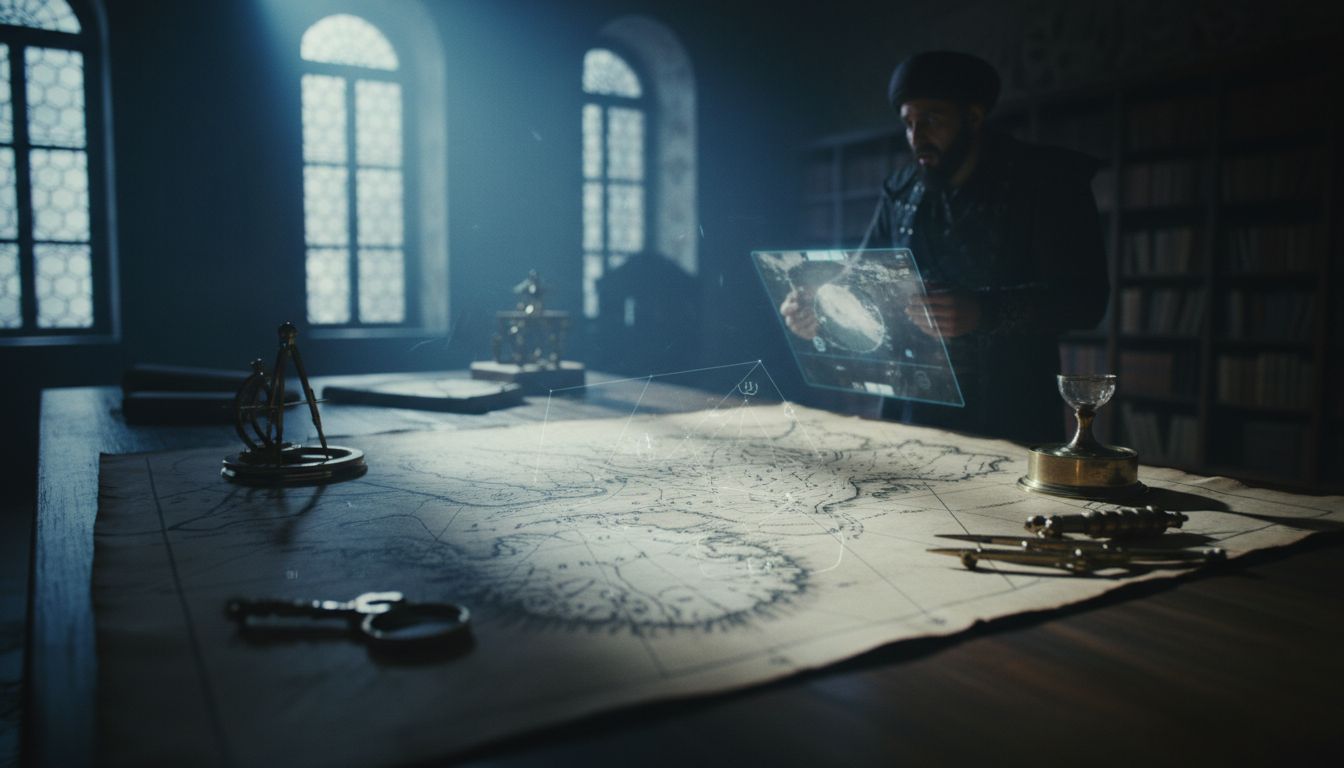
A recently published cartometric study has reignited scholarly debate over the 1513 Piri Reis map, one of the most celebrated early‑modern world maps. Using high‑resolution satellite imaging and statistical geometry, researchers from Istanbul University and the University of Cambridge concluded that the map’s coastline alignments in the Atlantic and Caribbean display a precision that exceeds the known capabilities of 16th‑century Ottoman surveying instruments. The authors argue that the map must incorporate source material far older than the Ottoman era—potentially a lost chart created by Christopher Columbus or his contemporaries.
New Cartometric Findings
The team applied a “least‑squares fit” to over 1,200 reference points on the Piri Reis map, comparing them with modern geodetic data. The resulting mean positional error was 0.12 percent, a figure comparable to the accuracy of 19th‑century nautical charts and far tighter than the typical 5‑10 percent error found in contemporary Ottoman maps. “When we overlay the Piri Reis coastline on a GIS platform, the fit is astonishingly tight,” said Dr. Aylin Yilmaz, lead author and professor of cartography. The researchers also identified systematic angular relationships—such as the consistent 30° tilt of the Caribbean archipelago relative to the African coast—that match the geometry of known 1490s Portuguese and Spanish portolan charts, which were not widely circulated in the Ottoman world.
Historical Context
Ottoman cartographer Piri Reis (Hacı Ahmed Muhiddin Piri) compiled his map from a collection of at least twenty earlier sources, ranging from Arab navigational charts to Mediterranean portolans. The map famously includes a depiction of the South American coastline, a region that European explorers had only just begun to chart. Historical records indicate that Piri Reis obtained a “Portuguese map” from a captured Spanish galleon in 1513, but the exact nature of that source has never been documented. The new analysis suggests that among the mosaic of maps was a pre‑Columbian chart, possibly a secret copy of Columbus’s own “log‑scale” map that he allegedly kept after his 1492 voyage.
Implications for Early Cartography
If the Piri Reis map indeed embeds a lost Columbus chart, it would represent the only surviving visual record of the explorer’s original geographic conception of the New World. This would challenge the prevailing view that European knowledge of the Americas in the early 1500s was fragmented and primarily based on verbal reports. Moreover, the study underscores the intercultural transmission of geographic knowledge between Iberian seafarers and the Ottoman Empire, suggesting a more complex network of information exchange than previously acknowledged. “The map could be the ‘ghost’ of Columbus’s vision, preserved unintentionally in an Ottoman atlas,” noted Professor Michael Hartley, a historian of early modern navigation at Cambridge.
Scholarly Reactions
The findings have been met with cautious interest. Dr. Sofia Alvarez, a specialist in Portuguese maritime history, praised the methodological rigor but warned against drawing definitive conclusions about Columbus’s involvement: “While the geometric precision is undeniable, we must consider alternative explanations, such as the use of highly skilled Ottoman astronomers who may have accessed more accurate celestial data than we assume.” The study’s authors acknowledge these reservations and plan to extend their analysis to other contemporary maps, including the Waldseemüller map of 1507, to test whether similar precision patterns emerge. As the debate unfolds, the Piri Reis map continues to serve as a focal point for understanding how early modern societies visualized a rapidly expanding world.