Overview
The former Marshalsea Barracks in Dublin’s Liberties—once a notorious debtor’s prison—has re‑emerged in public conversation after a series of anecdotal reports describing unexplained sounds and fleeting shadows near the site’s remaining walls. The stories focus on Pat Doyle, a prisoner who died in 1874 while attempting to flee the gaol. Although the building was largely demolished in the 1970s, local residents and occasional visitors continue to claim they experience what they describe as “haunting” phenomena, prompting renewed interest from historians and cultural‑heritage groups.
Historical background
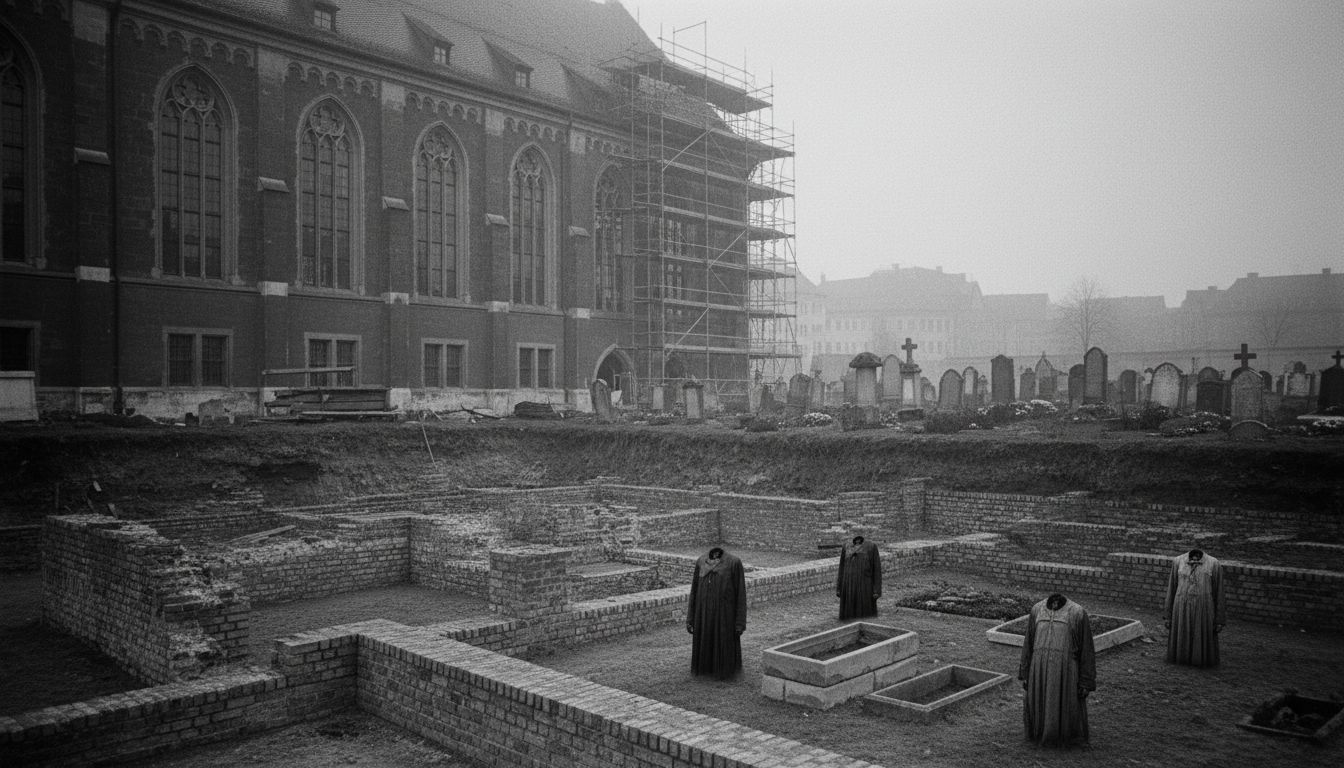
Established in the early 18th century, the Dublin Marshalsea (also known as the Four Courts Marshalsea) functioned as a debtor’s gaol where inmates could bring their families inside the compound to avoid further harassment from creditors. Conditions were cramped and austere, and the prison’s reputation for misery grew over the decades. Records indicate that the facility remained operational until 1874, when it was officially closed. The structure lingered as a ruin for nearly a century before road‑widening projects in 1975 led to its demolition, leaving only a walled enclosure as a physical reminder.
The incident that sparked the legend
According to local folklore, Pat Doyle was one of the many inmates caught in the cycle of poverty and debt that defined the Marshalsea. On a stormy night in the prison’s final years, Doyle allegedly attempted to escape by scaling the roof. He slipped, fell through the tiled roof, and was found the next morning dead on the courtyard cobbles. Contemporary newspaper accounts from the period are scarce, and the details of his death rely primarily on oral tradition passed down through generations of Dublin residents.
Reported phenomena and community response
Since the early 2000s, several witnesses have reported unexplained noises—such as tapping on windows and footsteps echoing above empty walls—when passing the site after dark. Some describe a “shadowy figure” moving along the perimeter of the remaining enclosure. While these accounts are anecdotal, they have been documented in recent blog posts and local folklore compilations, notably the Moon Mausoleum website, which catalogues paranormal reports from across Ireland. Heritage groups acknowledge the stories as part of Dublin’s intangible cultural heritage, but they caution that no scientific investigations have been conducted to verify the claims.
Current status and expert perspective
Today the Marshalsea Barracks exists only as a large walled enclosure within a modern urban landscape. The area is occasionally illuminated by streetlights that, according to some passers‑by, flicker without an apparent cause. Historians such as Dr. Siobhan O’Leary of Dublin City University emphasize that the “ghost” narrative reflects broader social memories of economic hardship and the stigma attached to debt in 19th‑century Ireland. “While the physical structure is gone, the collective memory of the Marshalsea endures,” O’Leary said in a recent interview. She adds that, “Investigating these reports with rigorous methodology could offer insights into how communities process historical trauma.”
Looking ahead
The Dublin city council has not slated the site for any development, preserving it as a modest public space. Local folklore societies plan to host a series of talks this summer, aiming to contextualize the Marshalsea’s history and the lingering stories of Pat Doyle within Ireland’s broader narrative of social justice and penal reform. Whether the reported sensations are the product of imagination, acoustic quirks of the remaining walls, or something less easily explained, the legend of Pat Doyle continues to shape the cultural landscape of the Liberties, reminding residents that the past can still echo through the present.