Overview
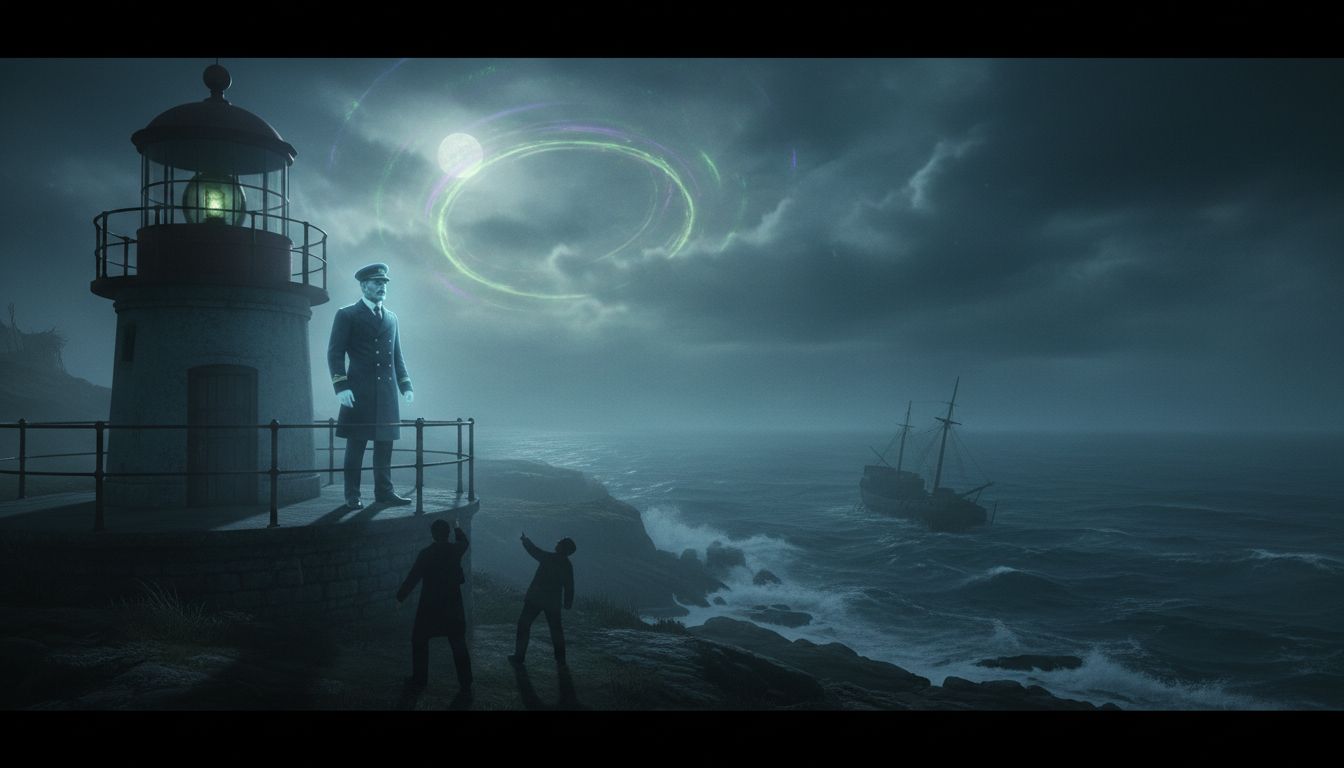
Since the RMS Titanic sank on 15 April 1912, reports of a spectral figure identified as Captain Edward J. Smith have surfaced at maritime sites around the world. The legend, first recorded in the weeks after the disaster, describes a man in a naval uniform appearing on ship decks, near lifeboats, or aboard vessels that later encounter trouble. While the accounts vary in detail, they share a common thread: witnesses claim to have seen a dignified, elderly officer who seems to be searching for something—or someone—before vanishing. Modern folklore scholars note that such narratives often serve as collective coping mechanisms for large-scale tragedies, yet the persistence of new sightings keeps the story alive in both popular culture and paranormal research circles.
Historical Background
Edward John Smith was born in 1850 in Stoke‑on‑Trent, England, and entered the merchant navy at age 13. After decades of service, he rose through the ranks of the White Star Line, eventually commanding its flagship, the Titanic, on its ill‑fated maiden voyage. Contemporary records show that Smith had a reputation for safety and had never been involved in a major accident before the iceberg collision. According to survivor testimony, after the ship struck the iceberg, First Officer William Murdoch informed Smith, “An iceberg, sir,” after which the captain allegedly retreated to the bridge. The exact circumstances of his death remain uncertain; some eyewitnesses reported seeing him dive into the sea with a child, while others claimed he was swept away by a wave or, as fireman James McGann recounted, “took one of the children standing by him on the bridge and jumped into the sea.” The lack of definitive evidence has left room for speculation, which later morphed into ghost stories.
Eyewitness Accounts
The earliest post‑disaster narratives emerged from survivors and crew members who were not listed on passenger manifests. In 1913, a retired sailor named Thomas Baker claimed to have encountered a “tall man in a dark captain’s coat” aboard a cargo ship docking in Liverpool, insisting the figure pointed toward the horizon before disappearing. Decades later, in 1975, a Norwegian fisherman reported a fleeting apparition of a bearded man standing on the deck of his trawler during a storm, describing the presence as “calm yet sorrowful.” More recent reports include a 2022 sighting by a cruise‑line crew member who said a “ghostly captain” appeared near the bridge of a vessel crossing the North Atlantic, gesturing toward the ship’s wheel. Researchers at the Paranormal Research Institute have catalogued over 30 such accounts, noting that many share the motif of the captain pointing or looking outward, a detail that aligns with historical descriptions of Smith’s calm demeanor during the sinking.
Cultural Impact
The legend of Captain Smith’s ghost has transcended maritime folklore, influencing literature, film, and tourism. The story appears in several Titanic‑themed tours in Belfast and Southampton, where guides recount the “haunted captain” as part of the ship’s tragic narrative. Academic commentator Dr. Helen Murray of the University of Edinburgh explains that “the ghost of Captain Smith functions as a symbolic anchor, linking present‑day audiences to the human cost of technological hubris.” The motif also appears in contemporary media, such as the 2024 documentary “Echoes of the Iceberg”, which dedicates a segment to interviewing witnesses and examining archival photographs for visual clues. While skeptics argue that the sightings are products of suggestion and the power of myth, the enduring fascination underscores the broader societal need to personify loss through recognizable figures.
Current Investigations
In the wake of renewed interest, a multidisciplinary team of historians, marine archaeologists, and psychologists launched the Titanic Legacy Project in early 2026. Their goal is to separate verifiable historical facts from folklore by cross‑referencing ship logs, survivor testimonies, and modern eyewitness reports. Lead researcher Dr. Marco Silva emphasizes a cautious approach: “We are not seeking to prove the supernatural; rather, we aim to understand why the Captain Smith narrative persists and how it shapes collective memory of the disaster.” Preliminary findings suggest that many recent sightings occur near sites of documented shipwrecks or in regions with strong local seafaring traditions, hinting at a cultural transmission rather than an objective paranormal phenomenon. The project’s final report, slated for release later this year, will contribute to a nuanced understanding of how historical tragedies continue to echo through both fact and folklore.