Overview
On the night before her wedding in the spring of 1897, a young woman from the historic Hvítárvellir estate in Borgarfjörður was reportedly pursued by a lethal specter now known as the Ghost of the Hay. The encounter, recounted in oral histories and recorded by local chronicler Jónas Sigurðsson, ended with the apparition vanishing into the early‑morning mist after a dramatic confrontation. Researchers from the Icelandic Folklore Institute have examined the tale, tracing its origins to a tragic 19th‑century love triangle and a subsequent ritual of vengeance that may have summoned the spirit.
Historical Context
Hvítárvellir, once one of the most valuable farms in western Iceland, was famed for its extensive hay fields and a thriving salmon fishery on the Hvítá River. The estate’s long‑standing presence meant that several generations of workers and tenants lived and died on the property, giving rise to a rich tapestry of local legends. Among these, the Ghost of the Stormhöttir and the Hvítárvellir‑Skotta are noted for causing accidents and deaths. In contrast, the Ghost of the Hay is described as a “more tragic figure,” rooted in personal heartbreak rather than malevolent intent.
The Legend
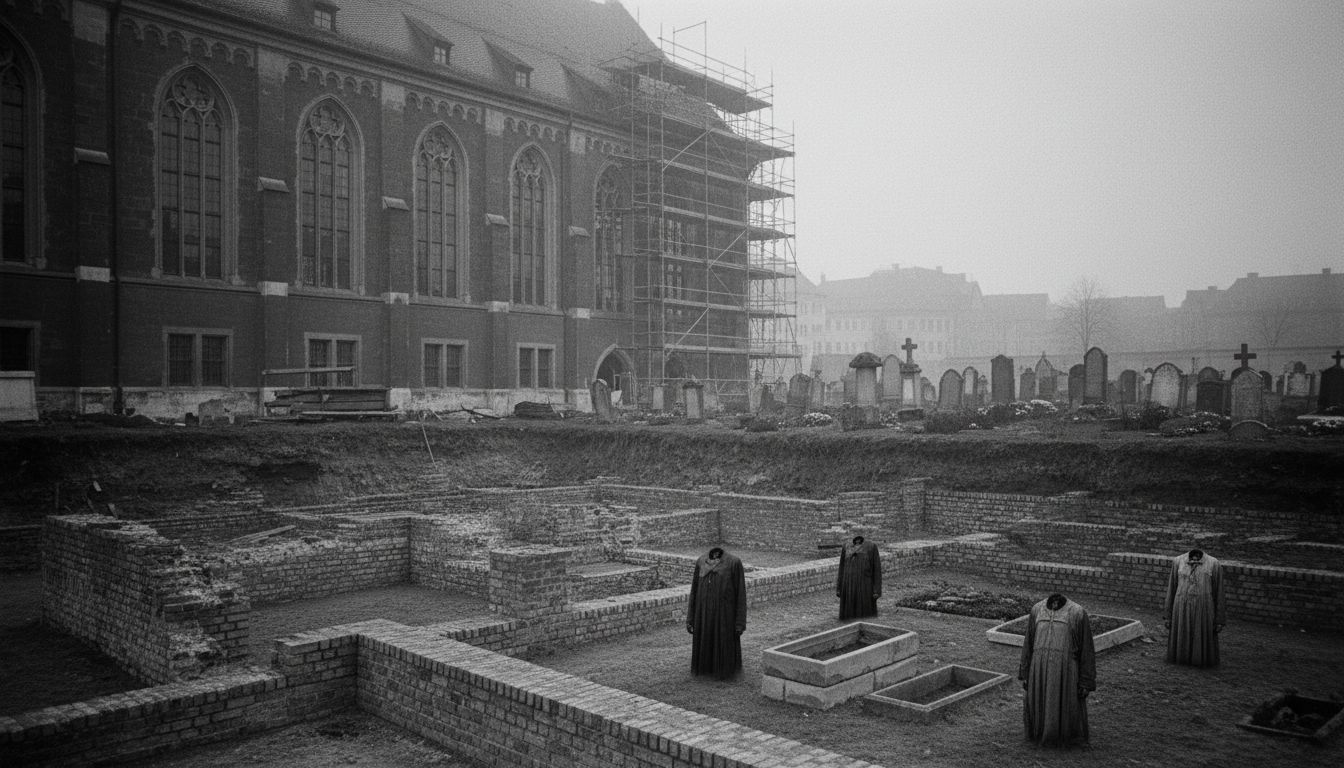
According to the narrative, an unnamed gardener—responsible for harvesting the hay that fed the farm’s cattle—fell in love with a young farmhand who later rejected his advances. Overcome with despair, he isolated himself and, in early 1897, was found hanged in a haystack, his neckerchief used as a makeshift noose. The girl, now engaged to another man, continued her preparations for the upcoming wedding. On the eve of the ceremony, she asked a maid to accompany her to the house’s doorway while she finished her bridal shoes. As the moon rose, witnesses claim the gardener’s spirit emerged from the white‑floored ruins, intent on “tracking down” the bride‑to‑be. The specter allegedly lunged at the girl, who, with the maid’s aid, managed to fend off the attack; the ghost then dissolved into the surrounding mist as dawn approached.
Investigation Findings
The Folklore Institute’s field team, led by Dr. Ásta Björnsdóttir, conducted interviews with descendants of Hvítárvellir’s former residents and examined parish records from 1895‑1900. “The written accounts are sparse, but the consistency across oral testimonies suggests a core event—a suicide in the hayloft—was later embellished with supernatural elements,” Dr. Björnsdóttir explained. The team also consulted the estate’s 1897 land survey, which confirms the presence of a “white‑floored” stone hall used for communal gatherings, matching the setting described in the legend. No physical evidence of a haunting was found, but the researchers note that the story aligns with a broader Icelandic motif in which unrequited love and untimely death give rise to “revenant” spirits that haunt specific locales.
Interpretation and Outlook
While the Ghost of the Hay remains a compelling piece of Icelandic folklore, scholars caution against literal interpretation. Professor Einar Þórðarson of the University of Iceland remarks, “Such narratives function as communal memory, preserving personal tragedies within the landscape. They also serve as cautionary tales about the consequences of social exclusion.” The tale’s endurance—now featured on platforms like Moon Mausoleum—highlights the ongoing fascination with Hvítárvellir’s “white floor” and its spectral legacy. As the estate prepares for a heritage restoration project slated for later this year, curators plan to include the Ghost of the Hay in interpretive panels, ensuring that the story, whether fact or fable, continues to inform visitors about the human emotions woven into Iceland’s rural past.