Overview
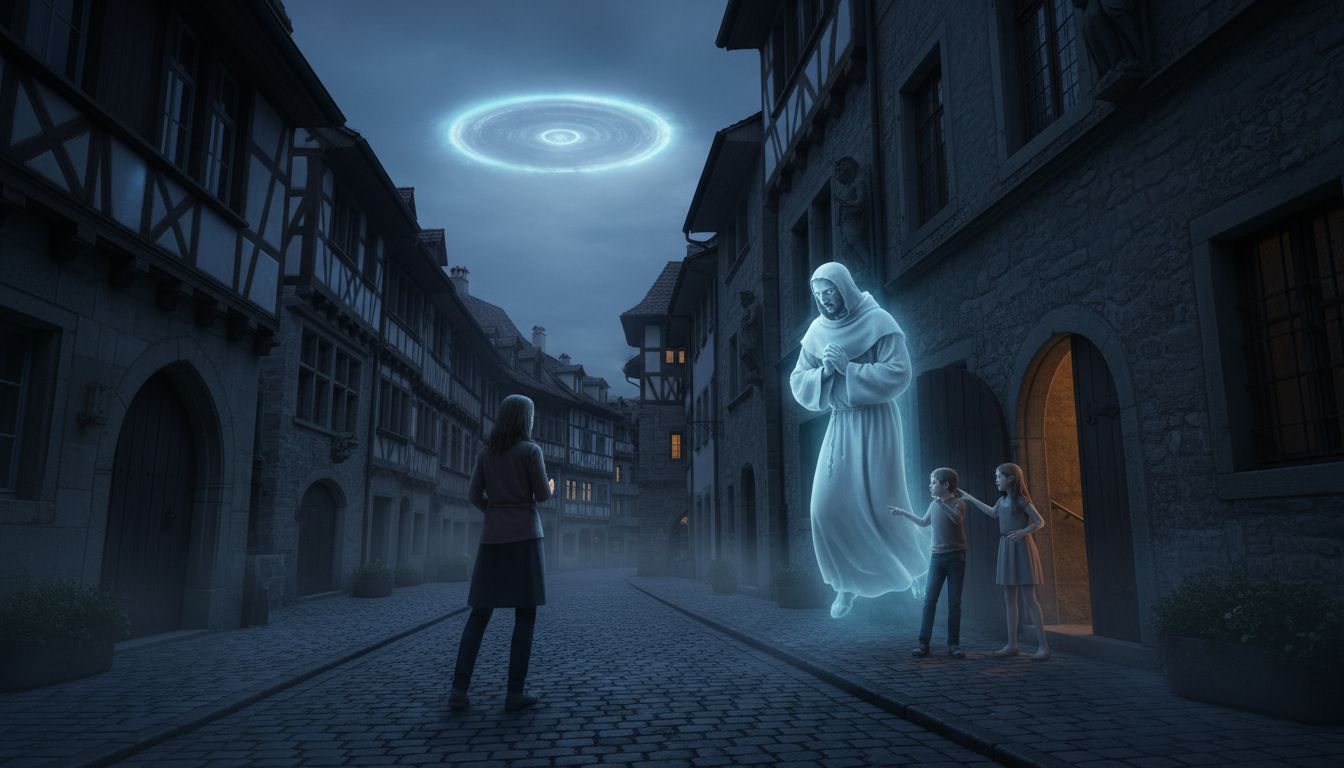
A centuries‑old legend continues to circulate in Basel’s historic Münsterberg district, where residents once reported the apparition of a spectral monk gliding through narrow alleys and private homes. Described as a cloaked figure absorbed in silent prayer, the “Ghostly Monk of Spittersprung” allegedly appeared on windy nights, startling children while remaining oblivious to the living. The tale, documented on the Moon Mausoleum website on 13 January 2026, raises questions about the monk’s purpose and the historical circumstances that may have birthed such a haunting.
Historical Context
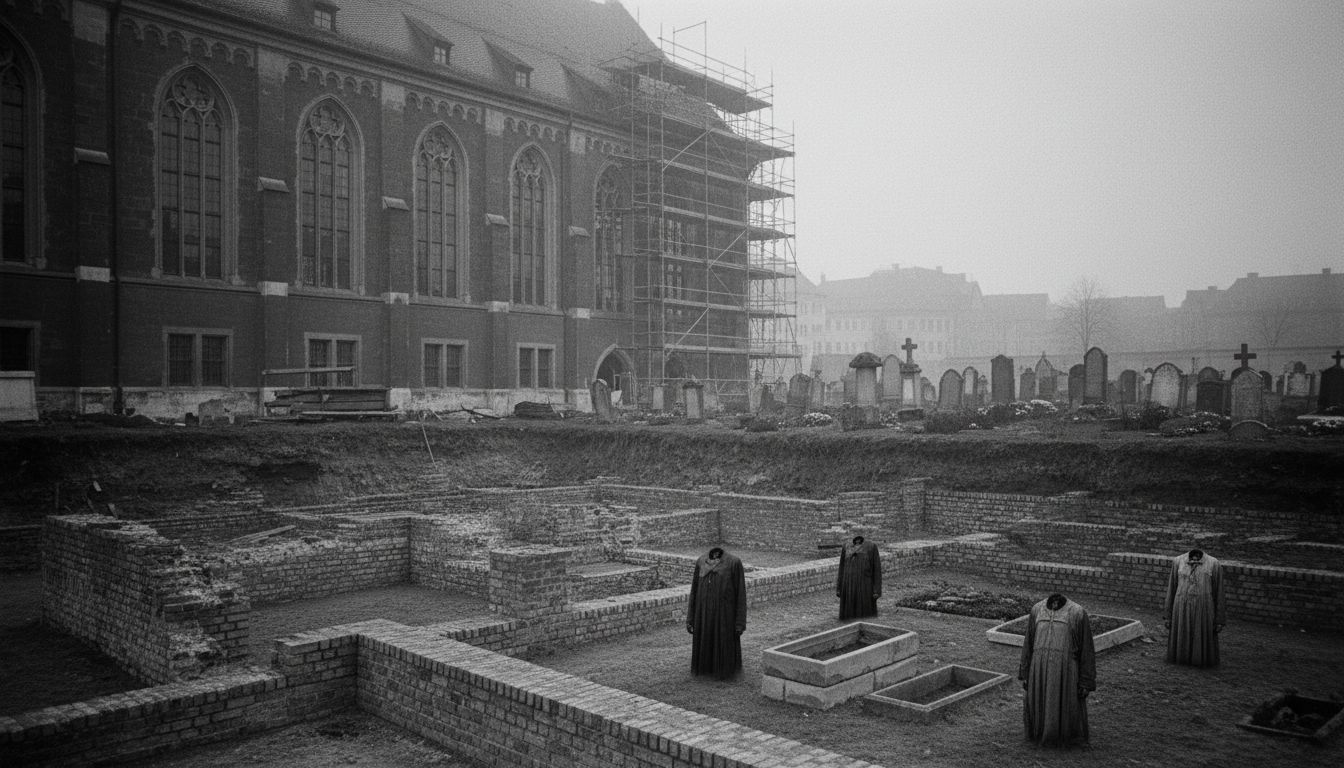
Münsterberg, the hill crowned by the imposing sandstone façade of Basel Münster, was known in medieval times as Spittelsprung. The name reflects the area’s early function as a hospital and almshouse where the sick, the dying, and the indigent sought the Church’s limited comfort. Architectural surveys confirm that 18th‑century palaces and the Naturhistorisches Museum now line the cobbles, but beneath those façades lie layers of medieval urban life marked by frequent disease and high mortality. Such conditions often gave rise to folklore that linked suffering with religious imagery.
The Legend in Detail
According to the Moon Mausoleum article, the monk “appears without warning in one of the houses along the hill,” his dark robes illuminated only by a flickering lamp or hearth. Witnesses claim the figure’s eyes never leave the pages of an ancient breviary, his lips moving in “soundless prayer” that fills the room with an “ancient and sorrowful” atmosphere. The narrative emphasizes that the apparition “glides in and out of the houses frightening the children,” yet remains indifferent to the living, suggesting a purpose rooted in unresolved devotion rather than malevolence. The repeated refrain—“the question is, prayer for what?”—highlights the mystery that fuels local intrigue.
Local Perspectives
Basel’s cultural historians note that the story fits a broader pattern of urban ghost folklore common in Swiss medieval towns. Dr. Hans Keller, a folklorist at the University of Basel, told the Basel Gazette that “such specters often embody collective anxieties about disease and mortality, especially in places that once housed infirmaries.” He added that oral traditions, like the monk’s nightly rounds, “serve as a communal reminder of the past’s hardships while providing a narrative anchor for contemporary identity.” Residents interviewed for the article recalled hearing the tale from grandparents, underscoring its transmission across generations.
Unresolved Questions
The legend’s persistence invites scholarly speculation about its origins. Was the monk a real cleric who died while tending to the infirm, his unfinished prayers echoing through time? Or does the story function as an allegory for the spiritual neglect that accompanied medieval healthcare? The Moon Mausoleum piece leaves these questions open, noting that “the prayer’s purpose remains unanswered.” While no archival records confirm a specific monk linked to Spittelsprung, the convergence of historical infirmary sites, religious practice, and enduring folklore suggests a fertile ground for further interdisciplinary research.
The ghostly monk of Spittelsprung thus remains a cultural artifact—a haunting that intertwines Basel’s medieval past with present‑day curiosity. As the city’s cobblestones continue to echo with the toll of the cathedral bells, the unanswered prayer of the spectral monk endures, inviting both locals and scholars to contemplate the thin line between history and legend.