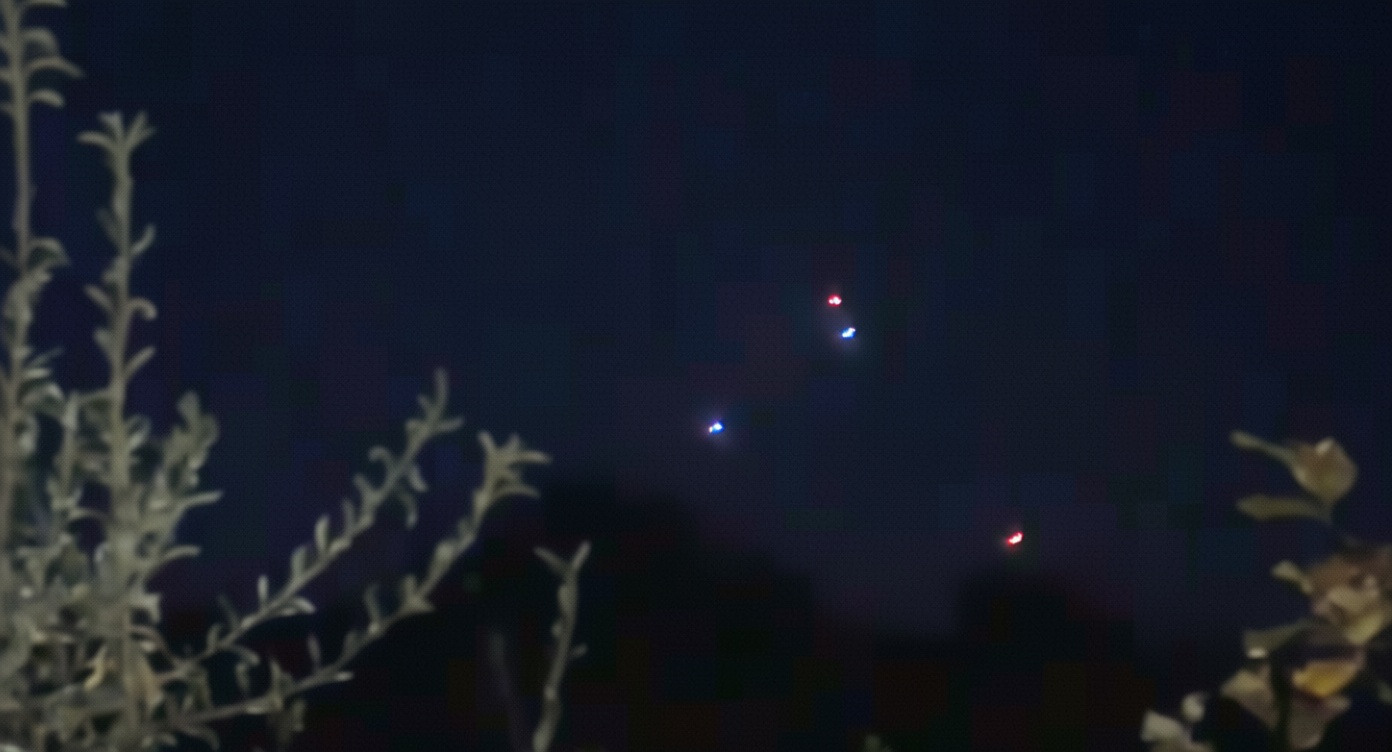
In a revealing and candid interview, Dr. James Lacatski, the former head of the U.S. government's largest publicly acknowledged UAP (Unidentified Aerial Phenomena) study, discussed some of the most intriguing and controversial cases from his time leading the Pentagon’s secretive UFO research efforts. Dr. Lacatski, who oversaw the Advanced Aerospace Weapon System Applications Program (AAWSAP) and its successor, the Advanced Aerospace Threat Identification Program (AATIP), shared details about documented encounters with mysterious craft, government investigations into UFO crashes, and the challenges of public disclosure.
Among the cases Dr. Lacatski referenced was an incident in Georgia involving a black triangle-shaped UFO. According to Lacatski, a witness deliberately shone a high-powered spotlight at the object, which responded by emitting a radiation beam. The witness reportedly developed tumors following this encounter, suggesting possible health risks associated with close contact with such phenomena. This case highlights the tangible physical effects sometimes reported by individuals who come into proximity with unidentified craft, a subject that has drawn increased scientific interest in recent years.
When pressed by interviewer George Knapp about the origins and nature of the craft investigated by U.S. authorities, Dr. Lacatski was careful not to disclose classified information. He declined to specify whether any recovered technology was the result of a crash, a gift, or other means, citing strict government restrictions. However, he did confirm that the technology in question is “very, very advanced,” suggesting a level of sophistication that far exceeds currently known human capabilities. "It's a difference akin to sticks and stones versus superconductors," Lacatski explained, emphasizing the potential global impact of such discoveries.
Dr. Lacatski also addressed the contentious issue of government transparency and the public’s right to know. He described his books, based on material from official Defense Intelligence Agency (DIA) programs, as a form of disclosure, noting that the public funded these studies. However, he acknowledged that all information must be vetted and approved for release by government authorities, creating a bottleneck in the dissemination of new data. “If I could, I’d staple all the documents together and hand them to you,” he said, illustrating the difficulties faced by researchers seeking to share their findings.
The interview further explored the role of private industry, particularly Bigelow Aerospace, in studying materials and artifacts allegedly associated with UAP. Dr. Lacatski pointed out that the unique focus on both paranormal and technological aspects during the AAWSAP era is unlikely to be repeated, urging scientists and the public to learn from currently available information. He emphasized the importance of open-minded investigation and the need to overcome fear or stigma when addressing these phenomena, suggesting that humanity has the capacity to understand and possibly benefit from them.
As the debate over UAP transparency continues, Dr. Lacatski’s remarks provide rare insight into the complexities of government investigations and the profound technological and philosophical questions raised by encounters with the unknown. While full disclosure remains elusive, his interview underscores the significance of ongoing research and public engagement in unraveling the mysteries of UFOs and their potential implications for science and society.