Overview
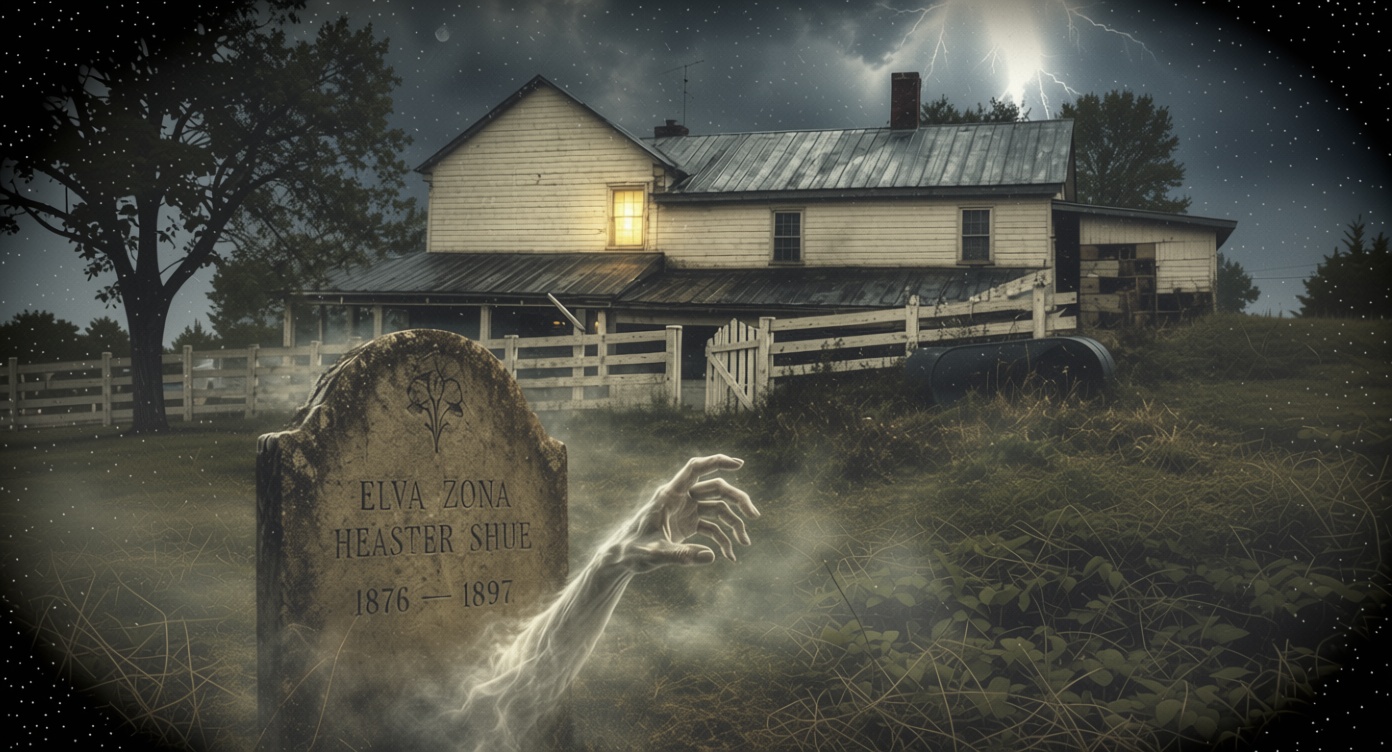
The Greenbrier Ghost case remains one of the most unusual murder stories in American folklore, blending a tragic death, local suspicion, and a mother’s extraordinary claim that her daughter returned from beyond the grave to identify her killer. The case centered on Elva Zona Heaster Shue, known as Zona, whose death in January 1897 in Greenbrier County, West Virginia, was initially treated as natural. Over time, however, the circumstances surrounding her death, combined with persistent doubts from her mother, transformed the matter into a homicide investigation that ended in a criminal conviction. What made the story endure was not only the legal outcome, but the enduring legend that a ghost’s testimony helped expose the truth.
A death that did not add up
Zona had married blacksmith Erasmus Stribbling Trout Shue in October 1896, and the union lasted only a few months. On January 23, 1897, she was found dead in the couple’s home after a local boy was sent to the house and discovered her body. Her husband reportedly moved her to a bed and dressed her in a high-necked garment before the doctor arrived, a detail that later drew attention because it may have concealed injury to her neck. At the time, the death was not immediately treated as a homicide. A coroner’s jury ruled “death by heart disease,” even though the medical examination was incomplete and the case had not been fully investigated. That early conclusion would later be undermined by new concerns, both from the community and from Zona’s family.
The mother’s claim of a ghostly visitation
The most famous element of the case came from Mary Jane Heaster, Zona’s mother, who reportedly distrusted her daughter’s husband from the beginning. Weeks after the burial, Mary Jane claimed that Zona’s spirit appeared to her repeatedly and described how she had been killed. According to her account, the apparition said Trout Shue had attacked Zona during an argument and broken her neck, and the ghost allegedly demonstrated the injury by turning its head unnaturally far to one side. Mary Jane brought this story to Prosecutor John Alfred Preston, and while the ghost account became the centerpiece of local legend, the legal response was more measured. Preston did not simply reopen the case because of a supernatural claim; he also had reason to believe the original inquiry was inadequate and that public suspicion was mounting.
Exhumation, evidence, and conviction
On February 22, 1897, Zona’s body was exhumed, and the results were dramatic. The examination found that her neck had been dislocated between the upper vertebrae, her windpipe crushed, and other injuries consistent with strangulation. The findings changed the case from a presumed natural death to a likely homicide, and Trout Shue was arrested and charged with murder. While the ghost story became the part preserved in popular memory, the prosecution was ultimately supported by physical and circumstantial evidence, not spectral testimony alone. That distinction is important: the legend of the Greenbrier Ghost may have helped focus attention on the case, but the conviction rested on the damaged body, the flawed original examination, and the growing inconsistencies surrounding Zona’s death.
A lasting American mystery
The Greenbrier Ghost case has survived for more than a century because it sits at the intersection of law, grief, and folklore. It is remembered as a rare instance in which a murdered woman’s mother claimed the dead helped bring justice, but historians and local accounts also point to the more ordinary — and more concrete — reality behind the legend. In that sense, the case endures as both a paranormal crime story and a reminder that even the most famous ghost tale often begins with very human evidence of violence, suspicion, and unresolved loss.