Overview
The grisly remains uncovered in Griswold, Connecticut, have revived a little‑known chapter of New England’s 19th‑century “vampire panic.” In 1990, three boys playing near a gravel pit discovered a scattered collection of human bones that would soon be linked to a burial marked only “J.B. 55.” The subsequent archaeological investigation revealed a post‑mortem ritual—decapitation, repositioned thigh bones, and a skull‑and‑crossbones arrangement—long associated with folk attempts to prevent the dead from rising. The case offers a rare, tangible glimpse into the desperate superstitions that once gripped rural America.
The 1990 Discovery
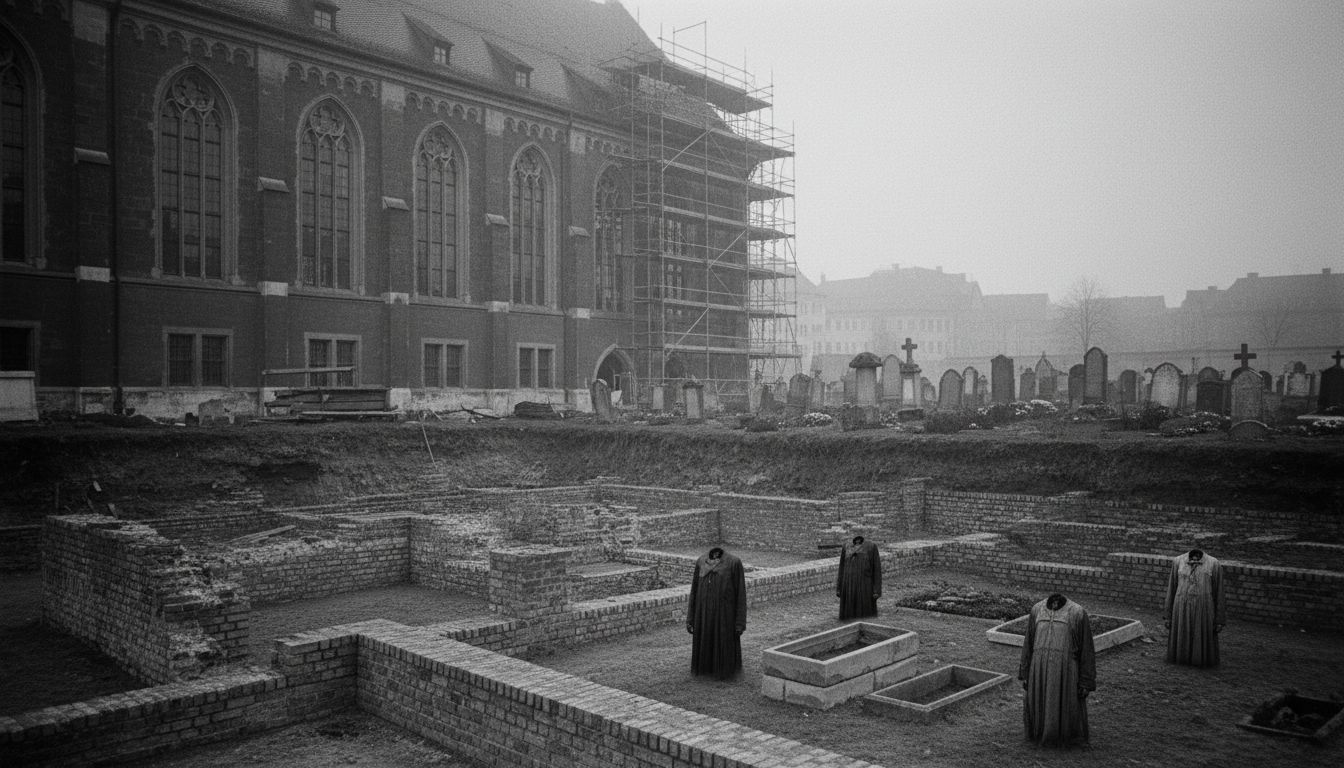
When the boys returned to the site with a skull, local police initially suspected a connection to the contemporary serial‑killer Michael Ross. However, Connecticut State Archaeologist Nick Bellantoni quickly recognized the bones as far older than any modern crime. “The stratigraphy and the coffin’s construction placed the burial squarely in the early‑1800s,” Bellantoni told the Hartford Courant after the excavation began. The site lay within the historic Walton Family Cemetery, a small, family‑owned plot that had been abandoned for generations. Among its markers, a solitary coffin stood out: its lid was fastened with brass tacks and bore only the initials “J.B.” followed by the number “55,” likely indicating the year of interment.
Forensic Findings and Ritual Manipulation
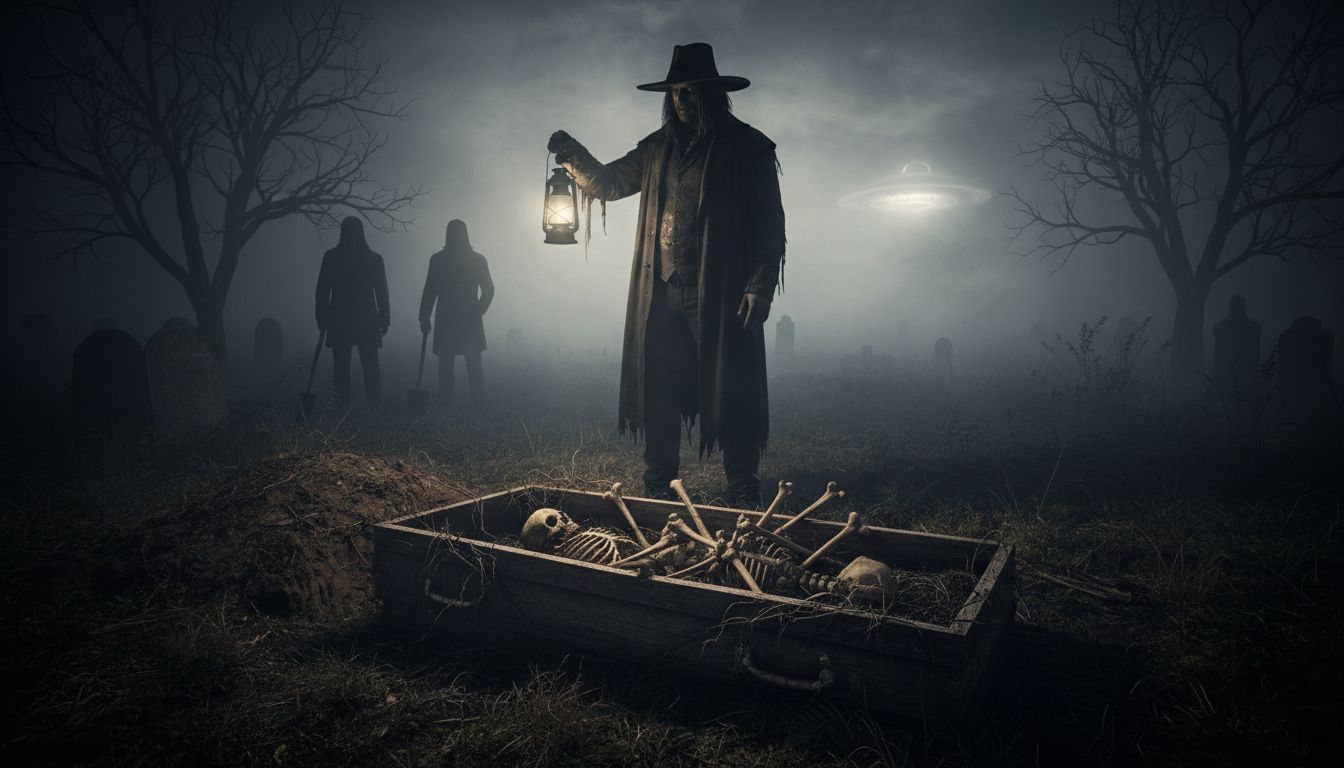
Detailed examination by Bellantoni’s team showed that the J.B. skeleton had been exhumed and deliberately re‑interred. The skull had been removed, placed atop the chest, while the femurs were arranged in a cross beneath it—a configuration documented in 19th‑century New England folklore as a safeguard against vampiric resurrection. Dental analysis confirmed the remains belonged to a male in his mid‑twenties, with no evidence of trauma that would suggest foul play. “The positioning is unmistakable,” said forensic anthropologist Dr. Ellen McCarthy of the University of Connecticut. “It mirrors the same practices recorded in the Mercy Brown case of 1892, where communities tried to stop a perceived vampire from draining the living.” The ritual’s precision suggests it was performed by individuals familiar with contemporary anti‑vampire lore, likely family members or close friends.
The Vampire Panic in Rural New England
The early 1800s saw a wave of panic across New England as tuberculosis (then called “consumption”) claimed many lives. Lacking medical explanations, some communities turned to supernatural explanations, believing the dead could return to feed on the living. In Rhode Island, Massachusetts, and Connecticut, bodies were sometimes exhumed, and heart or liver tissue was removed, or graves were altered to prevent the dead from rising. The Griswold case adds to this pattern, illustrating how fear could manifest in tangible, macabre interventions. Historian Sarah Whitaker, author of Specters of the Past: New England’s Vampire Lore, notes, “These acts were less about actual belief in vampires and more about a communal attempt to regain control in the face of an invisible killer.”
Unmasking J.B.: Who Was He?
Archival research in town records and church registries identified a James Babcock, born in 1835, who died in 1855 at age 20—exactly matching the “55” inscribed on the coffin. Babcock was a mill worker who contracted consumption during a local outbreak in 1854. His family, grieving and desperate for answers, likely performed the post‑mortem ritual after his death, fearing his illness might be a sign of vampirism. “The alignment of the initials, the date, and the timing of the tuberculosis epidemic point strongly to James Babcock,” Whitaker concluded. While the legend of a “vampire” has persisted in local folklore, the evidence suggests a tragic convergence of disease, superstition, and a community’s yearning to protect its surviving members.
Significance and Ongoing Interest
The Griswold find underscores how folklore can leave a physical imprint on the landscape, turning a solitary grave into a cultural artifact. It also reminds scholars that vampire panic was not mere myth but a real social response to the anxieties of disease and mortality. The site has since been protected, and the bones are housed at the Connecticut State Museum for public education. As interest in paranormal history grows, the case of J.B. serves as a cautionary tale: behind sensational headlines lies a story of human fear, loss, and the lengths to which people will go to confront the unknown.