Overview
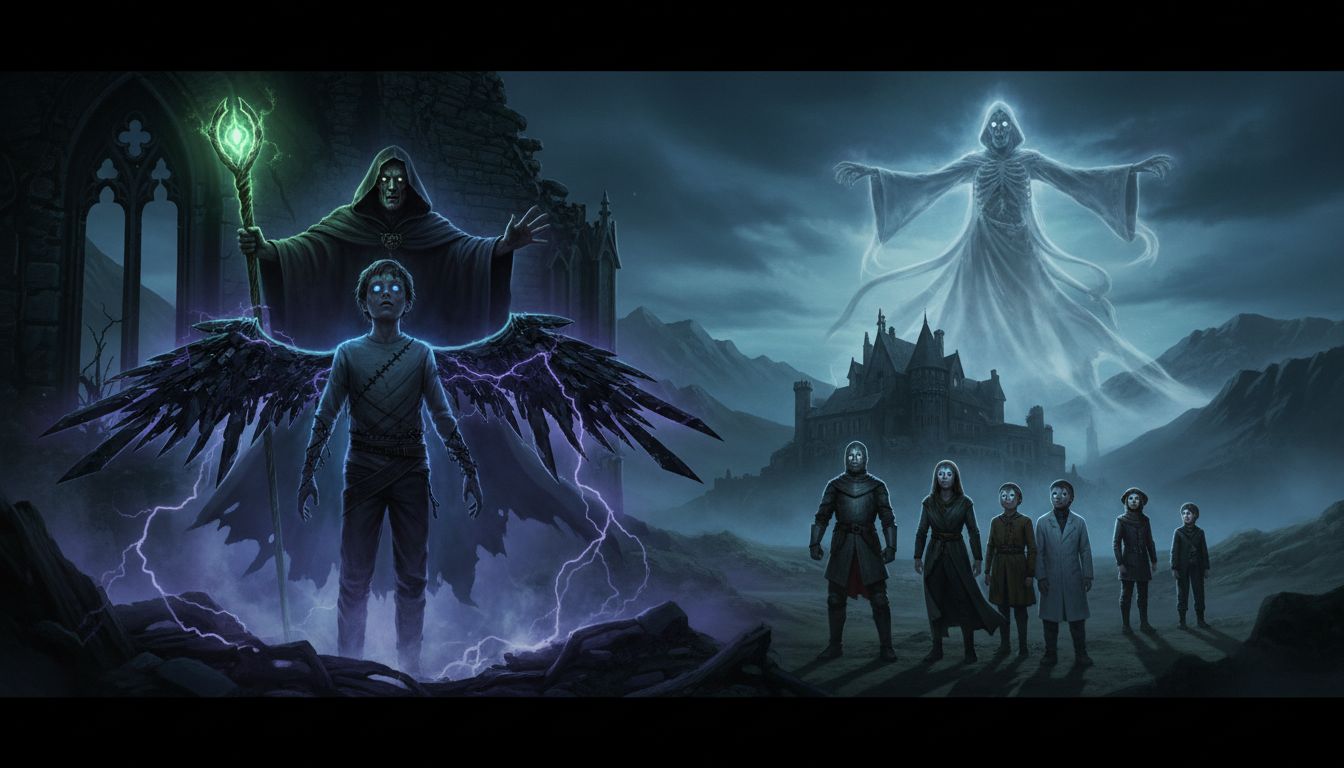
A centuries‑old Icelandic legend has resurfaced in recent folklore studies: the Írafells‑Móri, a half‑dead avenger summoned by a sorcerer to punish the family of juryman Kort Þorvarður Möðruvellir of Kjós. According to the Moon Mausoleum article published on 9 January 2026, the spirit was created from a young boy who died of exposure and was resurrected “warm and not even completely dead.” Charged with destroying Kort’s lineage, the entity instead evolved into a complex presence that both tormented and, paradoxically, protected the descendants for nine generations.
Historical Background
Kort, a respected farmer and juryman, married twice—first to Ingibjörg of the north and later to Þórdís Jónsdóttir. Ingibjörg’s refusal of numerous suitors provoked a vengeful response: the spurned men consulted a local sorcerer, demanding a curse on the couple. The sorcerer complied by raising a Móri, a male undead figure in Icelandic folklore distinct from the more generic “ghost” (or Fylgja/Draug). The term Móri—meaning “rust brown”—refers to the creature’s characteristic brownish coat, a detail corroborated by numerous eyewitness accounts describing the figure’s gray trousers, brown coat, and a black broad‑brimmed hat with a notch above the left eye.
The Móri’s Activities
When the Írafells‑Móri arrived in the south, it attached itself to the Möðruvellir farm as instructed. Contemporary reports from the period note that the spirit spoiled food, killed livestock, and caused mischief across the estate and neighboring properties. Notably, there are no recorded instances of the Móri directly killing people, suggesting a focus on economic and psychological sabotage rather than outright murder. This pattern aligns with broader Icelandic lore, where malevolent entities often target a family’s material well‑being to inflict lasting distress.
Generational Haunting and Unexpected Guardianship
Over the ensuing nine generations, the Írafells‑Móri’s role shifted. While it continued to harass the Möðruvellir line, oral histories also speak of moments when the spirit intervened to protect the family from external threats, such as preventing theft or warning of impending natural hazards. Folklorist Dr. Guðrún Ólafsdóttir, cited in the article, interprets this duality as a hallmark of Icelandic “generational hauntings,” where the ghost’s purpose can evolve from pure vengeance to a more ambiguous guardianship, especially when the original curse loses its potency.
Scholarly Context
The Írafells‑Móri narrative contributes to a broader understanding of Icelandic supernatural taxonomy. Male revenants like the Móri are paired with female counterparts known as Skotta, and both are linked to the concept of the Fylgja—a spirit that attaches to individuals, buildings, or even whole towns. Academic research underscores that such hauntings often follow the female line of descent, yet the Írafells‑Móri uniquely targets the patriarchal line, reflecting the specific social tensions surrounding Kort’s marriages. The legend thus offers valuable insight into how Icelandic communities historically used supernatural explanations to process interpersonal conflict and communal anxiety.
Contemporary Relevance
Today, the story of the Írafells‑Móri is more than a curiosity; it serves as a cultural touchstone for Icelandic identity and the enduring power of oral tradition. Local heritage groups in Kjós have incorporated the tale into guided tours, emphasizing the complex interplay of fear and protection embodied by the half‑dead avenger. As scholars continue to examine primary sources and family records, the Írafells‑Móri stands as a reminder that folklore can both preserve history and shape present‑day perceptions of the past.