Overview
Croppie’s Acre, a modest green space just beyond Dublin’s Royal Hospital Kilmainham and overlooking the River Liffey, has long been linked to the 1798 Irish rebellion. Local tradition holds that the field served as a mass burial site for the “Croppies,” United Irishmen executed after a failed uprising. While the historical record confirms that many rebels were executed in the Kilmainham area, the precise location of their interments remains disputed. In recent years, the site has attracted attention not only from historians but also from residents who claim to experience unexplained sensations while on the grounds.
Historical Context
The 1798 rebellion, inspired by the ideals of liberty and equality, saw thousands of United Irishmen rise against British rule. Contemporary accounts describe a decisive ambush in which many rebels were captured, sentenced, and executed by hanging, beheading, or shooting. Contemporary maps show burial pits near Kilmainham, and a monument on 98 Street commemorates the fallen. However, archaeological surveys conducted in the 2010s failed to locate human remains in Croppie’s Acre, leading some scholars to suggest that bodies may have been discharged into the River Liffey and carried away by the tide. Despite the lack of physical evidence, the narrative of a mass grave has persisted, cementing the field’s status as a memorial landscape.
Archaeological Findings and Skepticism
Researchers from the National Museum of Ireland carried out limited ground‑penetrating radar scans in 2022 and 2024. Their reports note “no definitive burial signatures” within the surveyed perimeter, a conclusion echoed by Dr. Siobhán O’Leary, a forensic archaeologist who commented, “The absence of skeletal material does not automatically disprove the oral tradition, but it does call for a more nuanced interpretation of the site’s past.” The museum’s findings have fueled a debate between academic skeptics and community historians who argue that the lack of evidence may be due to earlier disturbances, such as the field’s use as a football pitch throughout the 20th century.
Reported Paranormal Phenomena
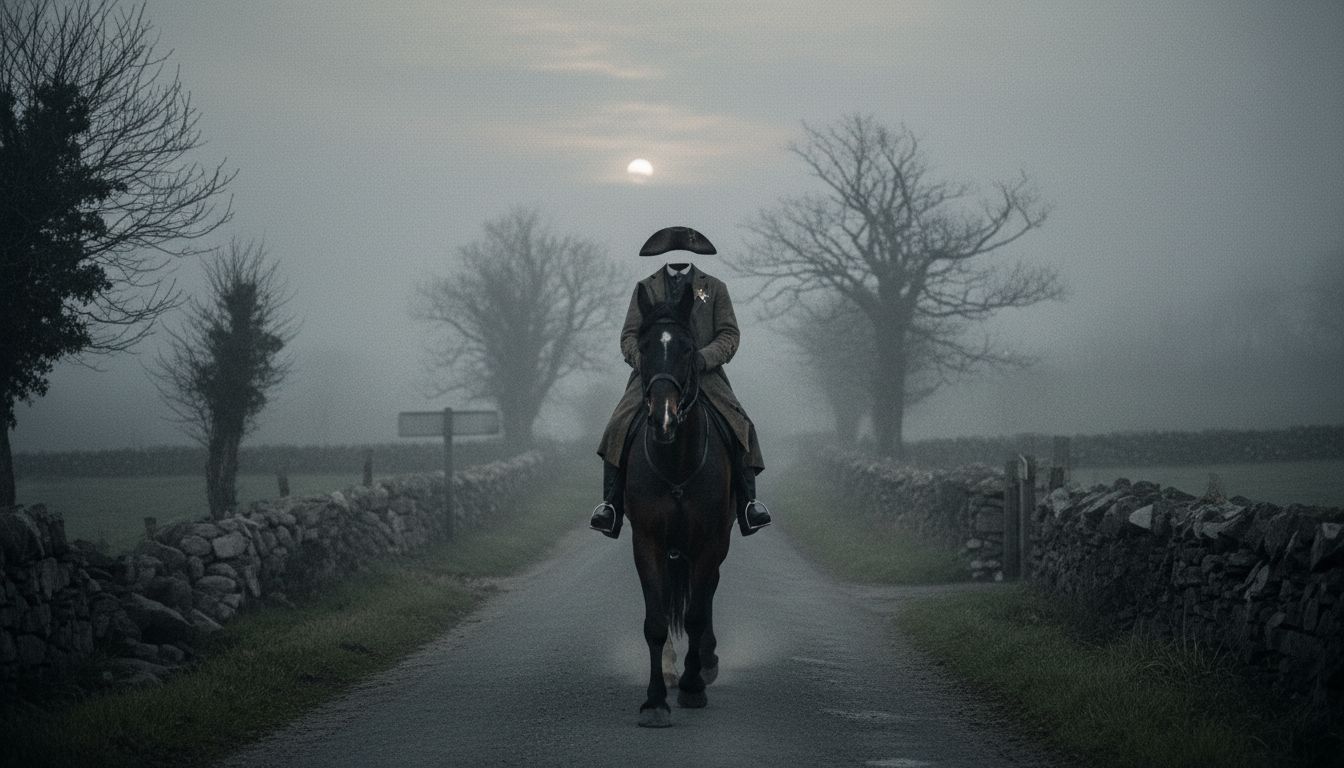
Visitors to Croppie’s Acre have reported a range of experiences that locals attribute to the “restless spirits” of the 1798 rebels. Former football players recall sudden chills on warm days, a sensation of being watched from the field’s edge, and a ball inexplicably veering off course. One long‑time resident, Aoife Murphy, recounted, “I was walking home past the field at dusk when I felt the ground shift under my feet, as if someone—or something—was moving just below the surface.” While such accounts are anecdotal, they have been documented in local folklore collections and featured in recent articles on Irish hauntings. Researchers from the Irish Paranormal Research Society (IPRS) have logged over 30 separate reports since 2018, though they acknowledge that subjective perception and environmental factors (e.g., wind, temperature gradients) can influence these experiences.
Community Response and Preservation Efforts
In response to both the historical significance and the growing folklore, Dublin City Council designated Croppie’s Acre as a protected cultural heritage site in early 2025. The designation includes a modest informational plaque that outlines the 1798 events and acknowledges the field’s place in local legend. Community groups have organized annual remembrance walks, emphasizing the importance of honoring the rebels while discouraging sensationalist exploitation of the site. “We want people to understand the human cost of the rebellion without turning the field into a theme‑park attraction,” said council heritage officer Liam O’Donnell. The balance between preserving historical memory and addressing paranormal claims continues to shape public discourse around Croppie’s Acre.
Looking Forward
As Dublin grapples with its layered past, Croppie’s Acre stands at the intersection of documented history, archaeological ambiguity, and living folklore. While definitive proof of a mass grave remains elusive, the field’s role as a symbol of resistance endures, reinforced by the stories of those who feel an unseen presence. Future interdisciplinary studies—combining archaeology, oral history, and environmental psychology—may provide clearer insight into why this modest patch of grass continues to evoke both reverence and unease among Dubliners.