Overview
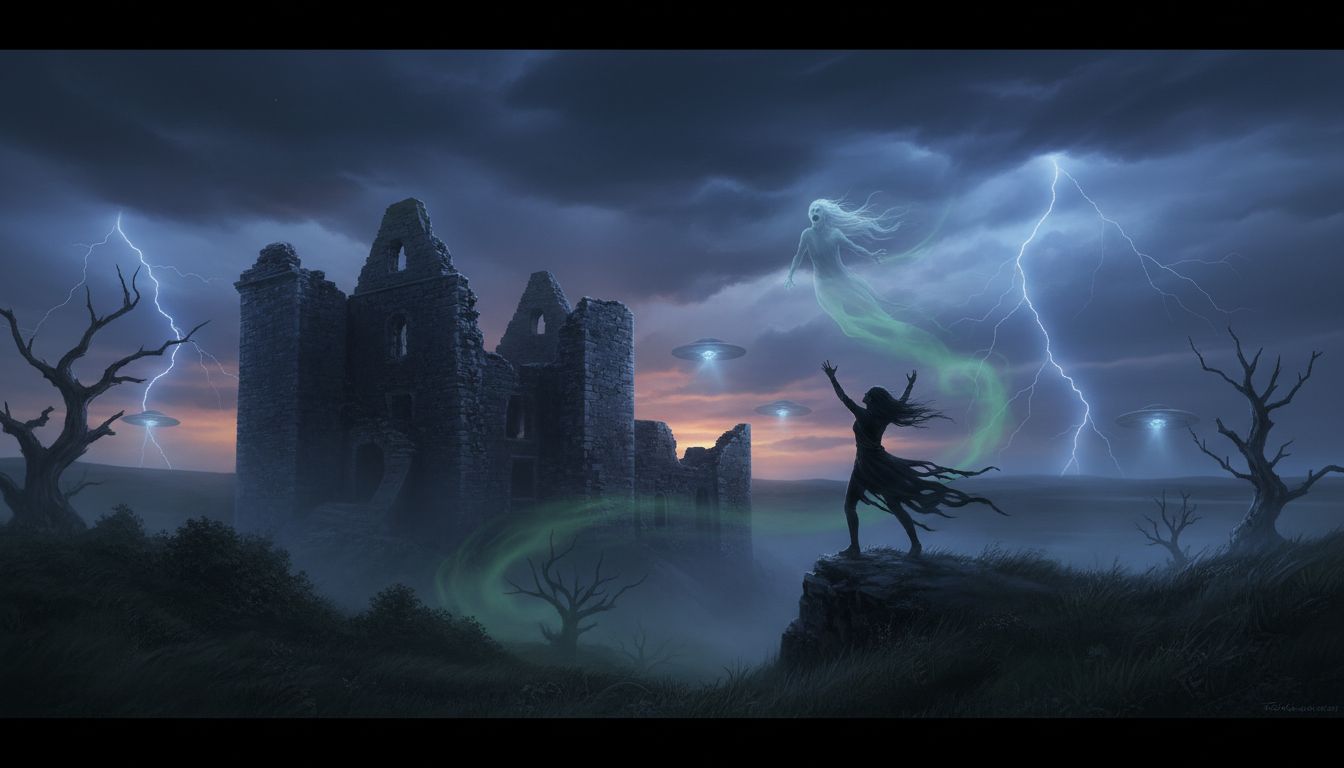
Pennard Castle, the weather‑worn ruin perched on the Gower Peninsula’s windswept cliffs, has long been a focal point for both historical inquiry and folkloric speculation. While archaeological records confirm the site’s origins as a Norman earth‑timber ringwork later replaced by a stone fortress in the 1300s, local tradition adds a layer of mystery: legends claim the castle materialised “in a single moonlit night,” allegedly built by a sorcerer or the fair folk of Welsh folklore. Recent visitor reports of unexplained sounds – described as a “howling witch” echoing through the sandy remnants – have revived public interest and prompted heritage groups to reassess the balance between preservation and myth.
Historical Context
The earliest documented phase of the site was a defensive timber fortification erected by Norman invaders shortly after the conquest of Wales. By the early 14th century, the stone castle that dominates the cliff face today was constructed under the auspices of the Broase family, later passing to the Mowbray, Despenser and Beauchamp lineages. Contemporary records indicate that severe sandstorms in the 13th and 14th centuries deposited massive dunes against the northern and western walls, accelerating structural decay. By the 1650s, parish accounts described the castle as “desolate ruins buried in sand,” a condition that has persisted despite intermittent archaeological surveys.
Folklore and the “Fair Folk” Narrative
The most striking element of Pennard’s story is the claim that the castle was conjured overnight. According to the Moon Mausoleum blog (published 5 March 2026), local folklore attributes the rapid appearance to either a sorcerer who sought refuge from Norman forces or to the “fair folk”—entities linked to the surrounding woodlands and the buckthorn bushes that grow along the Parkmill route, a plant traditionally associated with Welsh faeries. The legend further describes a curse placed by these beings, suggesting that the structure’s eventual ruin was a consequence of supernatural vengeance rather than solely environmental factors. Although no primary source documents these tales, oral histories collected by regional historians echo similar motifs, reinforcing the castle’s reputation as a haunted site.
Contemporary Perspectives
Modern visitors to Pennard Castle report auditory phenomena that align with the “howling witch” motif. While the castle’s exposed arches naturally amplify wind across the cliff, researchers from the University of Wales’ Department of Folklore caution against attributing such sounds to paranormal activity without systematic acoustic analysis. Dr. Cerys Llewelyn, a folklorist specializing in Welsh myth, remarks, “The interplay of geography, weather, and centuries‑old storytelling creates a potent narrative that can shape perception of ordinary environmental sounds.” Nonetheless, the legend has become a cultural asset, attracting tourism and prompting the Gower Heritage Trust to develop interpretive signage that distinguishes documented history from mythic embellishment.
Preservation and Future Research
Balancing heritage conservation with the allure of legend poses a challenge for local authorities. The castle’s stonework continues to erode under relentless coastal weather, and the encroaching sand threatens to obscure remaining archaeological features. In response, Cadw (the Welsh Government’s historic environment service) has earmarked funding for a detailed photogrammetric survey, aiming to create a digital record that can be accessed by scholars and the public alike. Simultaneously, the Gower Archaeological Society plans a community‑led oral‑history project to capture remaining first‑hand accounts of the “witch’s howl,” ensuring that contemporary folklore is archived alongside the physical ruins.
Pennard Castle stands at the crossroads of documented medieval history and enduring myth, a reminder that the landscapes of Wales are as much shaped by stone as by story. As preservation efforts advance, the site will continue to invite both scholarly examination and the imaginative wonder that has kept the legends of sorcerers, fair folk, and howling witches alive for generations.