Overview
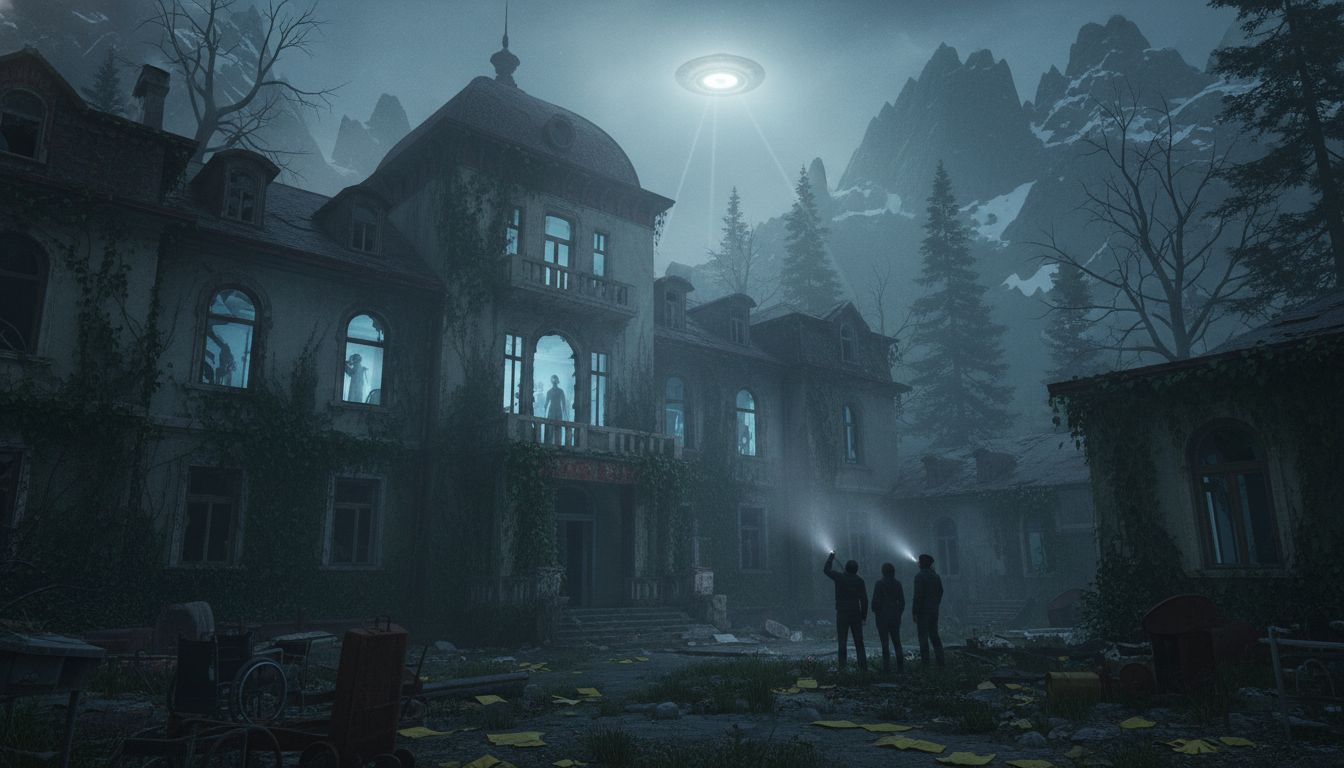
The former Gotthard Sanatorium, perched above the village of Piotta in the Gotthard Massif, has become a focal point for Switzerland’s modern folklore. The decaying brick complex, abandoned since 1961, is regularly cited in online ghost‑story collections as a place where “patients never checked out.” While the building’s crumbling façade and overgrown courtyards certainly inspire unease, local authorities stress that there is no documented evidence of paranormal activity, and the stories remain part of the region’s oral tradition.
Historical Background
Constructed in 1905, the Sanatorio Popolare Cantonale di Piotta was one of several Alpine sanatoria built to treat tuberculosis, a disease that thrived in the damp, high‑altitude climate of the Swiss mountains. Initiated by Italian politician Fabrizio Maffi, the facility opened with a capacity of 120 beds but declared bankruptcy just a year later, reflecting the financial volatility of early‑20th‑century health projects. During World I the sanatorium was repurposed as a quarantine and convalescent center for wounded soldiers, a role that expanded its patient base to include those suffering from shell shock and other war‑related ailments.
Legends and Reports
Local folklore alleges that a “nameless doctor” performed unsanctioned experiments on tuberculosis patients and injured soldiers, ranging from electric shock therapy to cold‑water immersion without anesthesia. Although no official medical or governmental records corroborate these claims, the building’s layout—featuring a concealed morgue, unmarked underground tunnels, and sealed wings that never receive sunlight—has fueled speculation. Visitors who have entered the derelict corridors report hearing distant footsteps, seeing fleeting shadows, and feeling sudden temperature drops, experiences that are now widely shared on paranormal blogs and social‑media platforms.
“When you stand in the basement, you can hear a low hum, like a heart that never stopped,” says Marco Rossi, a longtime Piotta resident who has guided informal tours of the site. “It’s probably the wind through the tunnels, but the story lives on.”
Current Condition and Access
The sanatorium’s structural decay is evident: broken windows resemble “hollow eyes,” ivy chokes the stone walls, and parts of the roof have collapsed under years of neglect. The property is privately owned, and the cantonal heritage office has listed it as a protected ruin, limiting any restoration or demolition without official approval. Although trespassing is prohibited, the site attracts urban‑explorers and ghost‑hunt enthusiasts, prompting occasional police patrols. The cantonal tourism board has not promoted the location as an attraction, emphasizing safety concerns and the lack of verified historical significance beyond its medical past.
Expert Perspective
Dr. Elena Keller, a historian specializing in Swiss medical heritage, cautions against conflating undocumented rumors with factual history. “The Gotthard Sanatorium is an important reminder of early 20th‑century public‑health efforts in the Alps,” she explains. “While the building’s abandonment creates a fertile ground for myth‑making, there is no archival evidence of the alleged experiments. The stories likely arose from the isolation of the facility, the trauma of war, and the natural human tendency to fill gaps in knowledge with narrative.” Dr. Keller adds that preserving the ruin offers an opportunity for scholarly study, provided it is approached with rigorous documentation rather than sensational speculation.