Overview
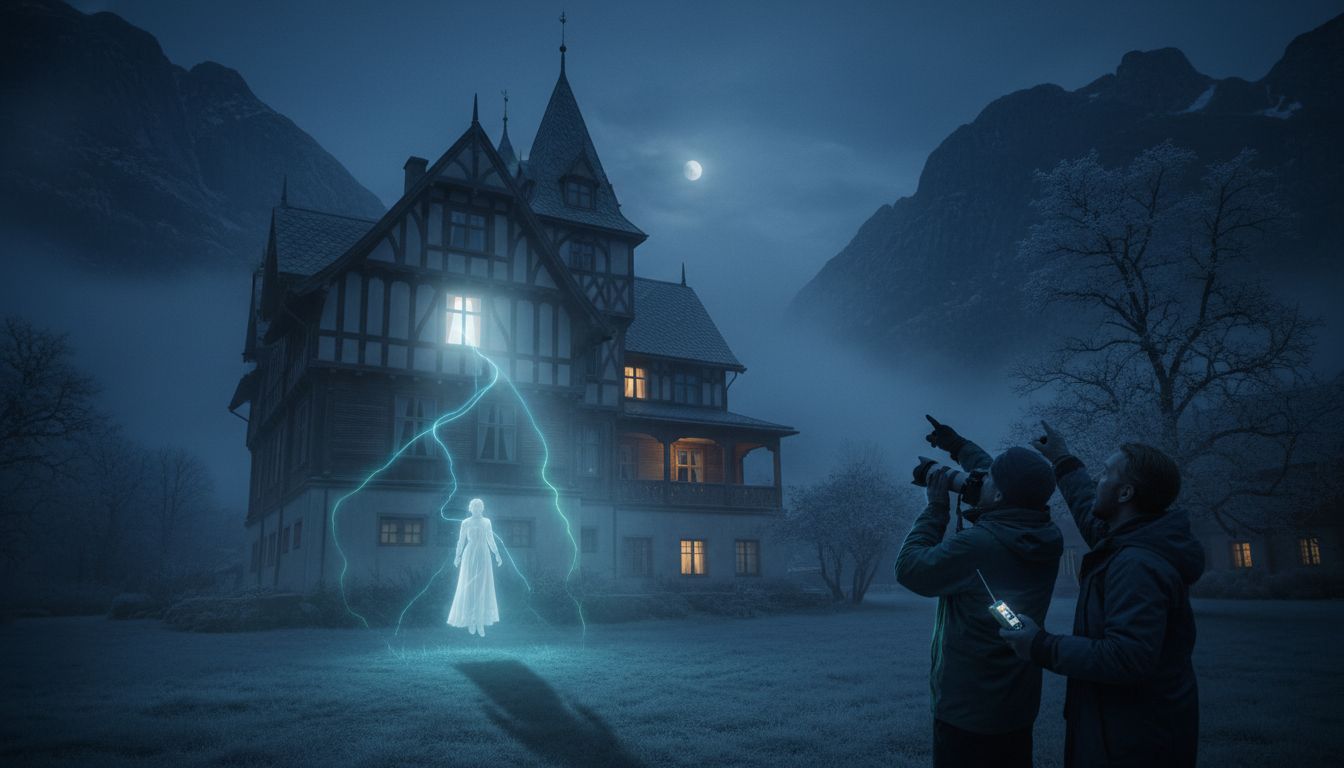
The Dalen Hotel, a 19‑th‑century landmark perched on the banks of Norway’s Telemark fjord, has long been celebrated for its “fairytale” architecture and historic charm. Yet, alongside its elegant wooden turrets, the hotel is also known for a persistent paranormal claim: the presence of an English lady who vanished from Room 17 in the early 1900s. Recent investigations by local historians and paranormal researchers have catalogued a series of repeatable phenomena—cold spots, faint footsteps, and a lingering scent of lavender—that they say correspond to the tragic story of the missing guest.
Historical Context
Completed in 1894, the Dalen Hotel was one of the region’s first establishments to offer running water and electric lighting, drawing aristocrats from across Europe. Its distinctive “Norwegian dragon” style, inspired by stave churches and Viking motifs, earned it a reputation as a luxury retreat. During World War II the building was commandeered by German forces, interior furnishings were stripped, and the structure fell into disrepair. After a comprehensive restoration completed in 1992, the hotel reopened with 49 rooms, preserving much of its original woodwork and period décor while modernizing guest amenities.
The Legend of the English Lady
According to hotel archives and oral tradition, the ghost is identified as Miss Eliza Greenfield, an English traveler who checked into Room 17 in the late 1890s. Contemporary newspaper notices describe her as a solitary woman who spent evenings wandering the hotel’s corridors, often carrying a small bottle of lavender oil—a habit noted by the staff. On the night of 12 January 1902, Miss Greenfield failed to appear for breakfast, and despite an extensive search, she was never found. The disappearance was recorded in the hotel’s logbook, but no official police report survived, leaving the case shrouded in speculation.
“We still have the original ledger entry that simply reads, ‘Miss Greenfield – absent, presumed missing,’” says Lars Østberg, the hotel’s current manager. “The staff has passed down the story for generations, and many guests still ask about Room 17.”
Investigations and Reported Phenomena
In 2024 a team from the Norwegian Society for Paranormal Research (NSPR) conducted a month‑long survey of the hotel’s most active ghost‑hotspot: Room 17 and the adjoining hallway. Using calibrated thermometers, they documented temperature drops of up to 4 °C below ambient levels at irregular intervals, often coinciding with the sound of a single footstep on the polished wooden floor. Guests interviewed by the NSPR also reported an unmistakable lavender fragrance lingering in the air, despite the absence of any scented products in the room.
Dr. Ingrid Dahl, a cultural historian who has studied Scandinavian folklore, cautions against jumping to supernatural conclusions. “Cold spots and olfactory cues can be explained by drafts, building materials, or even the human brain’s pattern‑recognition tendencies,” she notes. “Nevertheless, the consistency of these reports across independent witnesses does merit further, controlled study.”
Current Status and Expert Perspective
The Dalen Hotel now embraces the legend as part of its heritage tourism strategy, offering a “Ghost Tour” that includes a brief stop at Room 17. While the hotel does not officially endorse paranormal explanations, it acknowledges the story’s role in attracting visitors seeking a blend of history and mystery. Local authorities have not opened a formal investigation, citing the lack of physical evidence.
Experts agree that the tale of the English Lady reflects broader cultural narratives—the allure of the unknown, the preservation of oral history, and the way historic sites become canvases for collective memory. Whether the lavender scent and phantom footsteps are manifestations of an unresolved disappearance or simply the result of an aged building’s quirks, the story continues to captivate guests and scholars alike, ensuring that Miss Greenfield’s presence—real or imagined—remains an integral part of Dalen Hotel’s living history.