Overview
The narrow, covered wooden staircase known locally as the Fricktreppe or Frick Stairs has long been a practical shortcut linking Bern’s historic Matte district with the cathedral precincts. By day it carries commuters, tourists, and delivery workers along its 183 steps, but local folklore records a markedly different atmosphere after dark. According to a collection of oral histories compiled by the Moon Mausoleum website, the stairs are reputed to host “countless spirits, especially women who allegedly killed their children and the mourners of grisly funerals,” a claim that has attracted both curiosity and skepticism from scholars and visitors alike.
Historical Background
Constructed in the 14th century, the Frick Stairs were part of Bern’s medieval urban planning, providing a protected route between the bustling market square at Münsterplatz and the lower‑lying Aare River banks. Architectural surveys confirm that the staircase’s original timber framework has been periodically restored, yet its overall footprint remains unchanged. The steps are situated at the junction where the Matte district gives way to the Herrengasse, an area that once housed guild halls and municipal offices. Historical records from the city archives note the staircase’s role in daily life but contain no contemporaneous references to supernatural events, suggesting that the legends are a later cultural overlay.
The Legends
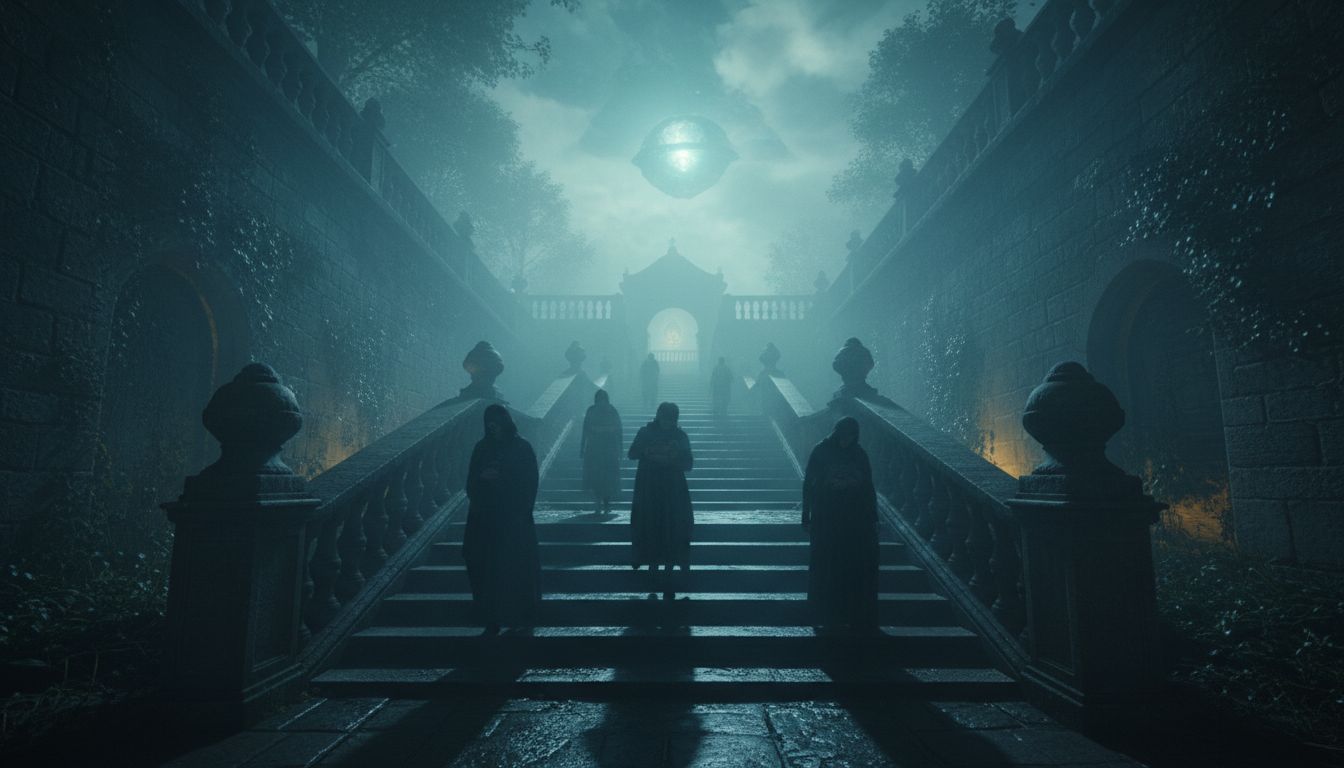
The most frequently cited tale involves a laundress returning home after a night shift. As she ascended the stairs, she allegedly encountered a silent funeral procession led by a policeman, followed by six bearers with a black coffin, four children with “horribly mutilated heads,” and a procession of “twisted dwarves and cripples” that stretched endlessly. The story continues that the woman’s scream echoed through the stairwell, after which she fell ill with a fever that lasted months. Another recurring motif describes women accused of infanticide wandering the steps, their cries said to be audible on moonless nights. A third narrative links the staircase to the “Restless Spirit of Hans Franz Nägeli,” a 16th‑century Bernese magistrate whose grave is reputed to lie nearby, though his name is rarely invoked in the primary accounts of the stairway’s hauntings. These legends share common elements—midnight timing, grotesque imagery, and a sense of unresolved suffering—that reinforce the staircase’s reputation as a site of “processions of death.”
Scholarly Perspective
Dr. Eva Keller, a folklorist at the University of Bern, cautions against taking the stories at face value. “The Frick Stairs are a classic example of localized legend formation,” she explains. “When you combine a historic urban space with the collective memory of past social anxieties—such as the severe punishments for child‑killing in early modern Switzerland—you get narratives that serve both as cautionary tales and as a way to explain the unsettling silence of stone architecture at night.” Keller notes that no municipal court records from the 15th to 18th centuries mention the alleged murders, and the “funeral procession” description appears only in oral testimonies collected in the 20th century. Local guide Markus Schmid, who leads nightly tours of Bern’s haunted sites, acknowledges the allure of the stories: “People love a good shiver, but we always stress that these are cultural myths rooted in Bern’s rich history, not verified events.”
Contemporary Impact
Despite the lack of empirical evidence, the Frick Stairs have become a focal point for Bern’s heritage tourism. The city’s cultural office has incorporated the legends into guided night walks, emphasizing the staircase’s architectural significance while presenting the ghost stories as part of the city’s intangible cultural heritage. Recent visitor surveys indicate that 68 % of participants find the narratives “enhance their appreciation of Bern’s history,” while 22 % express concern that sensationalism may overshadow factual preservation efforts. Municipal officials continue to fund restoration projects that maintain the staircase’s historic fabric, ensuring that both the physical structure and its mythic reputation endure for future generations.