Overview
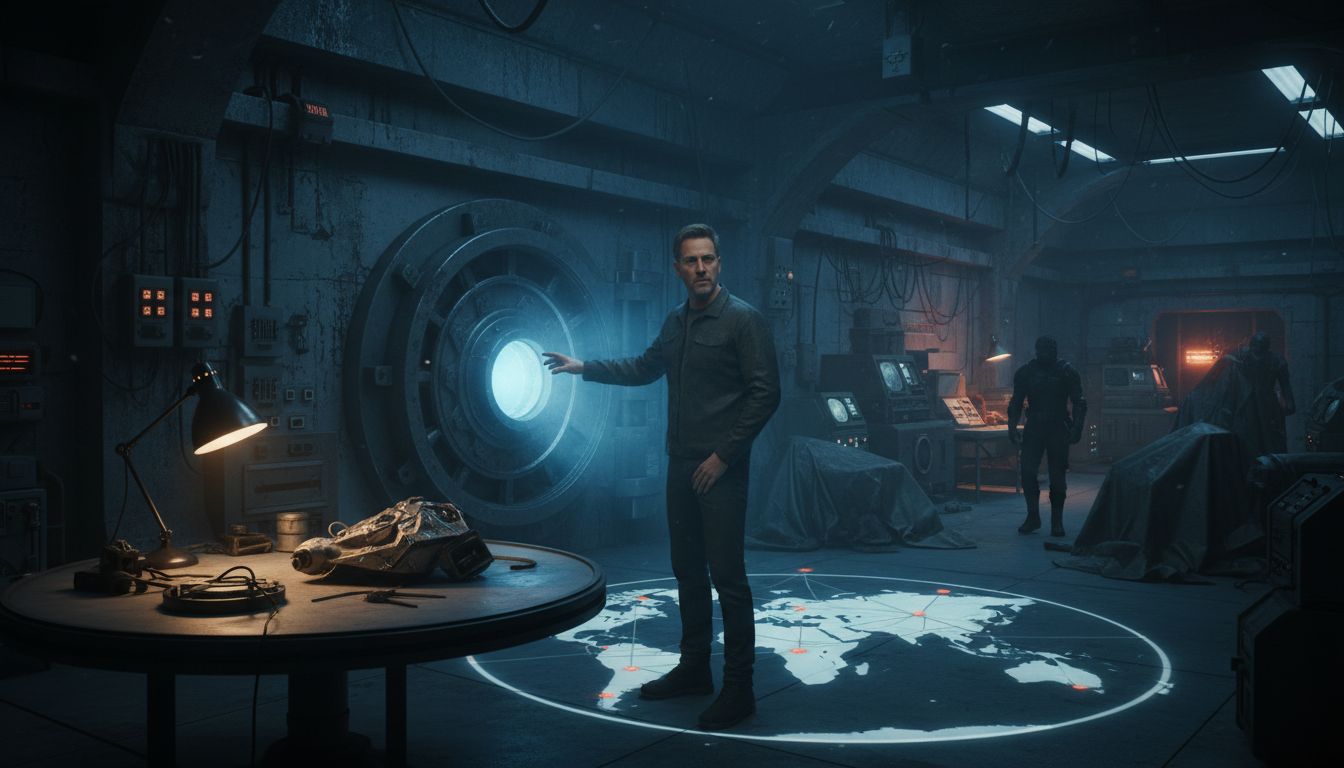
A video interview posted on VibeWire Magazine on January 12, 2026 features self‑identified UAP researcher “UAPGerb” outlining what he describes as a long‑standing, compartmentalized U.S. program to retrieve and reverse‑engineer alleged extraterrestrial craft. The piece, titled The Hidden UFO Program Is Real – Here’s How It Works! (ft. UAPGerb), claims that the effort began in the 1940s within structures tied to the Manhattan Project and has since involved a shadow network of contractors, a modern‑day equivalent of the alleged Majestic‑12 committee, underground facilities, and senior political figures—including former Vice President Dick Cheney.
Historical Roots
According to Gerb, the program’s origins trace back to the final years of World War II, when “top‑secret” Manhattan Project laboratories allegedly received fragments of unidentified aerial phenomena (UAP) that crashed in the American Southwest. He links these early incidents to the infamous Roswell event of 1947, suggesting that the debris was quietly transferred to a “black‑budget” research track under the auspices of the Department of Defense. Gerb cites declassified memos from the late 1940s that reference “unusual aerodynamic materials” and “non‑conventional propulsion signatures,” though the documents have not been independently verified by mainstream archives.
Organizational Structure
Gerb describes the contemporary effort as a highly compartmentalized network that operates outside normal congressional oversight. Key components, as outlined in the interview, include:
- Contractor firms with “dual‑use” clearances that handle material analysis, reverse‑engineering, and prototype development.
- A legacy Majestic‑12–style body, allegedly reconstituted in the 1990s to coordinate intelligence sharing among the Air Force, Navy, and CIA.
- Underground bases in Nevada, New Mexico, and an undisclosed Pacific island, purportedly housing “test bays” where recovered craft are examined.
- Political patronage, with Gerb naming former Vice President Dick Cheney as a “principal advocate” who facilitated funding streams through the Department of Energy’s legacy nuclear research programs.
Gerb’s narrative relies heavily on anonymous whistleblower testimonies, many of which claim to have worked on “exotic propulsion” projects that mirror publicly reported UAP sightings of the past decade.
Recent Revelations
The VibeWire interview also references a wave of disclosures that began in 2023, when several former military personnel filed complaints with the Office of the Inspector General alleging “unauthorized scientific activity” tied to UAP material. One whistleblower, identified only as “J.D.”, told investigators that “the hardware we were asked to test behaved in ways that violated known physics, and the chain of command was deliberately insulated from external review.”
Gerb asserts that the program’s most recent milestone was a “reverse‑engineered propulsion module” tested in secrecy at an underground Nevada site in late 2025. He claims the module achieved “sub‑orbital thrust without conventional fuel,” a statement that has yet to be corroborated by any independent agency. The interview ends with a call for broader public disclosure, arguing that “the technology could revolutionize energy, transportation, and national security if brought into the open.”
Challenges and Outlook
While the claims presented by UAPGerb are detailed, they remain unsubstantiated by official government records or peer‑reviewed scientific analysis. The Department of Defense has repeatedly stated that it continues to investigate UAP reports under the UAP Task Force, but it has not confirmed any reverse‑engineering program linked to extraterrestrial craft. Moreover, the alleged involvement of high‑profile officials such as Dick Cheney has not been corroborated by any public testimony or documentation.
Experts in aerospace engineering caution that extraordinary claims require extraordinary evidence. Dr. Linda Martinez, a professor of propulsion systems at the University of Colorado, notes that “any credible breakthrough in propulsion would inevitably surface in the scientific literature or patents, given the scale of collaboration required.”
The discourse surrounding UAPs continues to be shaped by a mixture of declassified material, anecdotal accounts, and growing public pressure for transparency. As congressional hearings on UAPs are scheduled for later this year, the balance between national security secrecy and the public’s right to know will likely remain a focal point of debate. Whether the hidden program described by Gerb exists in the form presented, or represents a conflation of disparate classified projects, remains to be determined through rigorous investigation and open inquiry.


