Overview
A new article published on Moon Mausoleum on 6 February 2026 revives an obscure Icelandic legend known as the Hörghóll‑Móri. The tale, recorded in a regional folklore collection, describes how a drowned man was re‑animated as a vengeful Móri—a male revenant distinct from the more widely known draugr—and sent to murder a specific farmer’s son. While the story is rooted in oral tradition, the recent write‑up provides a concise narrative that scholars say reflects broader themes in Icelandic supernatural lore, such as the interplay between land, labor disputes, and post‑mortem retribution.
Historical and Geographic Context
The legend is set in Hörghóll, a hill in the village of Vesturhóp on the southern coast of Iceland. The name translates roughly to “shrine hillside,” suggesting that the site may have once served as a pagan place of worship before Christianity took hold. According to the Moon Mausoleum article, the central human characters are Jón, son of Símon, a farmer who owned the farm, and his adult son Kristján. The narrative mentions a laborer named Ívar, hired from west of the nearby glacier, whose grievances over “meager” wages spark the conflict that ultimately leads to the supernatural revenge.
The Legend in Detail
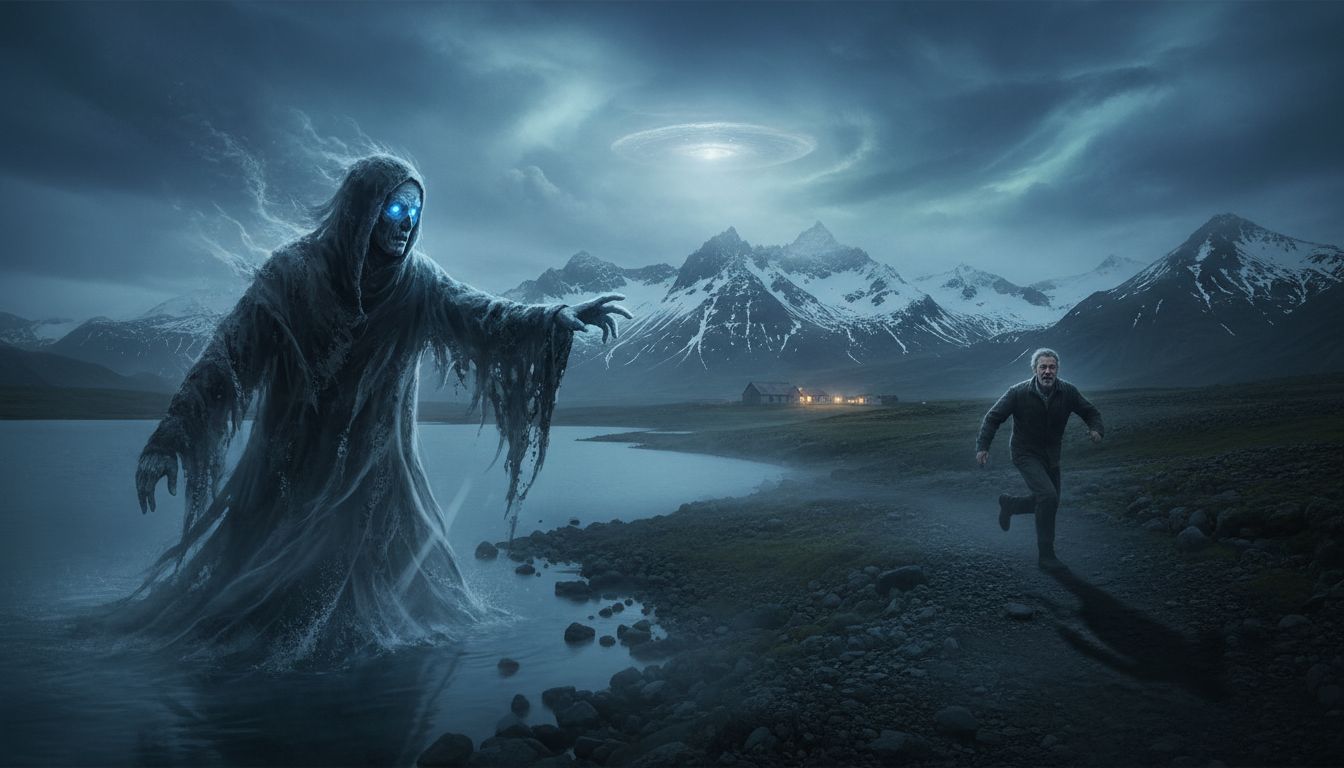
During a harsh winter, Ívar discovers a half‑dead man washed ashore. The source claims that Ívar “cut off one of the man’s arms and raised the dead man back as a revenant, as a Móri.” He then commands the newly created spirit to travel north to Hörghóll with a single directive: “Kill the farmer’s son Kristján and give no one peace at the farm.” The revenant, after questioning its purpose, complies and allegedly pursues Kristján relentlessly until the farmer’s son is slain. The article repeats the line verbatim, emphasizing the ghost’s single‑minded mission and its refusal to rest until the task is complete.
Folkloric Significance of the Móri
In Icelandic folklore, a Móri is a male ghost raised specifically for vengeance, distinct from a draugr (a general undead) or a fylgja (a protective spirit). Academic works on Icelandic supernatural beings, such as those by folklorist Jónas Kristjánsson, note that Mórir often arise from violent deaths or deliberate necromancy, serving as instruments of personal vendetta rather than guardians of the dead. The Hörghóll‑Móri story fits this pattern: the act of severing an arm and reanimating the corpse is a ritualistic element that underscores the intentionality behind the haunting.
Contemporary Interpretation
Folklorists caution against reading the legend as a literal account of paranormal activity. Instead, they view it as a cultural artifact reflecting historical tensions—particularly labor disputes in rural Icelandic societies. The dispute over wages and the subsequent accusation over missing mittens illustrate how everyday grievances could be mythologized into cautionary tales about the consequences of mistreating workers. As the Moon Mausoleum piece notes, “many boats were lost under the bay by the glacier and many lost their lives,” a backdrop that may have amplified the community’s anxiety and provided fertile ground for a story about an unstoppable, vengeful spirit.
Scholarly Outlook
The resurfacing of the Hörghóll‑Móri narrative offers researchers a fresh case study in how regional folklore adapts to contemporary media. By publishing the legend on a modern website, the story reaches a global audience, inviting comparative analysis with other European revenant myths. Professor Einar Ágústsson of the University of Iceland remarks that “the persistence of the Móri motif underscores Iceland’s unique blend of Christian and pre‑Christian belief systems, where the dead can be both cursed and commanded.” As interest in Nordic supernatural folklore grows, legends like Hörghóll‑Móri may inform both academic discourse and popular culture, reminding readers that even the most macabre tales often carry deeper social and historical meanings.