A Vampire Panic in Ottoman Tırnova
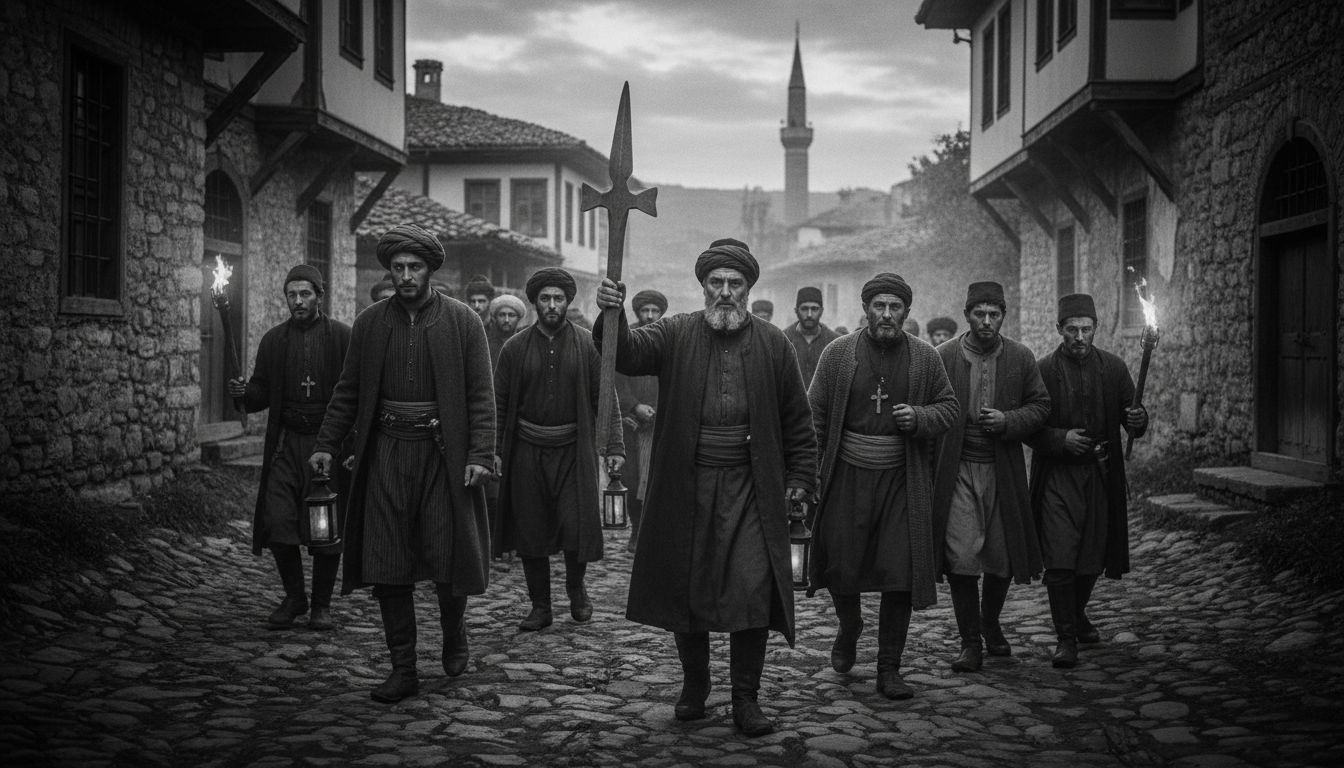
A little-known Ottoman-era account from Veliko Tarnovo, Bulgaria, describes a supposed vampire haunting the city in 1833. The story, recently discussed by the historical folklore site Moon Mausoleum, was serious enough to reach Ottoman authorities in the capital—and reportedly prompted Islamic officials to consider pagan protective practices in an effort to end the disturbances.
At the time, Veliko Tarnovo was known within the Ottoman Empire as Tırnova. The city had been captured by Ottoman forces on July 17, 1393, and remained under imperial rule until 1877. Formerly a major center of the Bulgarian kingdoms, Tarnovo continued to hold cultural and political importance during the Ottoman period, when local beliefs and religious traditions existed alongside official Islamic institutions.
An Unusual Official Record
The incident was reportedly documented by Ahmed Şükrü Efendi, the kadi, or Islamic judge, of Tırnova. In 1833, he sent a report to the Ottoman capital describing strange events in the city. The document was later published in issue 69 of Takvîm-i Vekâyi’, the Ottoman Empire’s first official state newspaper, dated to 19 Rebiulahir 1249—corresponding to October 1833.
The account is notable because written Ottoman references to vampires are relatively uncommon. European records contain numerous reports of alleged undead beings, particularly from communities along the shifting frontier between the Habsburg and Ottoman empires. By contrast, surviving Ottoman documentation is far more limited. According to the source, many of the recorded cases involved Christian populations and were preserved through the observations of Ottoman officials responsible for maintaining Islamic legal and religious order.
Invisible Attacks After Dark
The alleged entity in Tırnova was not described primarily as a blood-drinking corpse. Instead, reports said that the attacks began after sunset, when an unseen presence entered homes and terrorized residents.
The supposed vampire was blamed for mixing or contaminating food, including flour, butter and honey, sometimes allegedly spoiling it with earth. Household belongings were also said to have been destroyed: pillows, blankets, mattresses and clothing stored in cupboards were reportedly torn apart. Residents claimed that stones, jars, pots and handfuls of earth were thrown at them, despite no attacker being visible.
Some men and women were also reportedly assaulted. Their testimony appears to have formed part of the official inquiry, although the surviving material presented by Moon Mausoleum does not provide a full account of their statements or identify a physical culprit. The reports therefore remain a record of a historical panic and its official treatment, rather than evidence that a supernatural being was present.
Religion, Folklore and Authority
The episode highlights the complicated relationship between formal religion and local folklore in the Ottoman Balkans. Vampirism was not generally regarded as a mainstream belief among Muslim communities in Anatolia, and Islamic doctrine traditionally rejected the idea that the souls of the dead could return to attack the living. Yet stories of the undead continued to circulate, especially in regions where Muslim officials governed largely Christian populations with their own longstanding supernatural traditions.
According to the account, the rumours became so disruptive that authorities allegedly turned to practices associated with pre-Christian or pagan belief to stop the attacks. That detail is particularly striking: officials tasked with upholding Islamic orthodoxy were reportedly willing to consult local customs when conventional explanations failed. It suggests that, in practice, state authorities sometimes had to navigate popular fears pragmatically, even when those fears conflicted with formal theology.
A Window Into Balkan Folklore
The Tırnova report offers a rare glimpse into how supernatural accusations could move from household gossip into the administrative record. Whether the disturbances resulted from deliberate human actions, community conflict, illness, environmental causes or collective fear cannot be established from the available account. What can be documented is that residents believed they were under attack, that their claims reached an Ottoman judge, and that the story was important enough to appear in an official newspaper.
For modern readers, the case is best understood as a historical document about belief, authority and social anxiety. Its vampire may remain a figure of folklore, but the official response reveals how seriously Ottoman administrators could take reports of unexplained violence and disorder in the communities they governed.