Overview
In the mid‑19th century, a wave of tuberculosis—then called “consumption”—swept the coastal communities of New England, claiming dozens of lives. One of the most unsettling episodes from that era unfolded in Jewett City, Connecticut, where the Ray family’s repeated tragedies sparked a local panic that blended medical crisis with folklore. Contemporary residents came to believe that the family’s deceased members had become “vampires” who could rise from their graves and feed on the living, a notion that drove the surviving Rays to exhume and burn the bodies of two brothers in an effort to halt the disease’s spread.
Historical Context
Tuberculosis was the leading cause of death in the United States between the 1840s and 1850s, yet the germ theory of disease would not be widely accepted until decades later. Without a scientific explanation, communities often turned to superstition to make sense of sudden, fatal illnesses. In Jewett City—a small mill town in Griswold, Connecticut—this lack of understanding intersected with a series of rapid deaths within a single household, amplifying fear and prompting rumors of the undead. Historians note that similar “vampire panic” episodes occurred elsewhere in New England, where exhumations and the destruction of corpses were seen as a last resort to protect the living.
The Ray Family’s Tragedy
The Ray family, a sizable farming household, experienced an alarming succession of deaths between 1845 and 1854. The first loss was 24‑year‑old Lemuel Ray in 1845, followed by his father, Henry B. Ray, in 1851, and then his brother, 26‑year‑old Elisha Ray, in 1853. The surviving eldest son, also named Henry Ray, contracted consumption in 1854, prompting the community to question whether a supernatural force was at work. Local newspapers of the time recorded the family’s grief and the growing suspicion that the deceased were not truly at rest, a sentiment echoed in town meetings and church sermons.
Exhumation and the “Vampire” Response
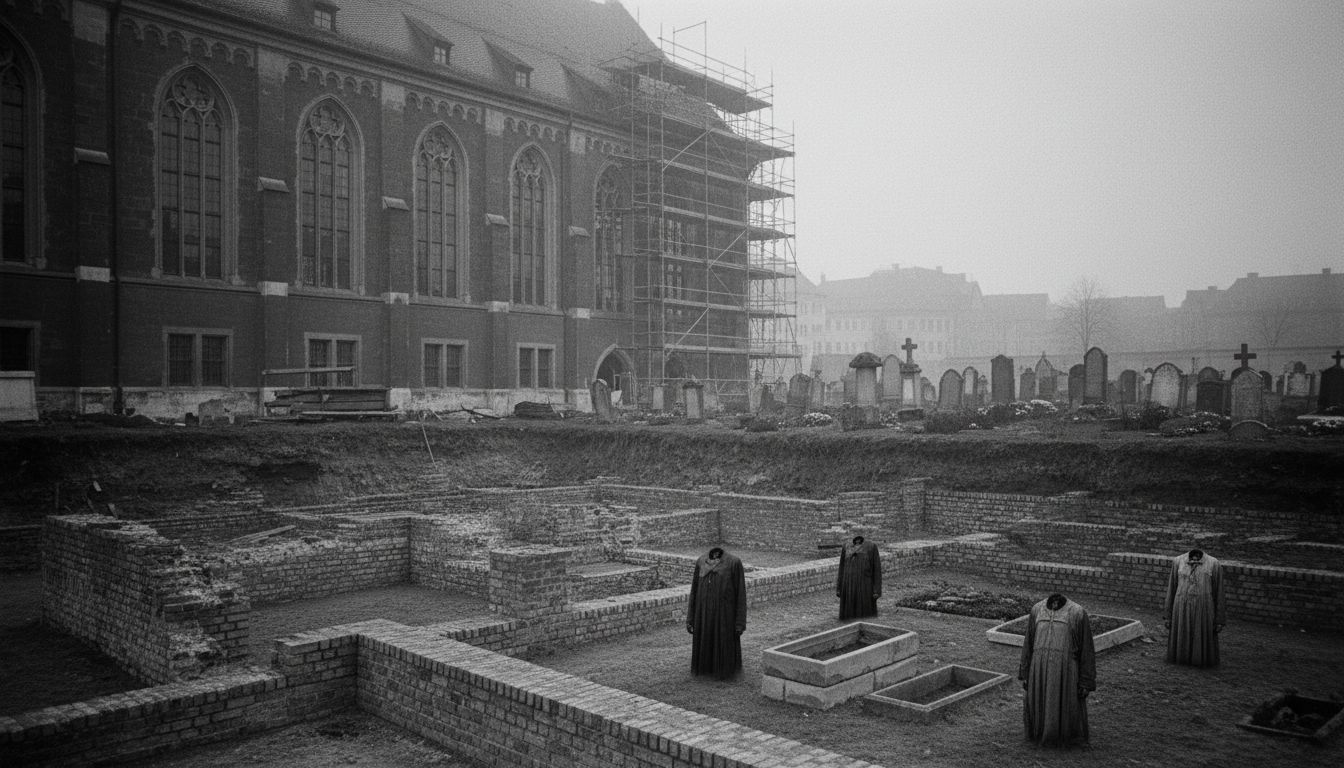
On May 8, 1854, driven by desperation and the prevailing belief that the dead could continue to “feed” on their kin, the Ray family, together with extended relatives, exhumed the bodies of Lemuel and Elisha from the Jewett City Cemetery. Contemporary accounts describe the exhumation as a somber, almost ritualistic event: the corpses were reportedly found in a state of “preservation” that seemed inconsistent with typical decomposition, a detail that fueled the vampire narrative. The family then burned the remains, a practice documented in other New England “vampire” cases as a means to “seal” the threat. While no medical records confirm that the act halted the spread of tuberculosis, the ritual provided the Rays with a tangible sense of control amid an otherwise helpless situation.
Community Reaction and Legacy
The Ray family’s actions sparked mixed reactions among neighbors. Some praised the exhumation as a necessary precaution, while others warned that tampering with the dead could invite further misfortune. Local clergy, who had previously condemned the disease as a moral trial, began to incorporate warnings about “unnatural” practices, reflecting the tension between religious doctrine and folk belief. Over time, the episode faded from public memory, but it resurfaced in modern scholarship as a case study of how communities confront epidemics with limited scientific knowledge. Researchers at the Connecticut Historical Society have cited the Ray family’s experience to illustrate the interplay between disease, superstition, and early public health responses.
Modern Perspective
Today, the story of the “Jewett City Vampires” serves as a cautionary tale about the dangers of misinformation during health crises. While the Ray family’s exhumation did not stem the tuberculosis epidemic—medical advances and public health measures eventually curbed the disease—their actions underscore a human impulse to seek agency when faced with overwhelming mortality. Understanding such historical episodes helps contemporary public health officials anticipate and address the social dimensions of disease outbreaks, ensuring that scientific explanations, rather than folklore, guide community responses. The Ray family’s ordeal remains a poignant reminder that fear can shape behavior as powerfully as any pathogen.