A Pub Linked to a Revolutionary Legacy
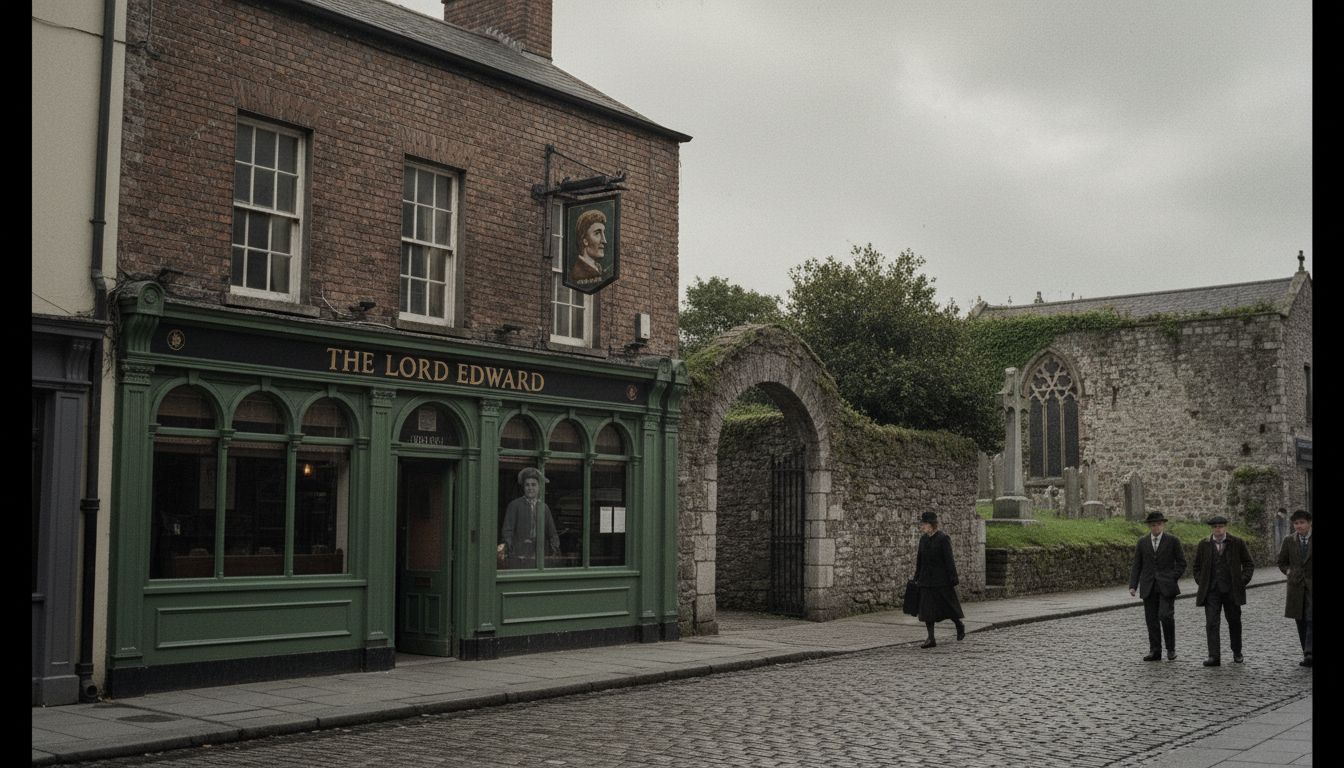
Across from St. Werburgh’s Church in Dublin, the Lord Edward Pub is associated with a local ghost story involving Lord Edward Fitzgerald, an 18th-century aristocrat and Irish revolutionary. According to the account published by Moon Mausoleum on Oct. 24, 2026, visitors and staff have long circulated claims that Fitzgerald’s spirit remains connected to the establishment, which stands near his burial place and bears his name.
Established in 1890, the pub is considerably younger than the rebellion with which Fitzgerald is associated. Its location, however, gives the story a strong historical setting: St. Werburgh’s Church is said to be Fitzgerald’s resting place, placing the pub within sight of a site linked to one of the most prominent figures of the 1798 uprising.
Lord Edward Fitzgerald and the 1798 Rebellion
Fitzgerald was the fifth son of the Duke of Leinster and was raised at Carton House in County Kildare. He served in the British Army, including in the American and West Indian colonies, and later held a seat in the Irish Parliament. The source describes him as becoming increasingly disillusioned with political policies and joining the Society of United Irishmen, a movement that sought major political change and, ultimately, an independent Ireland.
He became involved in planning the failed 1798 rebellion, alongside figures including Robert Emmet, Wolfe Tone and Napper Tandy. Fitzgerald was arrested after being discovered in nearby Thomas Street, where he reportedly resisted the soldiers attempting to take him into custody. Gravely wounded during the confrontation, he was taken to Newgate Gaol and died from his injuries before the rebellion reached its full course.
His burial at St. Werburgh’s helped preserve the connection between Fitzgerald and the surrounding neighborhood. Decades later, the pub’s name would reinforce that association, creating a setting in which historical memory and supernatural tradition could easily become intertwined.
The Alleged Haunting
The story does not describe a dramatic pattern of apparitions or unexplained events. Instead, it presents a more subdued legend: Fitzgerald’s ghost is said to move through the pub as a watchful presence, almost as though continuing to protect the people and cause for which he once fought.
Accounts referenced by Moon Mausoleum include reports of sudden chills and an uncanny atmosphere inside the premises. However, the article provides few specific witness accounts, dates or independently verifiable details. It also does not identify the original source of the haunting claims, making it difficult to establish how long the story has circulated or whether it arose from employees, regular customers or later folklore.
History, Memory and Local Folklore
The Lord Edward story reflects a familiar pattern in haunted-place traditions: a building gains a supernatural reputation through its proximity to a significant death, burial site or historic conflict. In this case, the combination of an old Dublin neighborhood, a nearby churchyard and a revolutionary figure creates a compelling backdrop for stories of unexplained sensations.
There is no publicly established evidence that Fitzgerald’s spirit haunts the pub, and the claims remain part of local folklore rather than documented paranormal fact. Nevertheless, the legend gives the Lord Edward Pub an identity extending beyond its role as a drinking establishment. For visitors, the site offers both a connection to Ireland’s turbulent political past and a ghost story rooted in the enduring memory of a rebel whose final resting place lies just across the street.