Overview
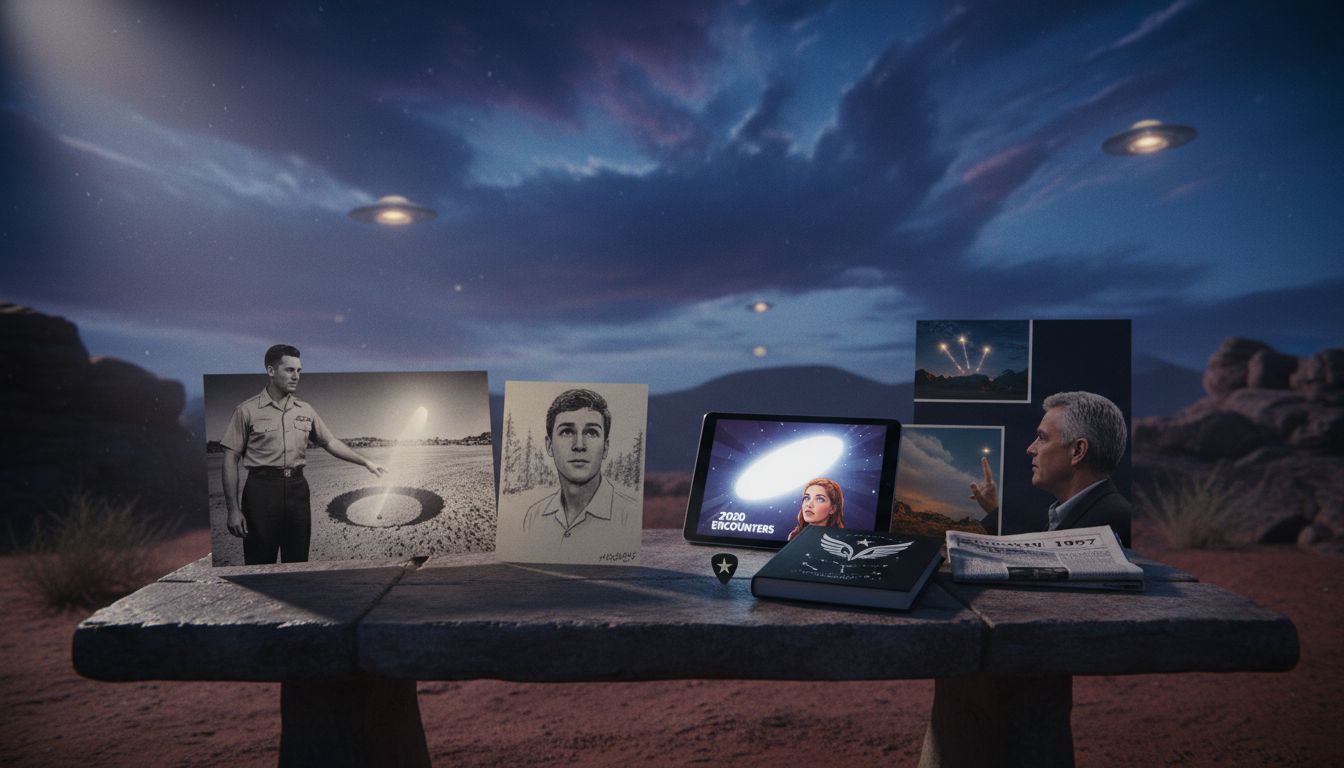
In recent months, the UFO (or UAP) conversation has been buoyed by a series of statements from well‑known individuals spanning the entertainment, aerospace, and political arenas. While the phenomenon has long been the domain of fringe theorists, the public disclosures of former astronaut Gordon Cooper, ex‑President Jimmy Carter, pop star Demi Lovato, musician‑entrepreneur Tom DeLonge, former Arizona governor Fife Symington, and late Senate Majority Leader Harry Reid have added a new layer of mainstream visibility. Their varied accounts—ranging from a 1951 desert landing to a 2020 “close encounter” on a concert tour—illustrate how personal experience, media exposure, and policy advocacy intersect in today’s UAP discourse.
High‑Profile Claims
Gordon Cooper, one of NASA’s original Mercury‑7 astronauts, recounted in a 1970s interview that while serving in the Air Force he observed a metallic disc land in the Nevada desert, describing the craft’s “silent hover” and “bright, pulsating lights.” The claim, made decades after the event, was corroborated only by Cooper’s own testimony, prompting skeptics to note the lack of contemporaneous documentation.
Former President Jimmy Carter publicly disclosed a 1969 sighting of a luminous object near Leary, Georgia, during a routine stop at a gas station. In a 1973 press conference, Carter said the light “behaved in a way that I could not explain,” but later clarified he did not believe it was extraterrestrial. His willingness to discuss the incident, however, underscored the willingness of senior officials to acknowledge unexplained aerial phenomena.
Pop star Demi Lovato entered the conversation in 2020, sharing on social media that a “bright, disc‑shaped light” hovered over their tour bus in Texas. Lovato’s post included a short video clip and a statement that the experience left them “both frightened and fascinated.” While the footage has not been independently verified, the celebrity’s large following amplified the story across mainstream platforms.
Political and Business Figures
Former Arizona governor Fife Symington has long spoken about the 1997 Phoenix Lights—a series of V‑shaped formations observed over the Southwest. In a 2022 interview, Symington described the event as “one of the most compelling pieces of evidence we have,” urging the Senate to allocate funding for systematic study.
Former Senate Majority Leader Harry Reid, who died in 2021, was instrumental in pushing for greater governmental transparency on UAPs. Declassified documents released in 2023 revealed that Reid advocated for a “full‑scale congressional hearing” on the subject, arguing that public trust required openness about any credible sightings. His push helped pave the way for the 2022 Office of the Director of National Intelligence report that acknowledged “multiple unexplained aerial incidents.”
Credibility vs. Publicity
Analysts caution that the credibility of each claim varies widely. Cooper’s military background lends weight, yet the absence of corroborating radar data makes verification difficult. Carter’s status as a former head of state adds gravitas, but his own ambivalence about the sighting tempers its impact. In contrast, Lovato’s and DeLonge’s accounts benefit from extensive media coverage but also attract scrutiny over potential promotional motives—DeLonge’s To The Stars Academy has commercial interests tied to UFO research. Symington and Reid, operating within governmental structures, provide a policy‑oriented lens, yet their statements often serve broader agendas for funding and legislative action.
Shifting Discourse
The aggregation of these high‑profile testimonies reflects a broader shift: UFOs are moving from fringe speculation to a topic with legitimate policy implications. The 2022 ODNI report, the establishment of the All‑Domain Anomaly Resolution Office (AARO), and bipartisan legislative proposals indicate that lawmakers are treating UAPs as a national‑security concern rather than a purely paranormal curiosity. Public figures, whether astronauts, presidents, or pop icons, contribute to a cultural milieu that pressures agencies to disclose information, even as scientific rigor remains the ultimate arbiter of truth.
Outlook
As the U.S. government continues to release classified footage and as congressional hearings loom, the statements from Cooper, Carter, Lovato, DeLonge, Symington, and Reid will likely be revisited with fresh scrutiny. Their varied motivations—personal curiosity, political advocacy, or commercial interest—underscore the complex interplay between credibility and publicity in the evolving UAP narrative. For journalists and researchers, the challenge remains to separate verifiable data from anecdote, ensuring that the public discourse stays grounded in evidence while remaining open to the possibilities that these high‑profile accounts continue to provoke.