Overview
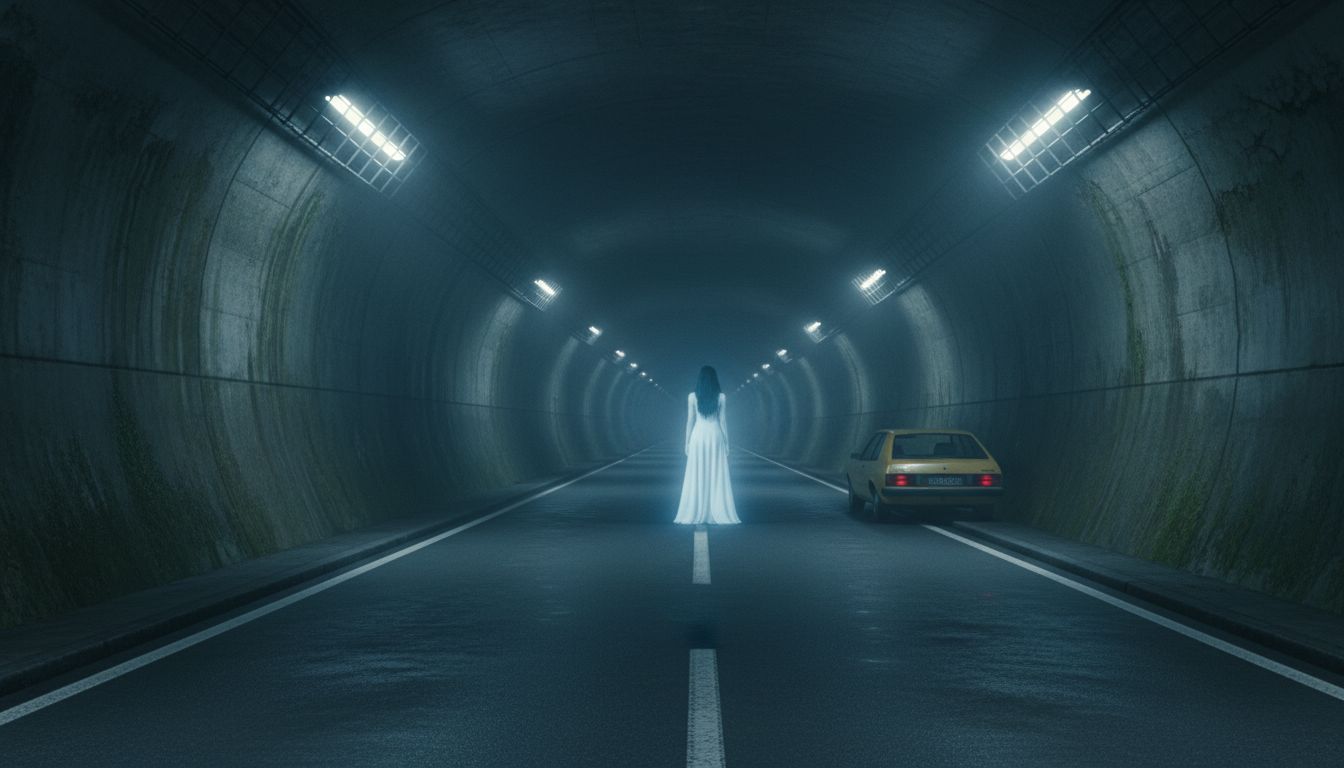
The Belchen Tunnel, a 2‑kilometre stretch of the A2 motorway that cuts through the Jura Mountains between the cantons of Solothurn and Basel‑Landschaft, has been the focus of a persistent Swiss urban legend since the early 1980s. Drivers and hikers alike have reported encounters with a “lady in white” who allegedly appears on the road or inside the tunnel before vanishing without a trace. While the tale enjoys a place in regional folklore, recent inquiries aim to separate documented incidents from mythic embellishment and to determine whether the phenomenon persists today.
Origins of the Legend
The story first entered public awareness in June 1980, when a motorist recounted picking up a male hitchhiker who disappeared from the back seat while the car was traveling at speed through the tunnel. Contemporary newspaper reports described the episode as a “ghostly hitchhiker,” but the incident received little official scrutiny. By January 1981, the narrative had shifted: local newspapers, including the Blick, published accounts of a woman dressed in white haunting the roadway. Retired highway patrolman Armin Gyger later recalled the surge in phone calls, stating, “I had many callers on the phone back then who firmly claimed to have seen a ghost in Eptigen,” though he remained skeptical of the testimonies.
The legend quickly intertwined with the broader mystique of the Belchen Triangle—a trio of peaks (the Belchenflue in Switzerland, the Belchen in the Black Forest, and the Belchen in Alsace) that ancient Celtic peoples used as a solar calendar. Researchers have highlighted the triangle’s geometric alignment with solstices, suggesting a longstanding cultural reverence for the area that may have seeded modern supernatural narratives.
Investigative Findings
Local authorities have conducted limited formal investigations, primarily focusing on traffic safety rather than paranormal verification. Police records from the early 1980s show no corroborating evidence of missing persons or unexplained vehicle incidents linked to the tunnel. Environmental factors—such as military training exercises in the vicinity, which sometimes involve flares, and optical reflections off wet road surfaces—offer plausible explanations for the reported “strange lights” and fleeting silhouettes.
Academic commentary adds further perspective. Dr. Lena Keller, a cultural anthropologist at the University of Basel, notes that “the convergence of a remote, dimly lit tunnel with a region already rich in Celtic symbolism creates a fertile ground for ghost stories. Human perception is especially prone to pattern‑recognition errors in low‑visibility conditions.” Her assessment aligns with the broader understanding that folklore often amplifies isolated anecdotes into communal legends.
Contemporary Accounts
In the two decades since the original reports, the frequency of sightings appears to have declined. A 2024 survey of regular commuters on the A2, conducted by the Swiss Transport Safety Agency (ASTRA), recorded only three anecdotal mentions of a white figure, all describing brief, peripheral glances rather than full apparitions. One driver, who asked to remain anonymous, said, “I saw a flash of white near the tunnel entrance, but it could have been a piece of clothing blown by the wind.” No new police reports have been filed regarding unexplained disappearances or injuries within the tunnel.
Nevertheless, the legend endures in popular culture. Local tour operators now include the “white lady” narrative in night‑drive experiences, and the story is featured on paranormal websites such as Moon Mausoleum, which continues to archive historical accounts and visitor testimonies. The persistence of the tale underscores its role as a cultural touchstone rather than evidence of an ongoing supernatural presence.
Conclusion
While the Belchen Tunnel’s “white lady” remains a compelling piece of Swiss folklore, available evidence suggests that the phenomenon is more a product of historical anecdote, environmental conditions, and the region’s rich Celtic heritage than a verifiable haunting. As Dr. Keller summarizes, “Legends survive because they speak to collective fears and curiosities; they are not necessarily proof of the paranormal.” For now, the tunnel’s reputation rests on the stories told by those who passed through it in the 1980s, and the modern era appears to have quieted the ghostly whispers—at least on the official record.