Overview
A story that has circulated in UFO‑research circles for decades claims that President Richard Nixon once escorted actor Jackie Gleason to a classified area of Homestead Air Force Base in Florida, where the two allegedly viewed the wreckage of a “flying saucer” and the frozen bodies of grey‑skinned, large‑headed humanoids. The encounter is said to have taken place in the mid‑1970s—most accounts point to 1974—while the pair were on a golfing vacation near Miami. Although the narrative lacks corroborating documentation and is widely regarded as anecdotal, it continues to be cited as evidence that U.S. presidents receive “need‑to‑know” briefings on extraterrestrial matters that are deliberately withheld from the public.
The Alleged Nixon‑Gleason Visit
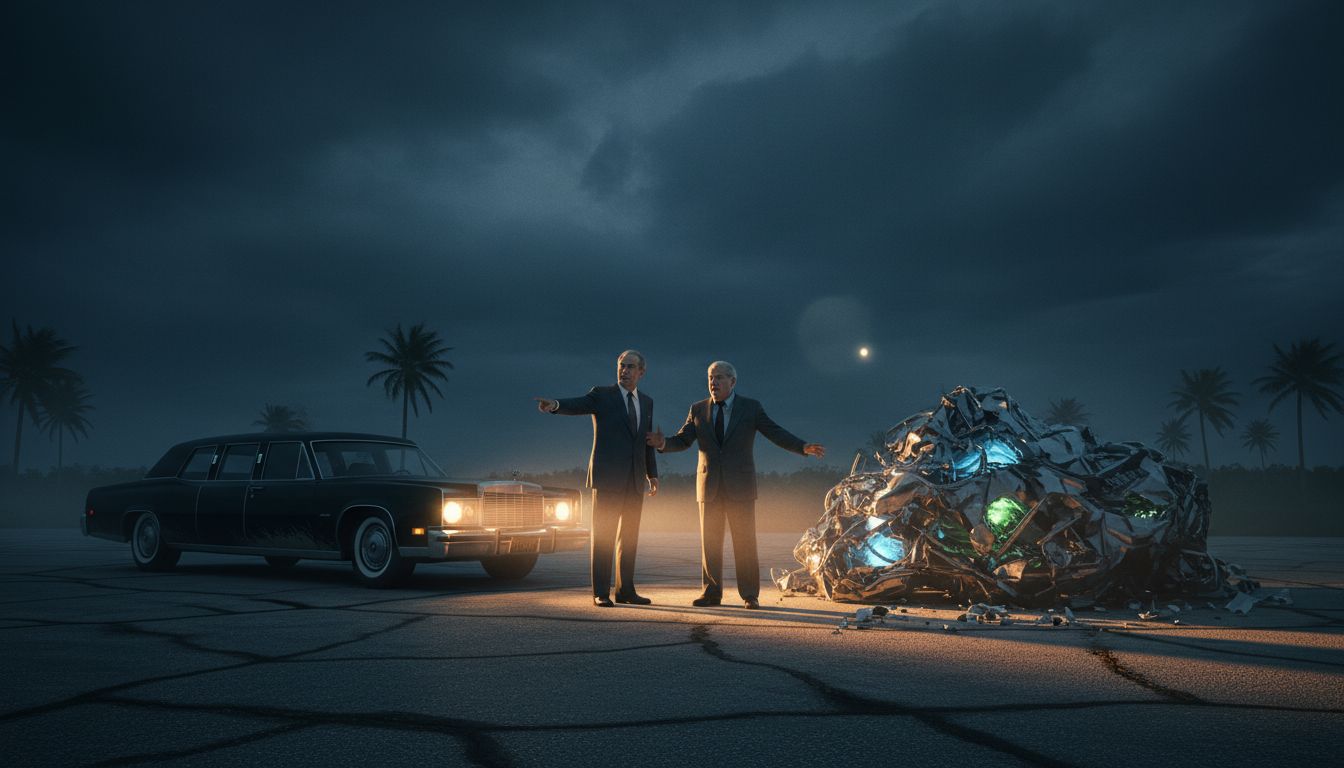
According to the account, Nixon and Gleason left the Inverrary Golf and Country Club after a round of golf and drove privately to Homestead AFB. Inside a restricted‑access hangar, the men were reportedly shown metallic fragments of an alleged UFO crash and three “terribly mangled” alien corpses stored in freezer‑like containers. Gleason, who was known for his interest in the paranormal, is said to have been “deeply shaken” by the sight, later confiding that the experience left a lasting impression. The story first appeared in UFO‑focused publications in the 1990s and was later reproduced on sites such as UFOInsight.com, which includes a still image from a dramatized TV reenactment of the alleged event.
The article acknowledges several inconsistencies—most notably the precise date of the encounter and the absence of any official record or eyewitness testimony beyond the second‑hand narrative. Researchers who have examined the claim note that no declassified Air Force or presidential logs reference a special briefing for Gleason, and the described “freezer‑like containers” have never been identified in any known inventory of military equipment.
Presidential UFO Briefings: A Broader Pattern?
The Nixon‑Gleason story is often presented alongside other alleged presidential UFO disclosures. Former CIA Director George H.W. Bush, who later became president, reportedly told a congressional committee in the early 1990s that he “knows a fair amount” about UFOs because of his intelligence background. Likewise, Jimmy Carter—a former governor of Georgia and a known UFO enthusiast—has been quoted as saying that CIA Director George Bush (then director) told him the UFO files were “need‑to‑know” and therefore unavailable to the president. Carter’s own memoirs recount a “disturbing briefing” that allegedly left him in tears, though the specifics of that briefing remain undisclosed.
These anecdotes contribute to a recurring theme in UFO literature: that successive administrations have been briefed on anomalous aerial phenomena but have been instructed to keep the information tightly compartmentalized. Critics argue that such secrecy could stem from national‑security concerns, such as protecting classified aerospace technology, rather than evidence of extraterrestrial life.
Expert Opinion and Skepticism
UFO scholars and former military officials who have evaluated the Nixon‑Gleason narrative stress the importance of distinguishing documented evidence from folklore. Dr. Stanton Friedman, a noted ufologist who passed away in 2019, described the story as “an intriguing anecdote that lacks the hard evidence required for serious historical analysis.” Former Air Force personnel familiar with Homestead AFB’s security protocols confirm that any civilian—especially a high‑profile celebrity—would have required an extensive background check and a documented escort, none of which appear in the public record.
Conversely, some researchers point to the coincidental timing of the alleged incident with other high‑level UFO investigations, such as the 1973 “Project Blue Book” closure and the 1975 “Majestic‑12” documents that surfaced in the public domain. They argue that the convergence of these events suggests a “pattern of selective disclosure” that merits further archival research.
Implications and Future Inquiry
If the Nixon‑Gleason account were substantiated, it would reinforce the notion that U.S. presidents receive limited, highly classified briefings on unidentified aerial phenomena, potentially because the information could have profound geopolitical or existential ramifications. However, the current lack of verifiable evidence means the story remains in the realm of speculation and conspiracy theory.
Researchers continue to request the declassification of presidential UFO files under the Presidential Records Act and the Freedom of Information Act, arguing that transparency could either confirm or dispel long‑standing rumors. Until such documents are released, the Nixon‑Gleason narrative will likely persist as a cautionary tale about the challenges of separating fact from fiction in the ongoing debate over UFOs, national security, and the limits of presidential knowledge.


