Overview
Investigative journalist Leslie Kean sat down with host Peter Skafish on the Sol Forum to trace the “disclosure era” that has emerged around unidentified aerial phenomena (UAP). Kean argues that today’s surge of official acknowledgment rests on a decades‑long, largely hidden effort by government officials, journalists, and researchers. She points to a series of high‑profile incidents, persistent Freedom of Information Act (FOIA) pushes, and internal memos that together form a “paper trail” of acknowledgment, even as many details remain classified or deliberately omitted.
Historic Crashes and Legal Battles
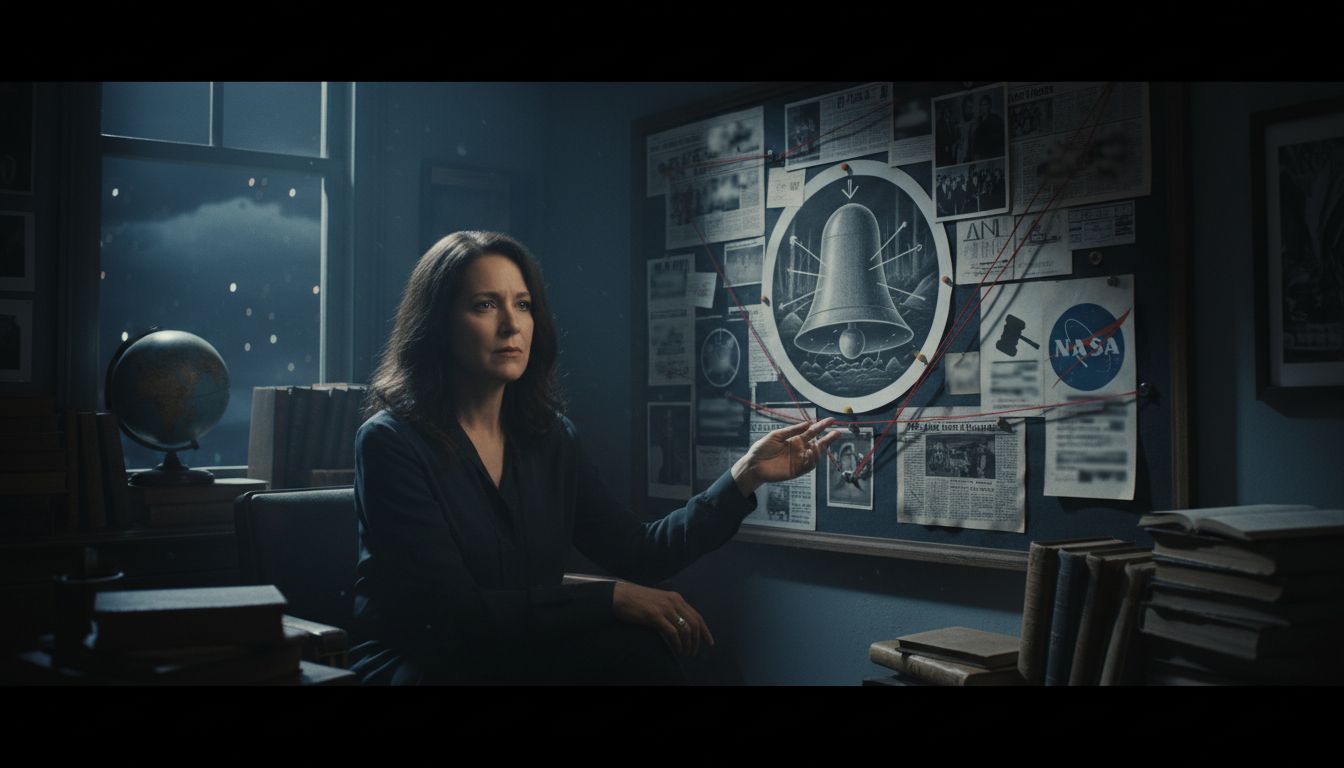
One of the earliest keystones in Kean’s narrative is the 1979 Kecksburg incident in Pennsylvania, where witnesses reported a fireball and a metallic object that allegedly crashed in a wooded area. Kean notes that a lawsuit filed against NASA in the early 1980s sought access to the agency’s investigative files, claiming that the government had retrieved the craft and concealed evidence. Although the suit was ultimately dismissed, the case revealed “multiple eyewitnesses, an unidentified object, and missing files” that continue to be cited by researchers as proof of a genuine crash retrieval. Kean emphasizes that the Kecksburg case set a precedent for later legal and investigative actions aimed at uncovering hidden material.
Government Archives and FOIA Efforts
Kean highlights several internal government initiatives that have gradually opened the archives. In 2022, John Podesta’s FOIA push resulted in the release of a handful of declassified documents, including the Bolender memo, which acknowledges that the Department of Defense was still receiving civilian UFO reports in the 1990s. Former Senate Majority Leader Harry Reid’s push for the Advanced Aerospace Threat Identification Program (AATIP) and its successor AASWAP led to the eventual public release of video footage and a limited inventory of recovered materials. Kean points out that these releases often contain “quiet references to ‘classic’ UFO cases”—a term used internally to denote incidents predating the modern UAP terminology—suggesting that the government has long been aware of a broader phenomenon.
Deep Secrecy and Recent Revelations
The conversation also turned to the depth of secrecy surrounding UAP investigations. Kean cites the Wilson memo, a classified internal document that outlines a covert program tasked with “monitoring and analyzing anomalous aerial events” while restricting dissemination to a narrow audience. She explains that her decision to publish former intelligence officer David Grusch’s allegations was not taken lightly; the story was cross‑checked against findings from an Office of the Inspector General (IG) investigation and corroborated by multiple independent sources. Kean stresses that the U.S. approach has been characterized by “systemic denial,” contrasting sharply with the openness displayed by other nations.
International Contrast and Outlook
Kean underscores that not all governments follow the United States’ pattern of secrecy. Chile, for example, operates an official UAP office within its civil aviation authority, regularly publishing reports and inviting public participation. This transparency, she argues, provides a useful benchmark for what a public‑first disclosure model could look like. As Kean concludes, the current “disclosure era” is the product of “quiet, sustained work” over decades, and its future will likely depend on continued pressure from journalists, legislators, and the public to move from selective releases to a comprehensive, accountable accounting of UAP encounters.