Overview
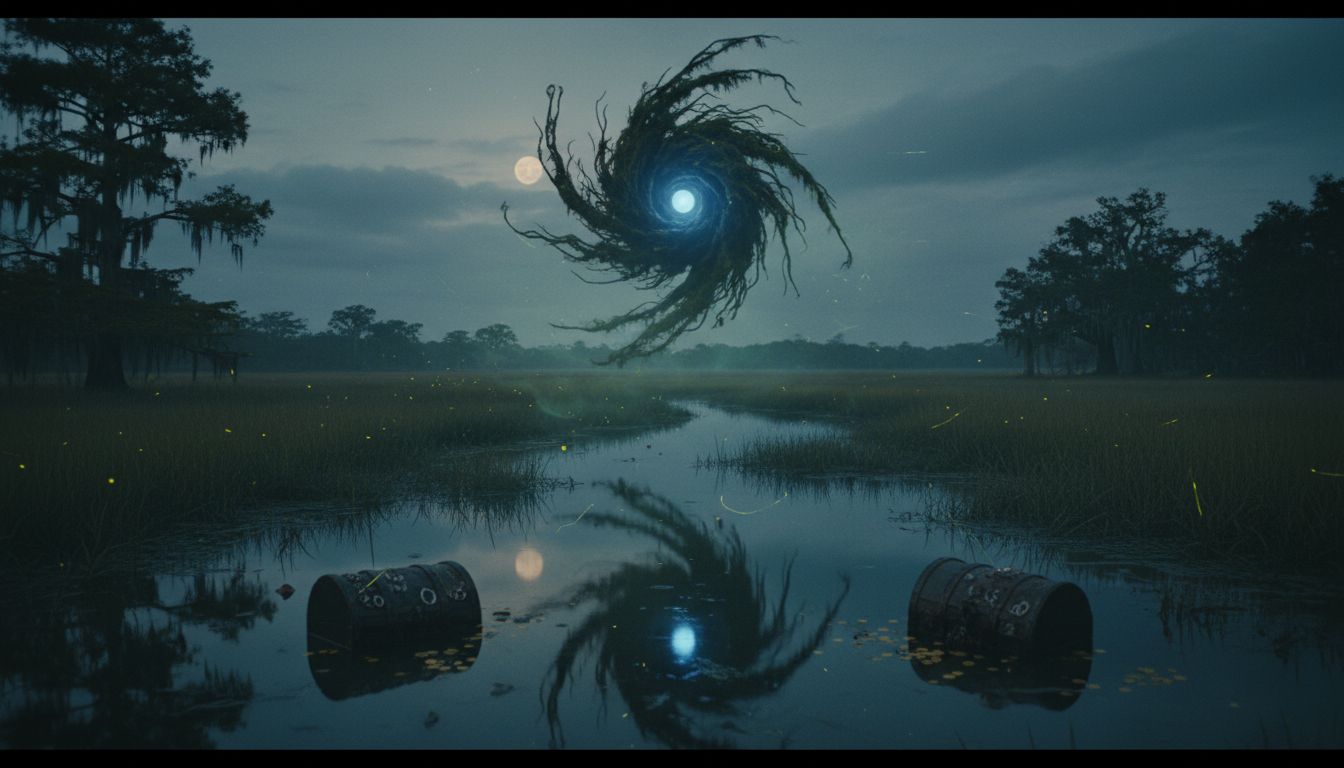
The Plat‑Eye has resurfaced in recent conversations among Gullah Geechee communities across the Lowcountry of South Carolina and Georgia. Described as a shapeshifting spirit—or “haint”— the entity is said to haunt swamps, dense woods, graveyards, and isolated roadways, appearing either with a single, luminous eye the size of a plate or with a pair of blood‑red, plate‑sized eyes. Folklorists link the creature to themes of death, moral transgression, and concealed treasure, positioning it alongside other regional legends such as the Boo Hag and the Gray Man.
Folkloric Roots
The Plat‑Eye emerges from the Gullah Geechee oral tradition, a body of stories that blends West African spiritual concepts with the lived realities of enslaved peoples and their descendants in the coastal marshes. Dr. Maya Johnson, a professor of African‑American folklore at the University of South Carolina, notes that “the Plat‑Eye reflects a cultural mechanism for warning against wrongdoing—whether it be theft, betrayal, or disrespect of sacred spaces.” The creature’s name itself evokes the notion of a “watchful plate,” a metaphor for an unblinking sentinel that guards hidden wealth or the boundary between the living and the dead.
Reported Encounters
First‑hand accounts of the Plat‑Eye have been collected in oral histories from the Sea Islands and inland Lowcountry towns. One elder from St. Helena Island recounted a night in 1992 when a lone traveler on a moonless road heard a low humming, then saw a glowing eye hovering just above the pine needles before the creature vanished into a black‑tailed raccoon with a conspicuous limp. In another story from Savannah County, a fisherman claimed the spirit morphed into a deer with a missing antler, leading him to a shallow riverbank where a rusted, iron‑bound chest was later uncovered—an anecdote that reinforces the legend’s association with hidden treasure. While such narratives vary in detail, they share common motifs: a single, unnaturally bright eye; animal transformations marked by physical defects; and an ominous sense of being watched.
Protective Practices
Within Gullah households, the Plat‑Eye is traditionally warded off with gunpowder and sulfur—materials believed to repel malevolent spirits. Historical accounts describe families sprinkling a mixture of black powder and powdered sulfur around doorways and along the perimeters of burial grounds. “The sulfur’s pungent smell was thought to disrupt the spirit’s ability to manifest,” explains folklorist Samuel Greene of the Lowcountry Folklife Center. In addition to these chemical deterrents, community members often invoke blue paint—the same “haint‑blue” used against the Boo Hag—to create a visual barrier that confuses spirits that cannot cross water or sky‑colored surfaces.
Cultural Significance
The Plat‑Eye functions as more than a spooky campfire tale; it encapsulates the Gullah Geechee people’s relationship with the land, the sea, and the moral order that governs both. By linking the creature to wrongdoing and the protection of hidden resources, the legend reinforces communal norms around honesty, respect for burial sites, and stewardship of the natural environment. Moreover, its persistence in contemporary storytelling—whether shared at family gatherings, local festivals, or university folklore courses—demonstrates the adaptability of Gullah oral tradition in the face of modernization.
As scholars continue to document Lowcountry folklore, the Plat‑Eye remains a vivid example of how mythic figures serve as cultural mirrors, reflecting anxieties, values, and the enduring mystery of the marshes that have shaped Gullah Geechee identity for generations.