Overview
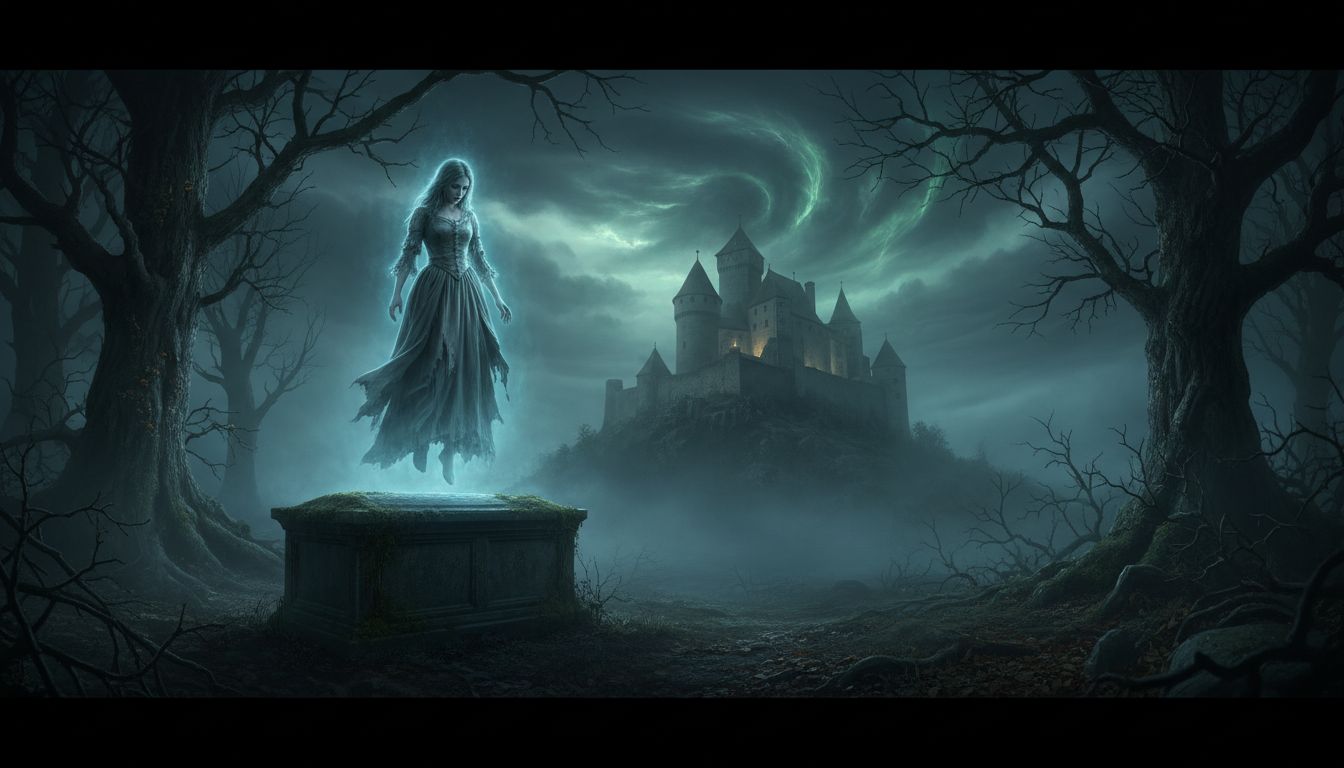
A centuries‑old stone fortress perched above the Aare River has become the backdrop for a haunting that blends documented history with local folklore. Wildegg Castle, a Habsburg‑era stronghold in the Swiss canton of Aargau, is linked to the tragic story of French Countess Marie Louise St. Simon‑Montleart (1763‑1804). According to a recent feature on the Moon Mausoleum website, the countess was buried in a forest clearing near the castle and is said to return as a spectral guardian of her grave. The legend, described by locals as the “queen of Wildegg Castle,” has turned a personal tragedy into a fairy‑tale haunting that attracts both historians and paranormal enthusiasts.
Historical Background
Wildegg Castle dates to around 1200, when the powerful Habsburg family erected the hilltop stronghold on the Chäschtebärg ridge near Möriken‑Wildegg. Over the ensuing eight centuries the fortress survived regional wars, changed hands among noble families, and was renovated in Renaissance and Baroque styles. Its strategic position above the Aare River made it a key defensive site, while its later role as a noble residence turned it into a cultural landmark. The castle’s long‑standing presence provides a credible setting for the later 18th‑century episode involving a French exile.
The Countess and Her Flight
Marie Louise St. Simon‑Montleart was born into Parisian aristocracy and married Louis Marie de Montléart, a French noble whose interests reportedly lay more in hunting and feasting than in marital devotion. As the French Revolution intensified, the countess fled the turmoil, seeking refuge with her close friend Baroness Sophie von Effinger, whose family seat was Wildegg Castle. Contemporary records confirm that several French émigrés settled in the Swiss countryside during the 1790s, but details of Marie Louise’s personal life remain sparse. She died in 1804, and local tradition holds that she was interred in a modest grave deep within the forest surrounding the castle, a location that later became the focal point of the ghost story.
The Legend of the Haunting
The narrative that emerged in the 19th‑century oral tradition describes the countess as a “queen” who roams the woods at night, protecting her resting place from disturbance. Witnesses claim to have heard soft footsteps, seen a faint luminous figure among the trees, or felt an inexplicable chill near the burial site. Moon Mausoleum’s article notes that the tale “turns a true tragedy into a fairy‑tale haunting,” emphasizing the blend of fact and folklore. While no empirical evidence has substantiated the paranormal claims, the story has been perpetuated through guided tours and regional ghost‑story compilations, reinforcing the castle’s mystique.
Local Perspectives and Cultural Impact
Swiss historian Dr. Hans Keller of the Aargau Historical Society remarks, “The Wildegg episode illustrates how exile narratives can become woven into local legend, especially when a dramatic setting like this castle is involved.” The local tourism office acknowledges the legend’s draw: “We receive a noticeable increase in visitors during the autumn months, many of whom are specifically interested in the ‘queen of Wildegg’ story.” Meanwhile, folklorist Elena Bianchi cautions against sensationalism, adding that “such legends serve as cultural memory, preserving the emotional truths of displacement even when the supernatural elements remain unverified.”
Conclusion
The tale of Marie Louise St. Simon‑Montleart exemplifies the intersection of historical migration, personal sorrow, and community storytelling. While archival documents confirm her exile and burial near Wildegg Castle, the spectral aspects belong firmly to the realm of legend. As the castle continues to welcome scholars, tourists, and curious onlookers, the story endures—reminding us that history often lives on not only in stone and record, but also in the whispered narratives that give places a haunting, human dimension.