Overview
A centuries‑old legend about a grieving gatekeeper has resurfaced in Basel’s cultural discourse after being featured on the Moon Mausoleum website on 20 January 2026. The story recounts how the gatekeeper of the now‑demolished Rhine Gate lost his four‑year‑old daughter in the river, sought a burial beside her, and was denied consecrated ground after the community labeled his death a suicide. According to the legend, his spirit is condemned to linger in the shadows, able to visit his daughter’s grave only from the darkness of the night. While the narrative contains supernatural elements, local historians note that it reflects documented burial customs and social attitudes of 17th‑century Basel.
Historical Context
Basel’s medieval fortifications once featured a series of gates and towers that regulated traffic across the Rhine. The Rhine Gate on the Grossbasel side guarded the Mittlere Brücke, a bridge whose origins date to 1223 and which remains a central symbol of the city. The gate itself was dismantled in 1839, but its memory persists in municipal archives and folklore collections. Contemporary research indicates that gatekeepers were municipal employees responsible for monitoring bridge traffic, collecting tolls, and maintaining order. Their positions were respected, yet the role also attracted individuals of varied reputation, as the legend’s reference to a “drunken gatekeeper” suggests.
The Legend
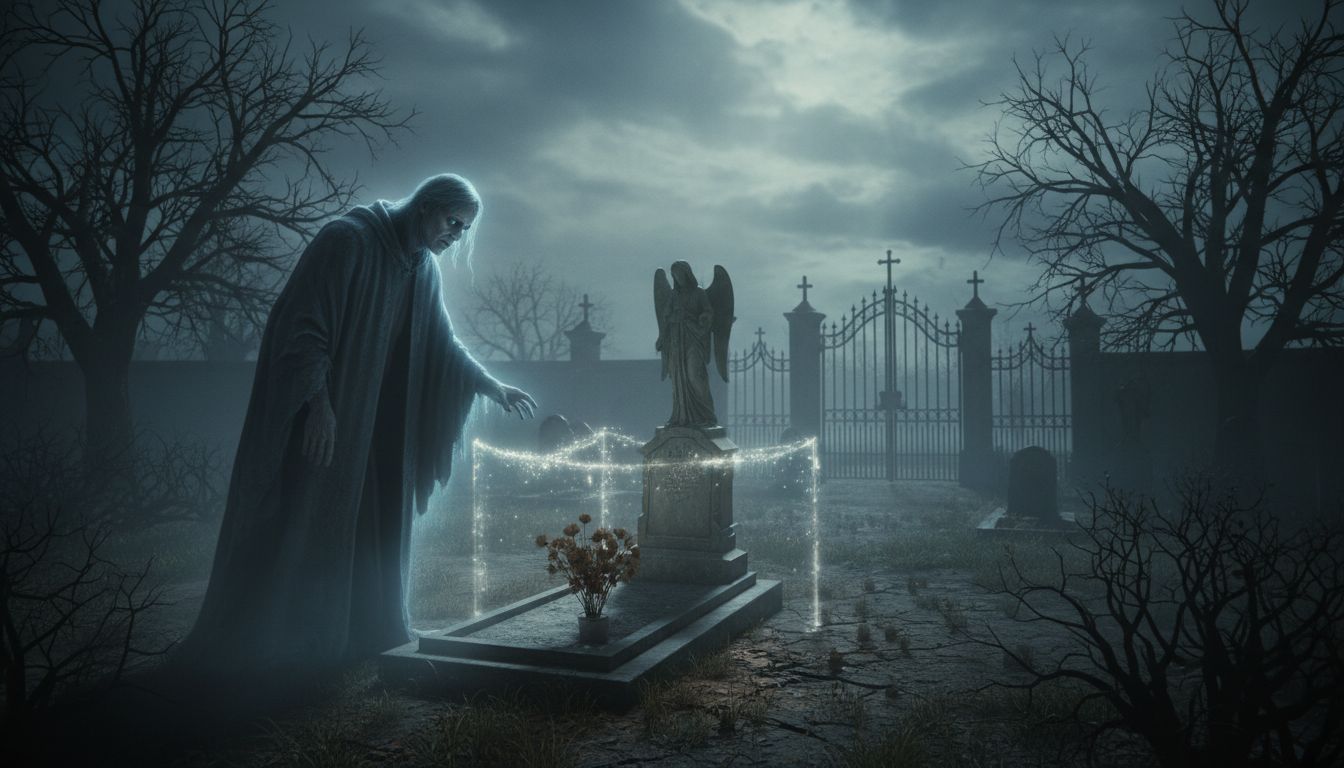
According to the Moon Mausoleum account, the gatekeeper’s daughter fell into the Rhine while playing near the bridge’s edge. The father, described as “deep in his cups,” was unable to rescue her. The tragedy allegedly led the gatekeeper to take his own life shortly thereafter. Because the town council classified his death as suicide, he was denied burial in consecrated ground, a common practice in early modern Europe that reserved churchyards for those deemed to have died in good standing. Instead, his remains were interred in an unconsecrated plot, and the legend holds that his spirit remains bound to the area, only able to appear at his daughter’s grave under the cover of night.
Local archivist Dr. Lena Keller of the Basel Historical Museum, who has examined municipal death registers from the 1600s, confirms that “records do show a number of cases where individuals labeled as suicides were excluded from church burial, often leading to marginal burial sites on the city’s periphery.” While no specific name appears in surviving documents that matches the legend’s description, the pattern aligns with known practices of the period.
Contemporary Significance
The tale has become a staple of Basel’s ghost‑tour circuit, featured alongside other regional legends such as the “silver bell” of the Basel Minster, which is said to have sunk into the Rhine after the 1356 earthquake. Tour operators cite the gatekeeper’s story as an illustration of “the city’s layered history of tragedy and resilience.” In addition, the Moon Mausoleum article links the legend to a broader European tradition of restless guardians, prompting comparative studies by folklorists.
A recent interview with Markus Schmid, director of the Basel Night Walks organization, revealed that “visitors are drawn to the emotional core of the story—the father’s loss and the community’s punitive response—rather than the supernatural details alone.” The narrative is also being examined by sociologists interested in how historic attitudes toward mental health and suicide continue to influence modern perceptions of heritage sites.
Interpretation
Scholars caution against taking the legend at face value, emphasizing that folklore often serves as a vehicle for communal values. The gatekeeper’s story underscores the intersection of personal grief, social stigma, and religious doctrine in early modern Swiss society. By denying a consecrated burial, the city not only reflected theological views on suicide but also reinforced social boundaries. Today, the legend invites reflection on how contemporary societies treat mental health crises and honor the dead.
As Basel prepares for the upcoming “Rhine Heritage Festival” later this year, organizers plan to include a panel discussion on the gatekeeper legend, featuring historians, ethicists, and mental‑health advocates. The inclusion signals a shift from purely sensational storytelling toward a nuanced exploration of how historic narratives can inform present‑day cultural and ethical dialogues.