Overview
In Richmond’s historic Hollywood Cemetery, a sprawling Victorian‑era necropolis that holds the remains of Confederate generals, U.S. presidents and thousands of local families, an enduring urban legend persists: the “Richmond Vampire” is said to haunt the marble mausoleum of William Wortham Pool. While the story has long been a staple of ghost tours, a newer version links the vampire myth to the tragic 1925 Church Hill Tunnel collapse, intertwining two of the city’s most haunting historical episodes.
Historical Context
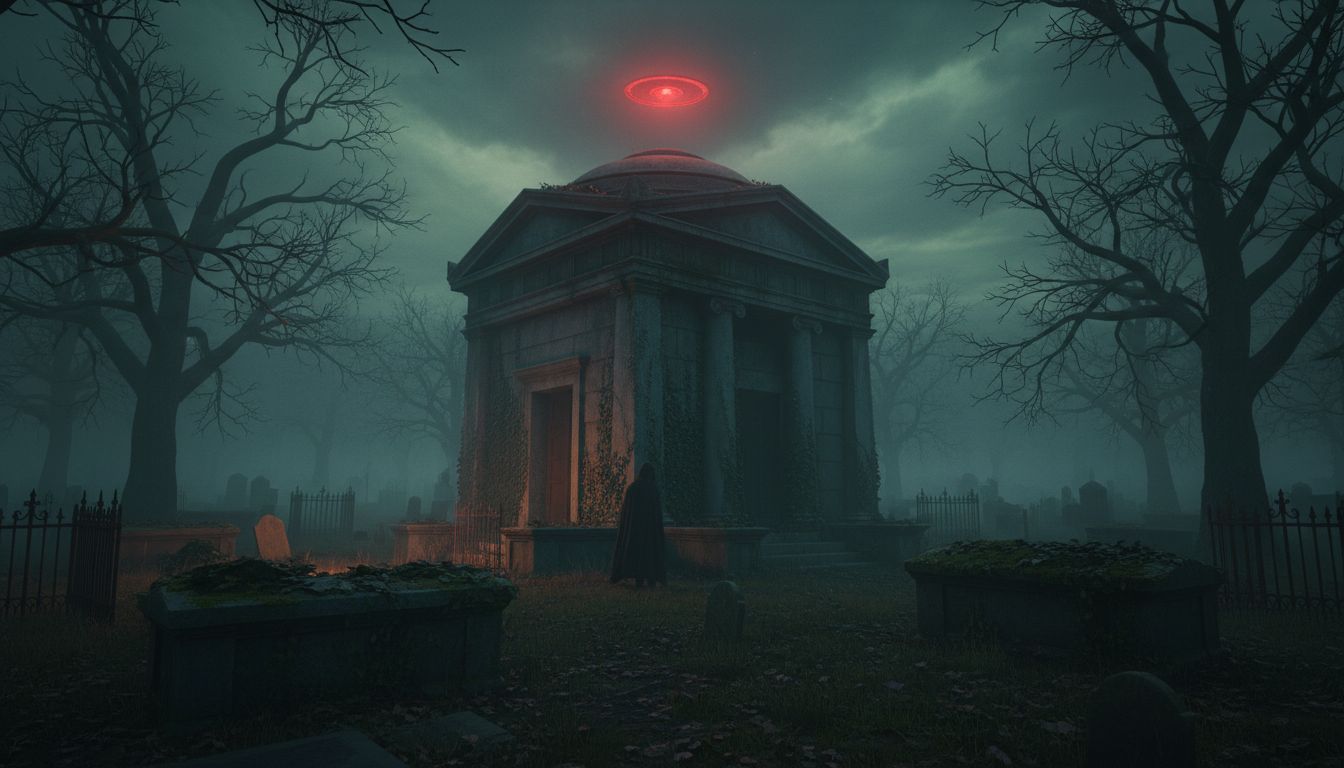
Hollywood Cemetery was established in 1847 as a “rural garden cemetery,” a design meant to combine solemn remembrance with natural beauty. The W.W. Pool mausoleum, erected before the Civil War, stands out for its eclectic mix of Masonic and Egyptian motifs, a stylistic choice that was fashionable among affluent Victorians seeking to convey permanence and mystery. William Wortham Pool himself was a Richmond businessman who died in 1922; his tomb bears the date “1913,” an inconsistency that has fueled speculation for decades. According to Dr. Emily Carter, professor of Southern history at Virginia Commonwealth University, “the unusual symbols and the date discrepancy are typical of the kind of material culture that gives rise to folklore, especially when official records are sparse.”
The Mausoleum and the Vampire Legend
Local lore paints Pool as more than a mere mortal. Early versions of the tale describe him as an 18th‑century English exile condemned for “vampirism,” while later retellings portray him as a practitioner of dark arts who achieved unnaturally long life. The mausoleum’s sealed interior allegedly contained a broken glass shard, prompting the question of how a vampire could have entered or exited the crypt. Tour guides on the cemetery’s “Night of the Spirits” walk often point to the tomb’s initials—“WW”—which, according to some storytellers, resemble fanged teeth. The creature is colloquially dubbed the “Richmond Vampire” or “Hollywood Vampire,” and folklore claims it emerges only on moonless nights, a motif that echoes classic vampire mythos.
The Church Hill Tunnel Connection
The legend acquired a fresh layer in the 2020s when a popular social‑media video linked the vampire to the Church Hill Tunnel collapse of 1925, one of Richmond’s deadliest engineering disasters. The tunnel, part of a rail line beneath Church Hill, caved in while workers were attempting repairs, killing 13 men. Some retellings suggest that the vampire, angered by the tragedy, now roams the cemetery seeking vengeance or solace. Cemetery caretaker James “Jim” Harper, who oversees daily maintenance, remarks, “The tunnel story is a recent addition, but it resonates because both sites represent loss and the unknown. It’s a way for the community to personify grief.” Historians, however, caution against conflating unrelated events; as archivist Linda Morales notes, “There is no documentary evidence tying Pool or his mausoleum to the tunnel collapse. The connection is a modern narrative device rather than a factual link.”
Perspectives and Cultural Impact
Scholars agree that the Richmond Vampire serves as a cultural touchstone, reflecting the city’s complex relationship with its past. Folklorist Dr. Aaron Whitfield explains, “Legends like this allow residents to negotiate historical trauma—civil war, industrial accidents, and changing social mores—through a supernatural lens.” The story also boosts local tourism, drawing curious visitors to Hollywood Cemetery’s winding avenues and prompting preservation efforts for the aging mausoleum. While the vampire remains firmly in the realm of folklore, its persistence underscores how historic sites can inspire imagination, especially when enigmatic architecture and tragic events intersect.