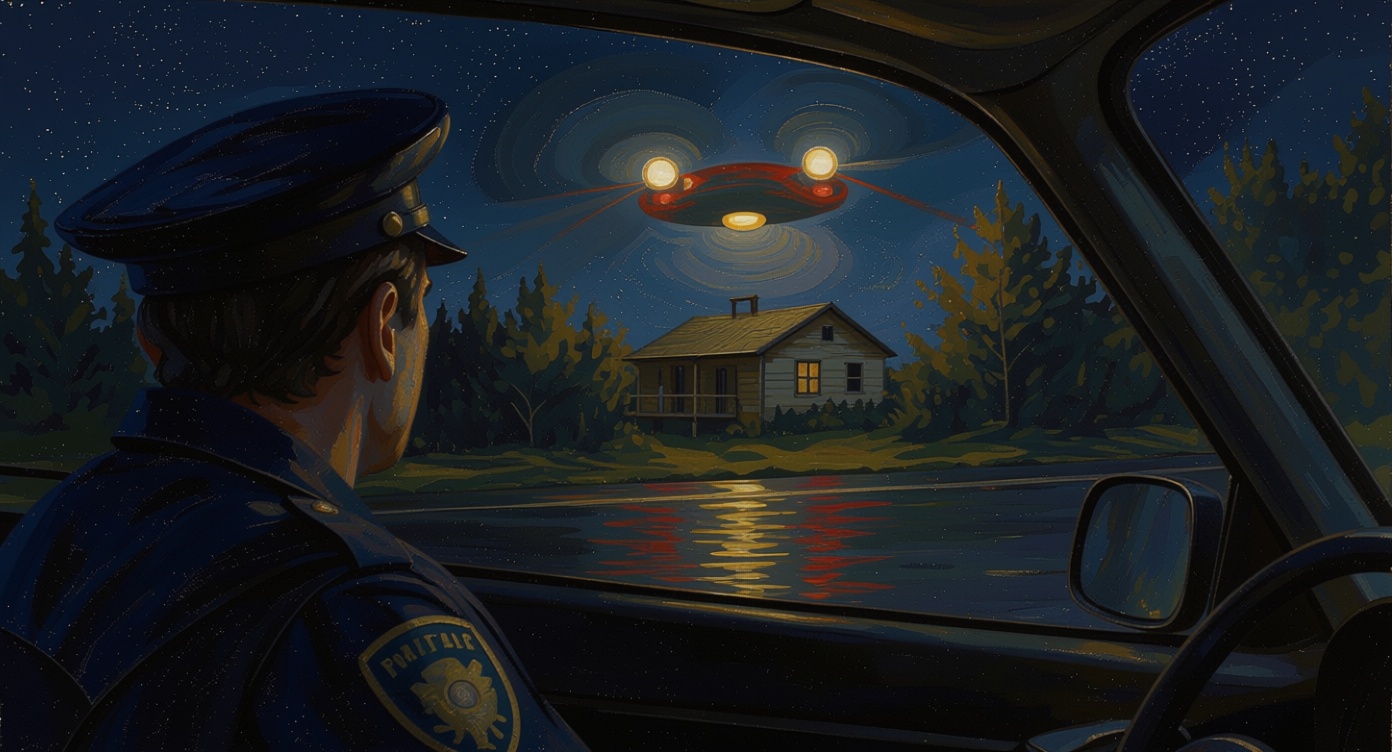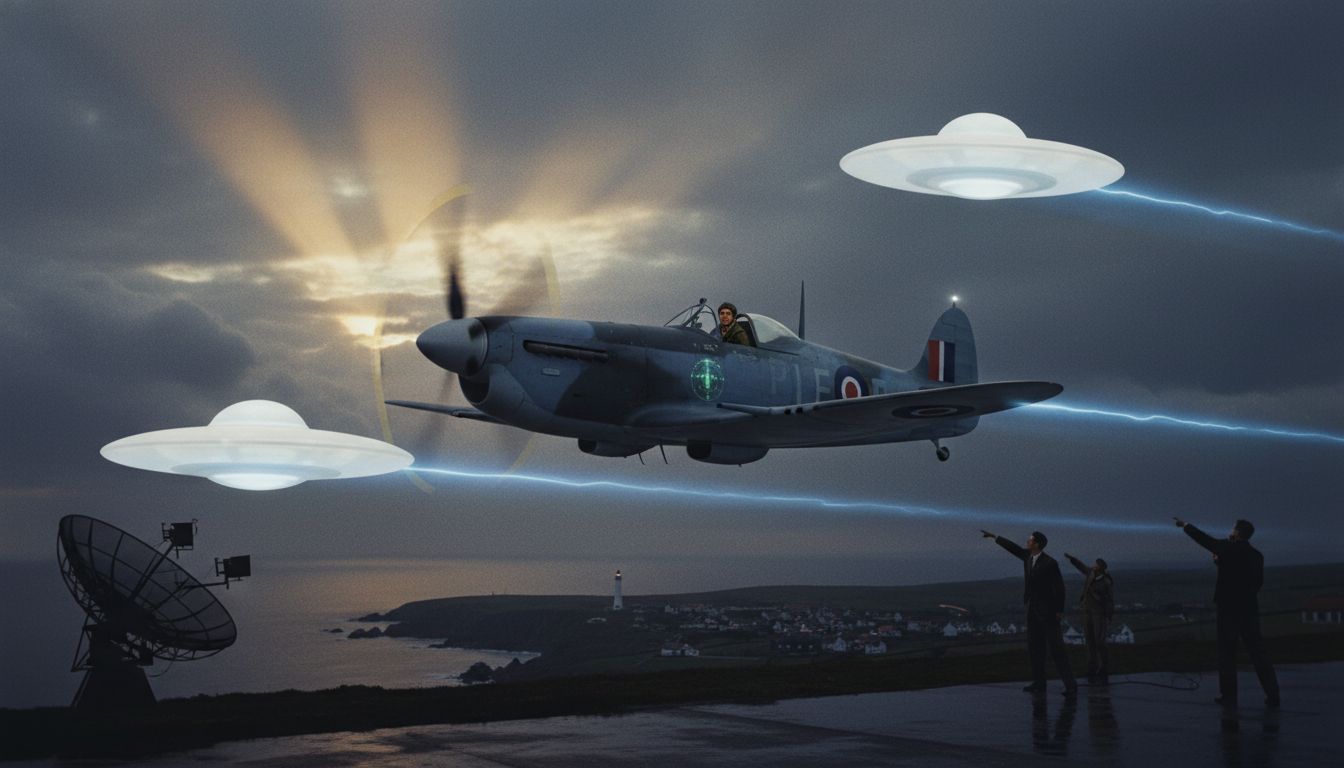
On the evening of 31 August 1954, Lieutenant J. A. O’Farrell of the Royal Australian Navy was returning to the base at Nowra, New South Wales, when his Sea Fury fighter encountered two bright objects that would later be described as “the best radar‑visual UFO case on record.” At approximately 19:10 hours the pilot reported a luminous point crossing his flight path directly ahead of the aircraft. Within seconds a second light appeared on his nine‑o’clock side, swept past the cockpit and then settled in the same position as the first. O’Farrell later recalled that the objects moved “by far the fastest I have ever witnessed,” a claim reinforced by the speed at which they kept pace with his aircraft before accelerating away in a sudden, unexplained burst.
The visual sighting was corroborated in real time by the control tower at RAN Air Station Nowra. Radar operators on duty reported two distinct contacts that matched the pilot’s description, appearing on their scopes at the same bearings and disappearing almost as quickly as they had emerged. The simultaneous visual‑radar correlation was unusual for the period; most contemporary reports involved either a single line‑of‑sight observation or a radar blip lacking a visual counterpart. The Nowra incident therefore attracted immediate media attention, reaching the front page of local newspapers within weeks and prompting the Australian Navy to open an internal inquiry.
The case resurfaced in the 1970s when noted UFO researcher Dr. J. Allen Hynek, then a consultant to the U.S. Air Force’s Project Blue Book, interviewed O’Farrell for the first time. Hynek’s notes, later released to Australian investigator Bill Chalker, emphasize the pilot’s credibility: O’Farrell was an experienced combat aviator with thousands of flight hours and no prior interest in UFO phenomena. Hynek wrote that the encounter “defies conventional explanation” and placed it among the handful of radar‑visual sightings he could not dismiss. In 1982 the Australian Navy declassified its original file at Chalker’s request, and in 1984 Hynek’s interview transcript was added to the public record, allowing researchers to piece together a fuller chronology of the event.
Despite the compelling evidence, the incident was quietly sidelined by official channels. Internal memos from the Navy indicated a desire to “hush it all up,” reflecting a broader Cold War‑era tendency to suppress anomalous reports that might attract public scrutiny or suggest gaps in national air‑defence capabilities. Nevertheless, the documentation survived and has been cited in subsequent scholarly assessments of military UAP encounters. Aviation historian Peter Davenport notes that the Nowra case “remains a benchmark for evaluating the reliability of radar‑visual reports because it combines an experienced pilot, contemporaneous radar data, and independent ground confirmation.”
Today, more than seventy years after the sighting, the Sea Fury encounter continues to be referenced in discussions of unexplained aerial phenomena. While the objects have never been identified as conventional aircraft, weather balloons, or known astronomical sources, the case endures as a rare example where visual, radar, and testimonial evidence converge without a satisfactory technical explanation. As Dr. Hynek concluded in his final assessment, the incident “stands as one of the most credible unexplained radar‑visual UFO cases on record,” underscoring both the enduring mystery of such encounters and the importance of rigorous documentation in any future investigations.