Overview
The Icelandic legend of Sels‑Móri, also known as the Ghost of Þorgarður, describes a curse that allegedly afflicted a single family for nine generations during the 18th and 19th centuries. According to oral tradition recorded by 17th‑century folklorists, the spirit targeted the women of the lineage, driving each to bouts of madness that were attributed to the unseen presence. While the tale bears the hallmarks of classic folklore, scholars note that it reflects broader shifts in Icelandic supernatural belief—from early Norse concepts of protective fylgja to later, more punitive hauntings.
Historical Context
The term fylgja (plural fylgjur) appears in medieval Icelandic texts as a “attending spirit” linked to an individual’s fate. Early accounts portray the fylgja as a tangible, sometimes animal‑like companion that could guide or protect its host. By the 1600s, however, the Christianization of Iceland and the rise of superstition transformed these entities into malevolent forces. Folklorist Jón Jónsson, cited in recent research, observed that “the shift from beneficent to vengeful spirits mirrors the societal anxiety of a community grappling with loss and disease.” The Sels‑Móri story fits this later pattern, portraying the spirit as an active agent of misfortune.
The Legend of Sels‑Móri
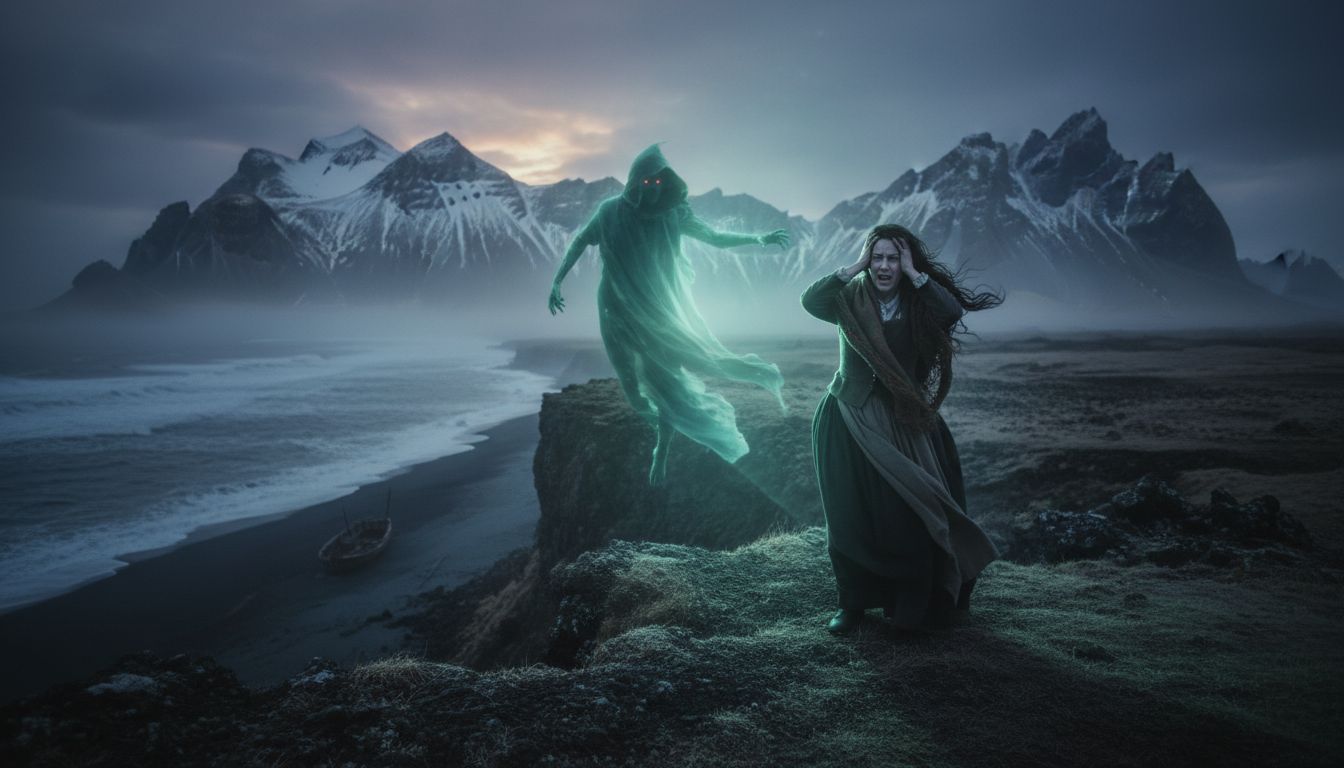
According to the collected narrative, the curse began with a farmer named Þorgarður in the village of Sel. After a dispute—variously described as a broken promise or an unavenged grievance—Þorgarður’s fylgja allegedly manifested as a pale, shrouded figure known as Móri. The spirit is said to have attached itself to the female line of Þorgarður’s descendants, appearing at night, whispering in the dark, and inducing “a fever of the mind” that culminated in insanity. Each successive generation reportedly experienced similar episodes, reinforcing the belief in a hereditary haunting that persisted until the late 1800s.
Cultural Interpretation
Researchers of Icelandic folklore emphasize that generational hauntings often serve as allegories for social tensions, such as inheritance disputes or the marginalization of women. Dr. Helga Björnsdóttir of the University of Reykjavík explains, “The focus on women in the Sels‑Móri tale may reflect historic anxieties about matrilineal inheritance and the limited agency of women in rural Iceland.” Moreover, the story’s endurance across the country illustrates how oral traditions adapt to local contexts while preserving core motifs—here, the fylgja as a punitive, family‑bound specter.
Modern Perspective
Today, the Sels‑Móri legend is cataloged alongside other Icelandic ghost narratives on sites like Moon Mausoleum, which aim to preserve cultural heritage rather than sensationalize it. Historians caution against taking the accounts at face value, noting the lack of contemporaneous documentation and the tendency of oral tales to evolve over time. Nonetheless, the legend offers valuable insight into how Icelandic communities historically interpreted unexplained mental illness and misfortune, attributing them to a tangible, if supernatural, cause. As Dr. Björnsdóttir remarks, “Understanding these stories helps us trace the intersection of belief, gender, and social stress in Iceland’s past.”