Overview
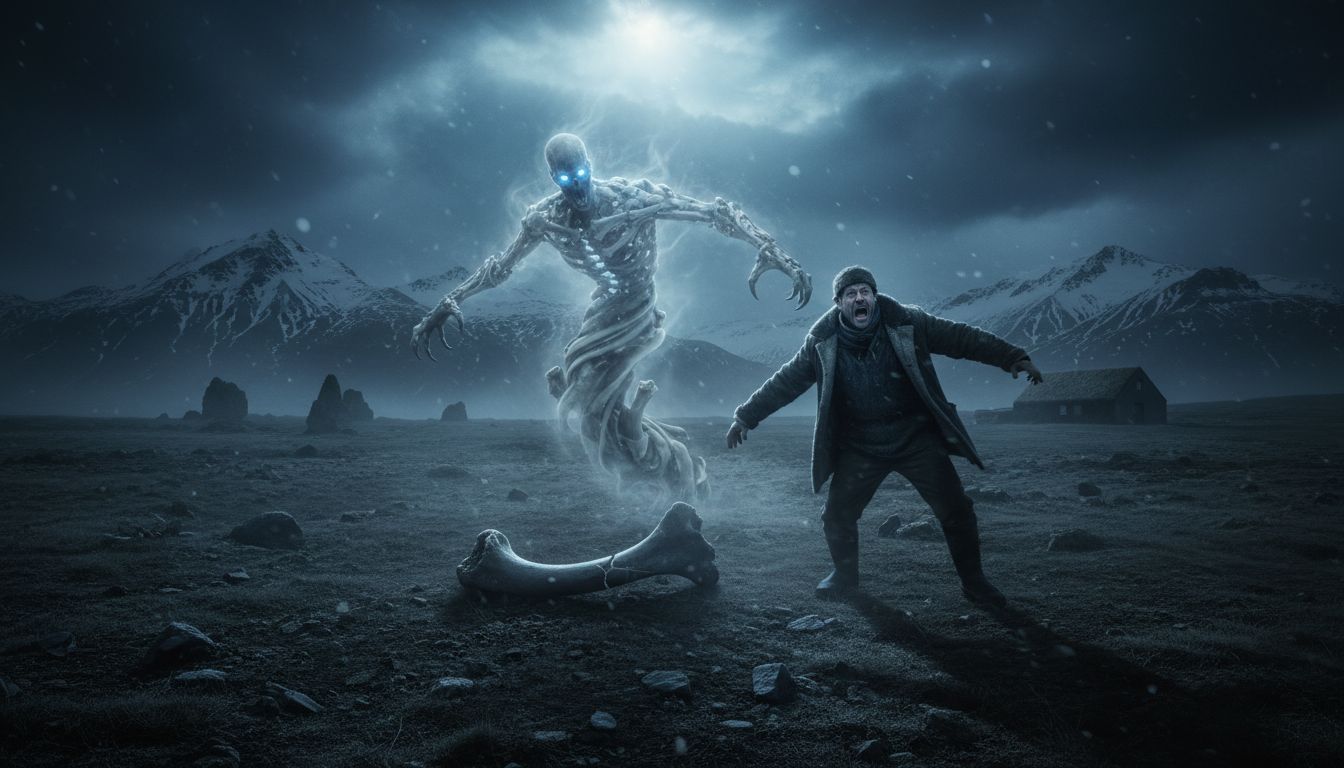
A local farmer in the remote Ábær area of northern Iceland reports an ongoing disturbance that he attributes to a spirit known as the Skotta of Ábær. According to the farmer, the entity was sealed inside a horse or sheep bone for many years before being inadvertently released, after which it began “tormenting” the farm and its surroundings. While the phenomenon has not been verified by scientific instruments, the claim has revived interest in a centuries‑old legend that intertwines Norse folklore, sorcery, and the concept of the Fylgja—a type of attendant spirit documented in medieval Icelandic texts.
Historical Background
The story of the Skotta originates in the early 19th‑century oral tradition of Skagafjörður, where it was alternately called the Árbær or Nýibær Skotta. Folklorist Dr. Einar Jónsson of the University of Iceland notes that the tale centers on a farmer named Ólafur, reputed to practice sorcery. According to the legend, Ólafur witnessed a man wrestling a newly‑raised ghost near a churchyard in Svartárdalur. After advising the man to “bite her in the left breast,” the man succeeded in subduing the spirit, only to later turn the ghost against Ólafur out of envy. Ólafur’s counter‑spell forced the apparition into a bone, which he stored in a chest for the remainder of his life. Before his death, he instructed his daughter Guðbjörg to burn the bone only in dire circumstances, warning her not to remove the stopper prematurely.
The Fylgja—sometimes rendered as “attending spirit”—is a well‑documented element of Norse belief, appearing in sagas from the 12th century onward. These spirits were thought to attach to individuals, families, or even entire settlements, often persisting across generations, especially through the female line. Scholars such as Dr. María Sigurðardóttir have linked the Skotta narrative to broader patterns of generational haunting in Icelandic folklore, where a cursed entity continues to affect descendants of the original target.
Recent Incident
In late February 2026, the current occupant of the Ábær farm, who wishes to remain unnamed for privacy, claimed that the bone containing the Skotta was unintentionally opened while cleaning the old chest. The farmer reported a series of unexplained occurrences: livestock displaying erratic behavior, cold drafts in a previously sealed barn, and a faint, recurring whisper that he describes as “a voice urging him to “stay”. Local police have logged the complaints but have not launched a formal criminal investigation, noting that “no physical evidence of intrusion or tampering has been identified.”
The farmer’s account aligns with the traditional description of a Fylgja manifesting through environmental disturbances rather than overt physical interaction. He has sought assistance from a local practitioner of old rites, who advised a ritual burning of the bone’s remnants and the placement of protective symbols around the property. The practitioner, who asked to be identified only as “the keeper,” emphasized that “the spirit’s power is tied to the object that holds it; destroying that anchor can diminish its influence.”
Cultural Significance
The resurgence of the Skotta story underscores the enduring relevance of Icelandic supernatural lore in contemporary rural life. While modern Iceland is largely secular, many communities retain a cultural memory of ghost narratives that serve as cautionary tales about respecting boundaries between the natural and the unseen. The Skotta legend, with its emphasis on misused sorcery and the consequences of releasing a sealed spirit, mirrors similar motifs found in other European folklore, such as the Irish “fetch” or the Scottish “bean nighe.”
Anthropologists point out that such stories often function as social regulators, reinforcing community norms around property care and intergenerational responsibility. In the case of Ábær, the narrative may also reflect historical anxieties about land inheritance and the isolation of remote farms, where supernatural explanations once provided a framework for otherwise inexplicable misfortunes.
Next Steps
Local authorities have recommended that the farmer document any further incidents and contact the Icelandic Centre for Folklore Studies, which offers guidance on handling alleged hauntings. Meanwhile, Dr. Jónsson plans to include the Skotta episode in an upcoming symposium on “Living Folklore in the Digital Age,” exploring how internet platforms like Moon Mausoleum disseminate and reshape traditional tales. Whether the farmer’s experiences will be attributed to psychological stress, environmental factors, or a genuine paranormal event remains unresolved, but the case has already sparked renewed scholarly interest in how ancient myths continue to influence modern Icelandic identity.