Overview
Ebenrain Castle, a late‑Baroque summer residence built between 1774 and 1776 on the outskirts of Basel, has long been celebrated for its architectural elegance and cultural programming. In recent months, however, the estate has attracted a different kind of attention: reports of cold spots, faint whispers, and a lingering sense of unease that visitors attribute to the spirit of Johann Rudolf Ryhiner‑Streckeisen, a 19th‑century Basel merchant whose reputation was marred by accusations of bigamy and alleged involvement in the trans‑Atlantic slave trade. While the castle continues to host art exhibitions and concerts, the legend of a tormented ghost has turned it into a focal point for both heritage scholars and paranormal investigators.
Historical Background
The castle’s origins lie with Martin Bachofen, a prosperous silk‑ribbon manufacturer who commissioned the Baroque manor as a retreat for his family. Bachofen’s death in 1814 passed the property to a succession of wealthy Basel citizens, the most infamous being Johann Rudolf Ryhiner‑Streckeisen. Contemporary records confirm Ryhiner’s status as a merchant of considerable means, but they also reveal a series of legal disputes, including a 1823 bigamy charge that threatened his social standing. According to the Basel City Archives, Ryhiner was found dead on 29 July 1824, the result of a self‑inflicted gunshot in one of the castle’s principal rooms. Two years later, his widow sold the estate to Ludwig Vest, a Liestal businessman, and the castle gradually shifted from private residence to public venue.
The Alleged Slave Trader
The claim that Ryhiner was involved in the trans‑Atlantic slave trade stems from a combination of merchant ledgers and oral tradition. Historian Dr. Elisa Keller of the University of Basel notes, “While Basel’s commercial archives do list Ryhiner among exporters of raw cotton and sugar, there is no definitive documentary proof linking him directly to slave shipments. The rumors likely arise from Basel’s broader, often overlooked, participation in the triangular trade during the early 19th century.” Nonetheless, the narrative persists in local folklore, portraying Ryhiner as a figure whose moral transgressions extended beyond personal scandal to a wider historical injustice.
Reports of Paranormal Activity
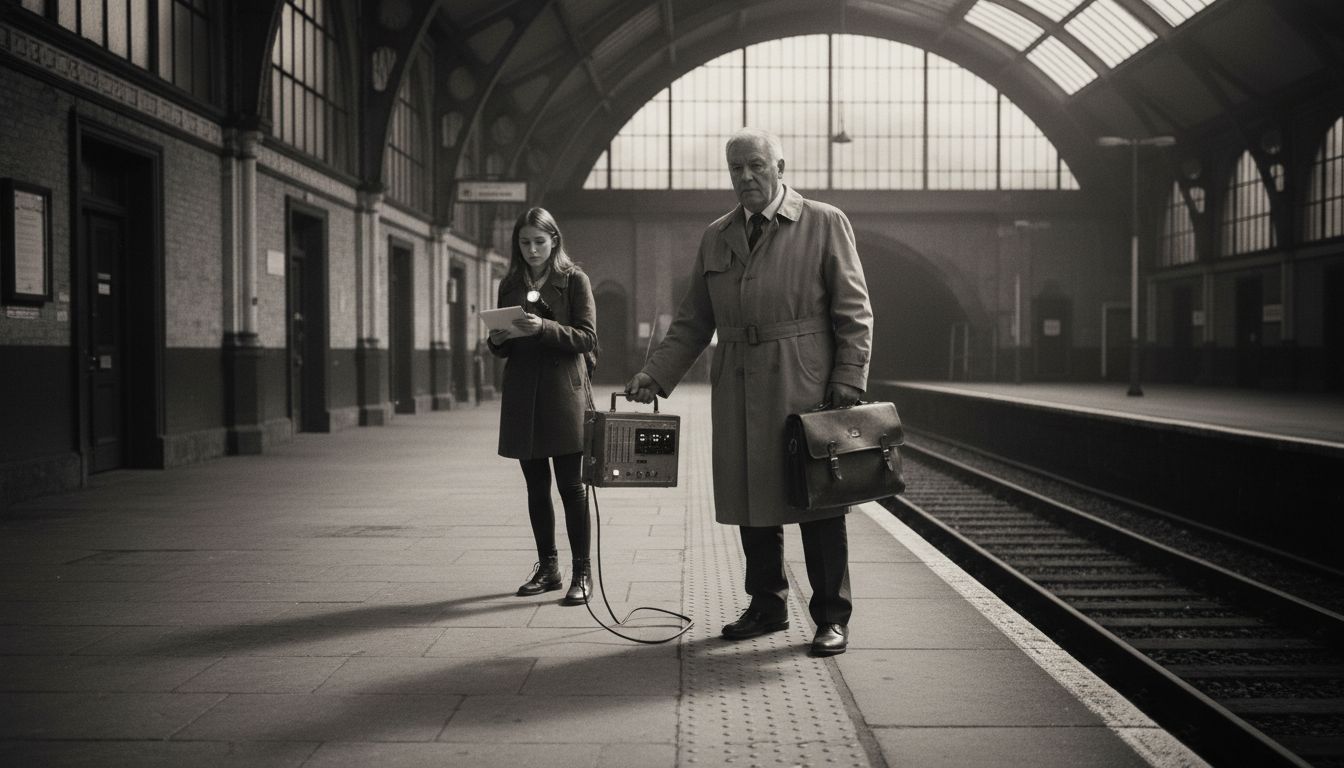
Since 2022, a growing number of visitors have reported anomalous phenomena within the castle’s corridors. “During a guided tour I felt an abrupt drop in temperature near the east wing, and a faint whisper seemed to repeat the word ‘Gnade’ (mercy) in German,” says Anna Meier, a docent at the Ebenrain cultural program. Independent paranormal researcher Marco Vetter, who conducted a night‑time survey in October 2023, recorded intermittent electromagnetic fluctuations and low‑frequency audio peaks that could not be attributed to the building’s old wiring. Vetter’s team, employing a calibrated EMF meter and directional microphones, documented three separate incidents of temperature drops of up to 4 °C lasting under a minute, each occurring in the same room where Ryhiner’s suicide is believed to have taken place.
Response and Preservation
Ebenrain’s custodians, represented by director Claudia Huber of the Basel‑Land Cultural Heritage Office, emphasize a balanced approach. “The castle’s primary mission remains the preservation of our regional heritage and the promotion of contemporary arts,” Huber states. “While we respect the personal experiences of our guests, we also rely on scientific inquiry to assess any claims of paranormal activity.” The office has commissioned a joint study with the University of Basel’s Department of Physics to monitor environmental variables during public events, aiming to distinguish folklore from measurable phenomena. Meanwhile, local tourism officials have noted a modest increase in visitor numbers, with some tourists specifically seeking the “haunted tour” that now forms part of the castle’s programming.
Context and Outlook
The legend of the “Slave Trader of Ebenrain” illustrates how historic sites can become repositories for both documented past and collective imagination. By situating Ryhiner’s personal tragedy within the broader context of Basel’s commercial history, the narrative invites reflection on ethical legacies that extend beyond individual guilt. Whether the reported cold spots and whispers are the result of psychological suggestion, environmental quirks, or an as‑yet‑unexplained phenomenon, the castle’s management is proceeding with caution, ensuring that preservation, scholarly research, and respectful public engagement remain at the forefront of its evolving story.