Overview
On May 29 2026, a detailed post titled “The Socorro UAP Incident” circulated widely across the #UAP and #ufotwitter communities, reigniting discussion about one of the most documented Unidentified Aerial Phenomena (UAP) cases in U.S. history. The article, posted on a popular Substack newsletter, revisits the 1964 Socorro sighting in New Mexico while linking it to the latest batch of declassified UAP files released by the U.S. Department of War (formerly the Department of Defense). By juxtaposing the historic encounter with contemporary debates over “nuts‑and‑bolts” versus “woo” explanations, the piece offers both a refresher on the incident and a snapshot of the evolving discourse among researchers, officials, and online enthusiasts.
Historical Context
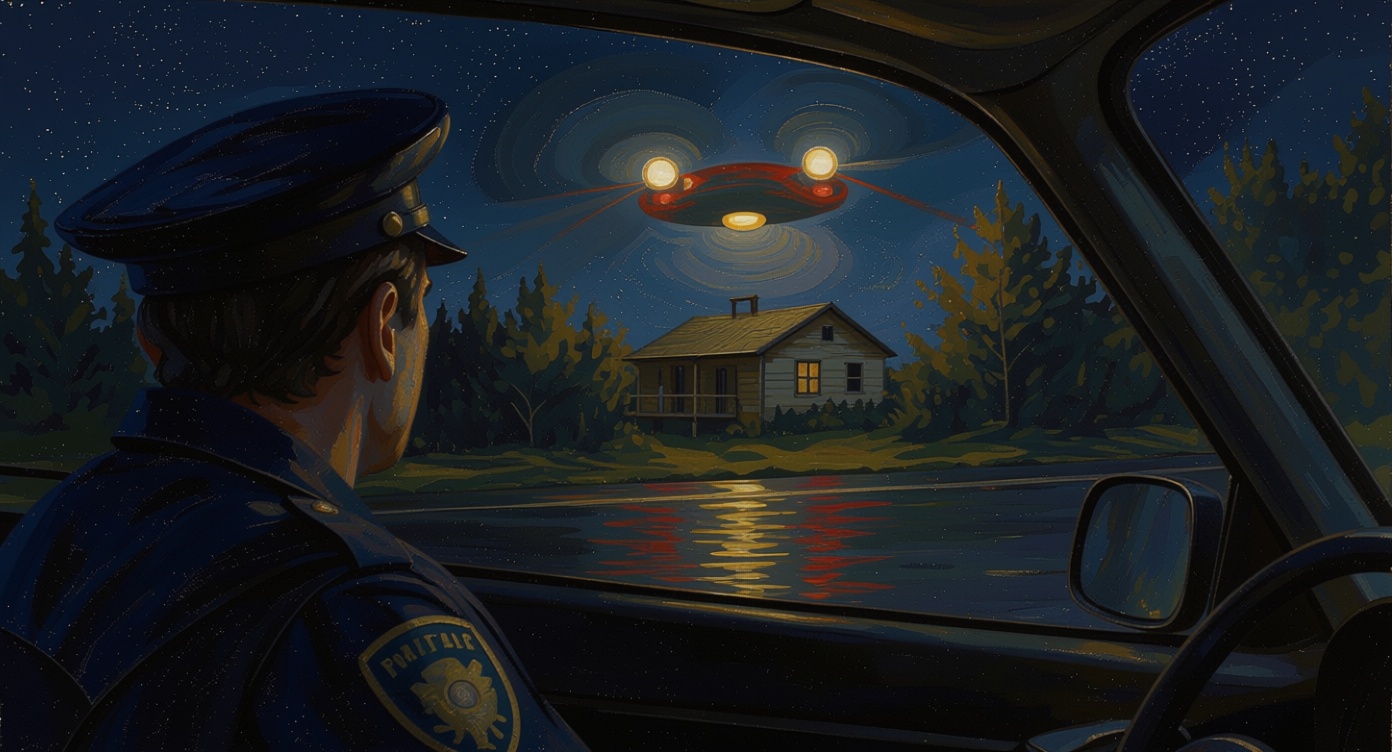
The original Socorro incident occurred on April 24 1964 when police officer Lonnie Zamora reported a low‑altitude, metallic‑sheathed craft that emitted a distinctive humming noise before accelerating skyward, leaving scorch marks on the desert floor. The sighting was investigated by the United States Air Force’s Project Blue Book, which classified it as “unknown” after exhaustive radar and ground‑level analysis failed to produce a conventional explanation. Over the decades, the case has been cited in official reports and academic studies as a benchmark for credible, well‑documented UAP encounters, distinguishing it from less substantiated claims.
Recent File Release
The Substack author notes that the new release on the Department of War’s public portal includes “second‑batch” UAP documents, though the material remains “underwhelming” by the author’s standards. The files consist primarily of FLIR (forward‑looking infrared) video clips and sensor readouts that, while technically sophisticated, do not yet provide definitive proof of extraterrestrial technology. The post emphasizes that the lack of “visual tours of alien craft interiors” or “autopsies of recovered bodies” reflects the ongoing gap between public expectations and the limited data the government is willing to disclose. This sentiment echoes a broader frustration expressed by many in the UAP research community, who argue that incremental releases hinder rigorous scientific analysis.
Expert Perspectives
Prominent UAP researcher Jacques Vallée is referenced as a counterpoint to the “nuts‑and‑bolts” narrative. Vallée’s work, spanning decades, has highlighted patterns of control, perception, and cultural influence that suggest UAP phenomena may extend beyond conventional aerospace explanations. While the Substack author adopts a more sensational tone—opening with “WOO‑HOO!” and questioning why alleged visitors might focus on “human genitals”—the article ultimately acknowledges Vallée’s hypothesis that “there is something… more to the UAP field than just nuts‑and‑bolts crafts traveling here from another planet.” This balanced inclusion underscores the ongoing scholarly split between materialist and phenomenological interpretations.
Community Reaction
Since its posting, the article has generated a surge of commentary on Twitter, Reddit, and dedicated UAP forums. Users have shared the link under hashtags #UAP and #ufotwitter, debating the credibility of the new files and the relevance of the Socorro case to modern investigations. Some commentators praise the piece for reviving public interest in a historically significant encounter, while others caution against conflating anecdotal enthusiasm with empirical evidence. The discussion reflects a broader trend: the UAP community increasingly demands transparent data, yet remains divided over whether the phenomenon is best approached as a physical, engineering challenge or as a multidimensional, possibly psychological, event.
Outlook
The Socorro incident remains a touchstone for both governmental and civilian UAP inquiries, serving as a reminder that even well‑documented cases can leave unanswered questions. As the Department of War continues to release additional material, analysts anticipate that more robust sensor data and corroborated eyewitness accounts may finally bridge the gap between the “nuts‑and‑bolts” and “woo” camps. Until then, the dialogue sparked by the May 29 post illustrates the delicate balance between public curiosity, scientific rigor, and the cautious pace of official disclosure—a balance that will shape the future of UAP research.