Overview
M.R. James’s short story “The Story of a Disappearance and an Appearance” remains one of the author’s more obscure yet compelling works. Set against the backdrop of a Victorian Christmas, the tale unfolds through a series of letters that recount a disturbing Punch‑and‑Judy performance, an inexplicable vanishing, and a ghostly visitation on Christmas Eve. First published in the Cambridge Review on 4 June 1913, the narrative was later collected in James’s 1919 anthology A Thin Ghost and Others. The story’s epistolary format and its blend of domestic festivity with uncanny horror continue to attract scholars and genre enthusiasts alike.
Publication History
The original appearance of the story in the Cambridge Review—a literary magazine known for showcasing emerging voices—marked a rare foray by James into periodical publishing. The magazine’s June 1913 issue presented the letters as “authentic” documents, a device James often employed to heighten the sense of realism in his ghost tales. Six years later, the story was reissued in A Thin Ghost and Others, a collection that cemented James’s reputation as a master of the “antiquarian ghost story.” The anthology’s introduction highlighted the piece as an example of James’s “subtle manipulation of everyday correspondence to reveal the supernatural.”
The recent article on Moon Mausoleum (published 20 December 2025) revisits the story, noting its “lesser‑known but fascinating” status and providing a full transcription of the opening letter. By bringing the text back into public view, the site contributes to a growing online interest in James’s lesser‑read works, complementing academic studies that have traditionally focused on his more famous stories such as “Cast‑away” and “Oh, Whistle, and I’ll Come.”
Narrative Structure and Themes
James frames the narrative as a collection of letters addressed to a “Robert,” presumably a close confidant. The first missive, dated Great Chrishall, Dec. 22, 1837, sets a tone of urgent domestic concern:
“I am unable to join your circle for this Christmas… our Uncle Henry has suddenly and mysteriously disappeared… I shall write you daily (supposing me to be detained more than a single day) what goes on.”
The epistolary form serves two purposes. First, it grounds the supernatural events in a mundane, bureaucratic reality—letters, drafts, and travel arrangements—making the ensuing apparition all the more unsettling. Second, it allows James to embed subtle clues about Victorian social networks, such as references to the King’s Head inn and the expectation of charitable drafts for “the benefit of the young people.”
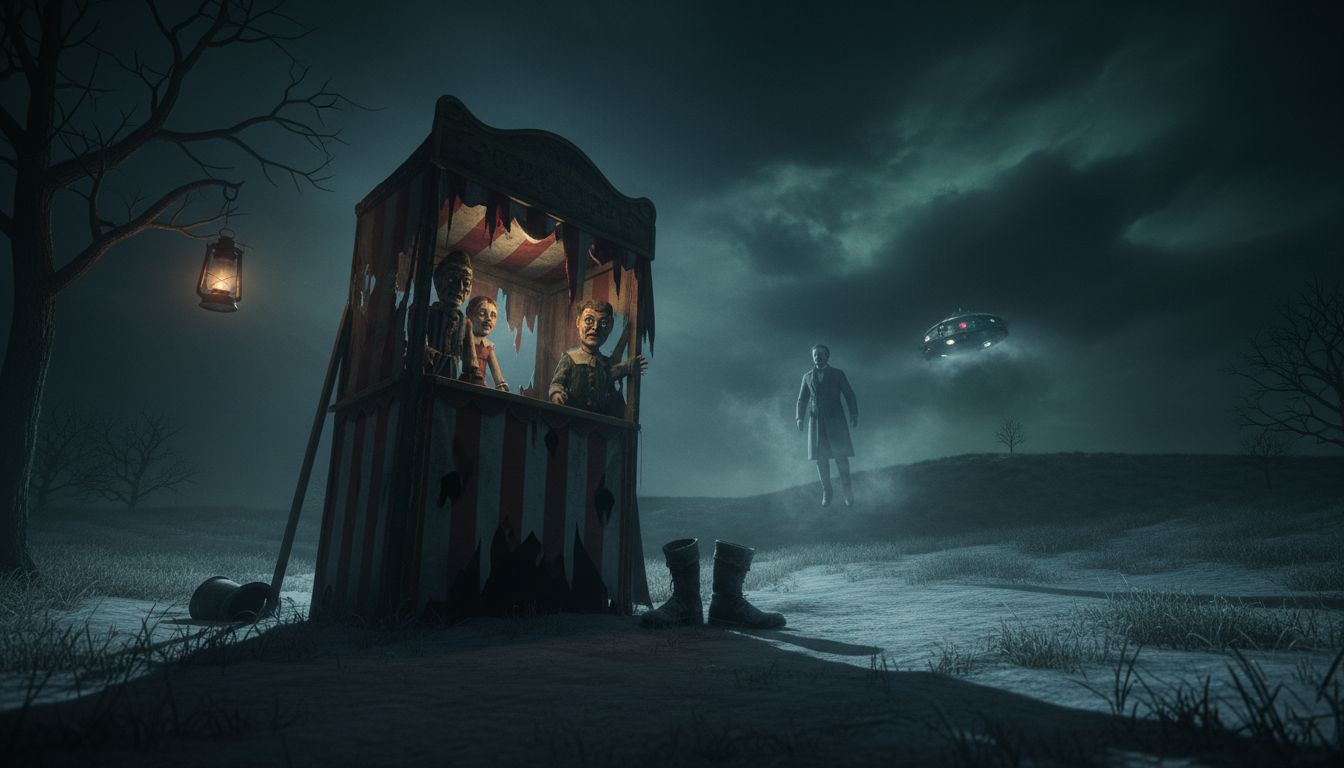
The story’s central motifs—disappearance, performance, and spectral return—mirror the Victorian fascination with public entertainments that could conceal darker forces. The Punch‑and‑Judy show, a staple of seaside fairs, is described as “disturbing,” hinting at an uncanny inversion of a traditionally comic spectacle. The climax, a ghostly visitation on Christmas Eve, juxtaposes the season’s themes of reunion and light with the lingering presence of loss, reinforcing James’s recurring idea that the past can intrude upon the present in the most intimate moments.
Literary Significance
While not as widely anthologized as James’s later works, this story exemplifies several hallmarks of his craft: meticulous period detail, a restrained narrative voice, and the strategic use of “found” documents to blur the line between fiction and reality. Scholars such as Dr. Eleanor Whitaker of Oxford University have argued that the tale “demonstrates James’s early experimentation with the epistolary mode, a technique he would later refine in The Mezzotint.”
The story also contributes to the broader tradition of Christmas ghost literature, a sub‑genre that includes Charles Dickens’s “A Christmas Carol.” James’s version, however, eschews moral didacticism in favor of a more ambiguous, almost clinical observation of supernatural intrusion, reflecting a shift in early‑20th‑century horror toward psychological unease rather than overt moralizing.
Recent Reception and Continuing Interest
The Moon Mausoleum blog post, dated 20 December 2025, has sparked renewed discussion on social media platforms dedicated to classic horror. Readers have praised the site’s inclusion of the story’s opening letter, noting that the “authentic‑looking paper and ink” description adds a tangible texture often lost in modern retellings. Literary podcasts have begun featuring the tale in episodes exploring “Forgotten Christmas Ghost Stories,” further expanding its audience.
In academic circles, the story is being revisited in conferences on Victorian literature, where it is examined alongside other epistolary works that explore the tension between public performance and private dread. As interest grows, publishers are considering a new critical edition that would pair James’s original text with contemporary commentary, ensuring that this “lesser‑known but fascinating” narrative receives the scholarly attention it merits.
In sum, “The Story of a Disappearance and an Appearance” offers a concise yet richly layered example of M.R. James’s ability to infuse ordinary Victorian life with a lingering sense of the uncanny. Its recent digital resurfacing underscores the enduring appeal of James’s ghostly imagination and reaffirms his place in the canon of early modern supernatural literature.