In a recent episode of the investigative podcast "Weaponized," Dr. James Latsky—longtime government scientist and the acknowledged head of the United States' largest official UAP (Unidentified Aerial Phenomena) study program—shed new light on historical UFO encounters and covert government research. The discussion, part of a two-part interview, explored how UAP incidents and related technologies were investigated during the so-called "glory days" of the 1960s and 1970s. Dr. Latsky emphasized that this era was marked by a flurry of innovative ideas and experimental approaches, as officials and scientists tried to understand the persistent mystery of UAPs.
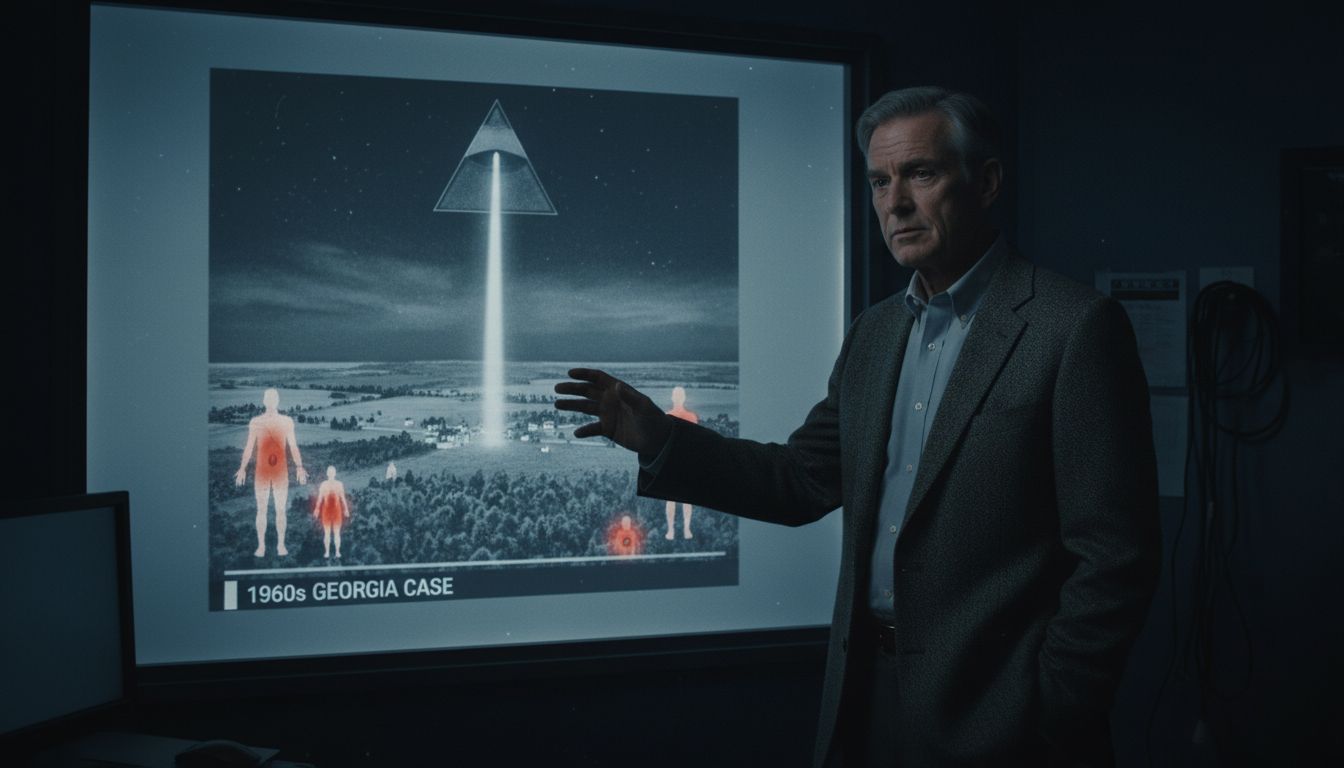
One of the most striking cases highlighted in the conversation was a dramatic 1960s encounter in Georgia. According to Dr. Latsky, a local man deliberately directed a powerful, million-candlepower spotlight at a black, triangular-shaped UFO hovering nearby. In what he described as an immediate and unexpected escalation, the object reportedly retaliated by emitting a "radiation beam" at the individual. The aftermath, Dr. Latsky explained, was severe: "He got tumors from it." While the details of the case remain under investigation, the incident underscores the potential dangers and unknowns associated with close UAP encounters.
The podcast segment delved into how this and similar cases have shaped both public perception and government response to the UAP issue. Co-hosts noted that investigative journalism over the years has gradually uncovered more about secretive "legacy" UAP programs—classified efforts that predate the government's current, more transparent Office of Aerial Phenomena (OAP). Dr. Latsky, when asked directly whether he had been "read into and involved in a legacy UAP program before OAP," was pressed for a response but did not deny the assertion, hinting at deeper, ongoing government involvement in the study of unexplained aerial events.
Throughout the interview, Dr. Latsky and the hosts discussed the technological capabilities often attributed to UAPs, such as advanced propulsion and apparent energy weaponry. These characteristics have long fueled speculation about the origins and intentions of such phenomena. Dr. Latsky's account of the Georgia case is particularly notable because it suggests not just observation, but interaction—raising important questions about both the risks and the strategic importance of further UAP research.
The episode also touched upon the evolving landscape of government transparency and public curiosity regarding UAPs. The acknowledgment of past and present study programs, as well as the willingness of figures like Dr. Latsky to speak publicly, reflects a broader shift toward open discussion. However, many details about legacy programs, past encounters, and their scientific evaluation remain classified, leaving researchers and the public alike eager for more information.
As investigations continue, interviews like this one provide rare insights into how the U.S. government has approached the UAP enigma over decades—balancing scientific inquiry, national security, and the safety of those who find themselves at the center of unexplained aerial events. The Georgia incident, with its alleged health consequences and technological mystery, stands as a reminder that the search for answers about UAPs is as urgent as ever.