Overview
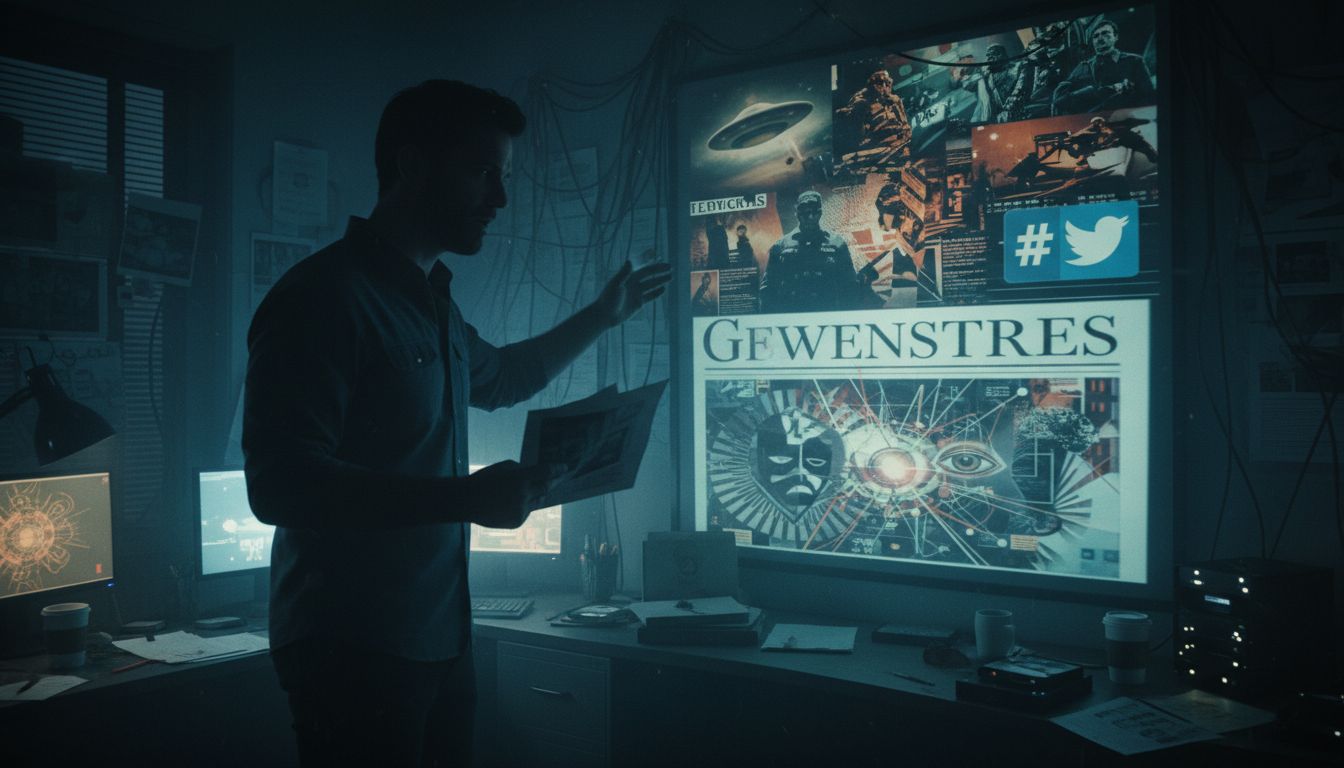
Investigative journalist Steven Greenstreet has released a series of exclusive reports on the New York Post alleging that U.S. government agencies and mainstream media have deliberately concealed information about unidentified aerial phenomena (UAP) for decades. The pieces, published over the past month, claim that coordinated “psy‑ops” campaigns were used to discredit credible witnesses and shape public perception. The revelations have sparked intense discussion on social‑media platforms, especially within the #ufotwitter community, where users are circulating excerpts and demanding official accountability.
Key Findings
Greenstreet’s investigation draws on dozens of Freedom of Information Act (FOIA) requests, leaked internal memos, and interviews with former defense‑department analysts. Among the most striking allegations are:
- Systematic suppression of radar data from Navy and Air Force encounters dating back to the 1990s, with senior officials allegedly ordering the files to be classified under “national security” without clear justification.
- A covert media‑influence program run by a joint task force of the Pentagon and the Department of State, designed to promote skeptical narratives and label UFO reports as “hoaxes” or “misidentifications.”
- Psychological‑operations (psy‑ops) briefings delivered to journalists, encouraging the use of dismissive language such as “flying saucer” or “alien conspiracy” to steer public discourse away from serious inquiry.
Greenstreet cites a 2018 internal briefing titled “Strategic Narrative Management for Unidentified Aerial Phenomena” that outlines a “consistent messaging framework” aimed at preserving “operational secrecy” while minimizing public alarm.
Reactions from Officials and Experts
The Department of Defense (DoD) issued a brief statement acknowledging the existence of a “UAP Task Force” but denied any coordinated effort to mislead the public. “The DoD remains committed to transparency while safeguarding legitimate national‑security interests,” the statement read. A spokesperson for the Office of the Director of National Intelligence declined to comment on the specific documents cited by Greenstreet.
UFO researchers have expressed mixed views. Dr. Jacques Vallée, a veteran in the field, called the claims “concerning and worth further scrutiny,” emphasizing the need for independent verification. Conversely, astrophysicist Dr. Emily Zhao warned that “without access to the original classified files, it is difficult to assess the veracity of these allegations, and we must guard against speculation that could erode public trust.”
Context and Historical Background
The UAP topic has gradually moved from fringe speculation to congressional attention. In 2021, the Senate Intelligence Committee released a report acknowledging “unexplained aerial objects” and recommending a more systematic approach to data collection. In 2023, the DoD formally declassified several Navy videos showing anomalous flight characteristics, prompting the establishment of the All‑Domain Anomaly Resolution Office (AARO). Greenstreet’s exposé suggests that these recent steps may be part of a broader strategy to control the narrative rather than a genuine shift toward openness.
The #ufotwitter surge reflects a broader cultural moment where citizens demand transparency about phenomena that intersect national security, scientific inquiry, and public curiosity. Hashtags such as #UFOTruth and #UAPCoverup have amassed millions of impressions, prompting several lawmakers to request additional hearings on the matter.
Next Steps and Outlook
While Greenstreet’s series has ignited public debate, the lack of direct access to the classified documents means that definitive conclusions remain elusive. Advocacy groups have filed new FOIA suits seeking the release of the “Strategic Narrative Management” briefing and the suppressed radar logs. Meanwhile, the House Oversight Committee has announced a hearing for later this year to examine potential “information suppression” regarding UAPs.
Whether these developments will lead to substantive policy changes or simply reinforce existing secrecy protocols is uncertain. What is clear, however, is that the conversation about UFOs is now anchored in both investigative journalism and legislative scrutiny, marking a departure from the era when the topic was relegated to late‑night talk shows. As the debate unfolds, stakeholders—from government agencies to scientific institutions—will need to balance national‑security concerns with the public’s right to know.