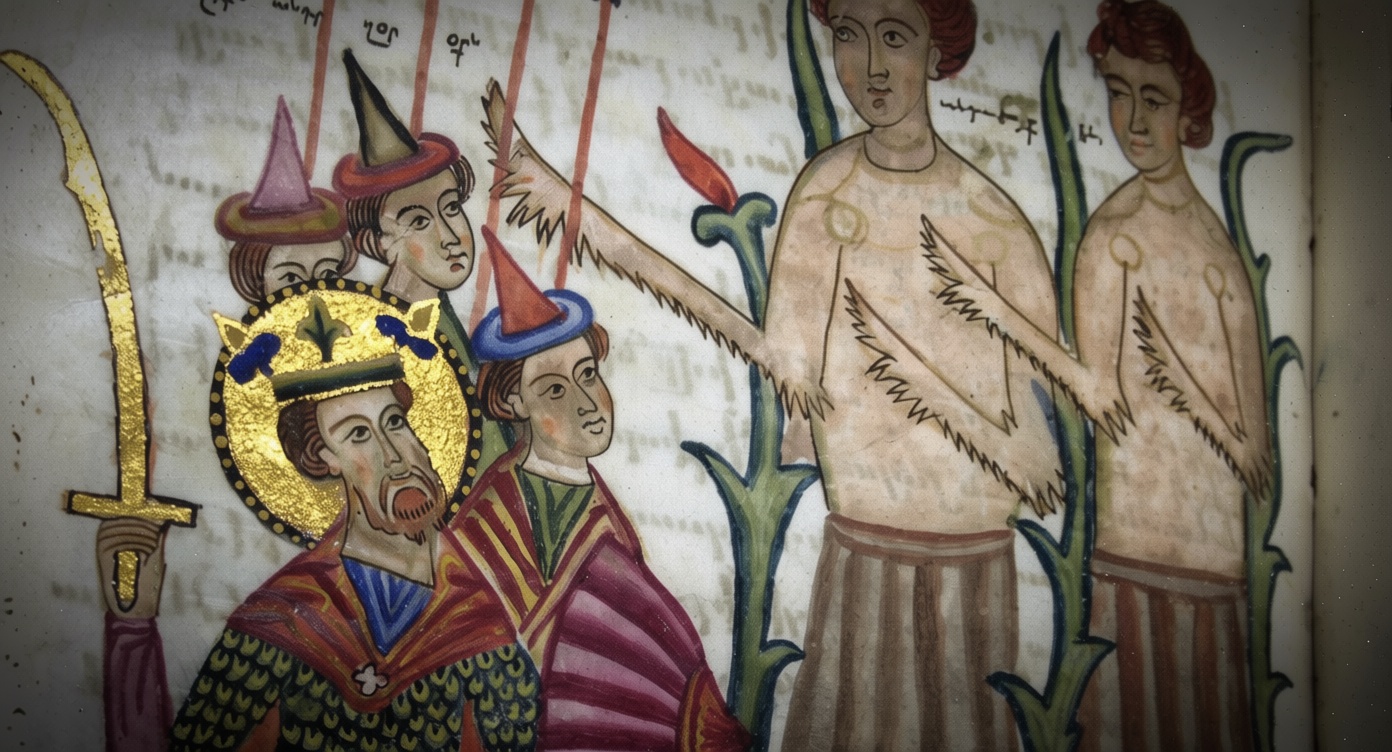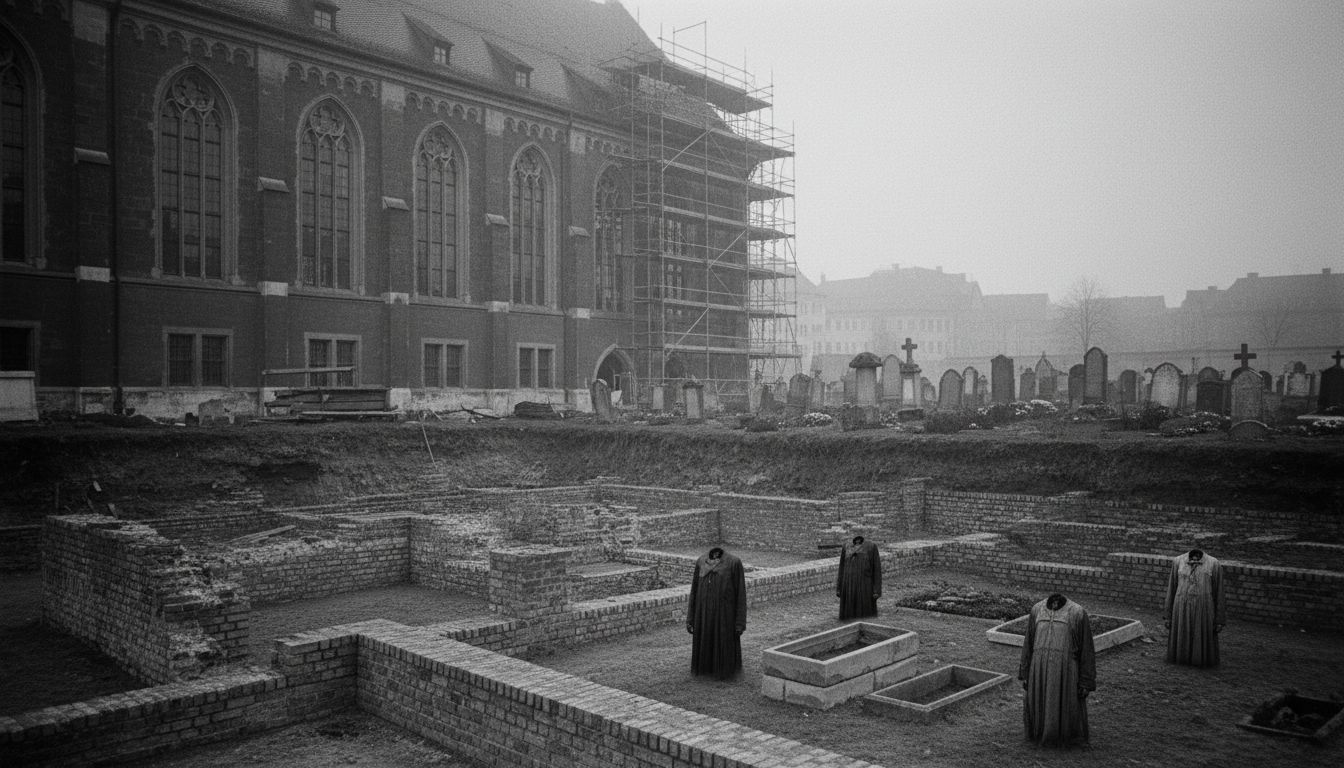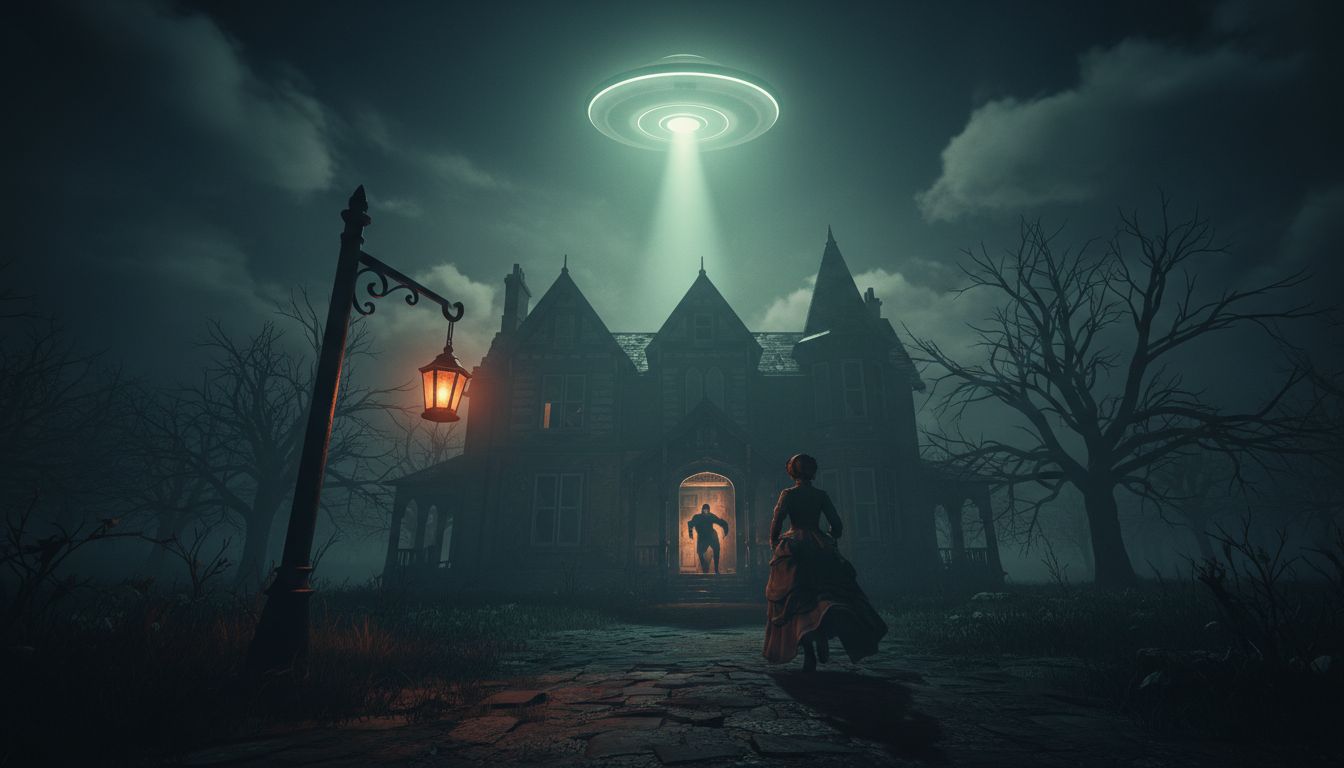
The story of the Croglin Grange vampire first entered public consciousness through the pages of Augustus Hare’s 1896 memoir The Story of My Life. Hare presents the episode as a firsthand account relayed by a “Captain Fisher,” whose family had long occupied the remote house near the village of Croglin, Cumbria. According to the narrative, three siblings—identified in later retellings as Amelia, Edward and Michael Cranswell—rented the isolated manor in the mid‑1870s. One hot summer night, Amelia allegedly saw “a brown‑faced, flaming‑eyed creature” slip through an open window, bite her neck and flee toward the adjoining churchyard before her brothers could intervene. The episode ends with a frantic search that yields no trace of the intruder, leaving the family “paralyzed with terror.”
Hare’s account is the sole contemporary source for the legend; no newspaper reports, police records, or parish documents from the period corroborate the alleged attack. Scholars of Victorian folklore note that the tale emerged at a time when Britain was fascinated by the “new” vampire, a fascination sparked by Bram Stoker’s Dracula (1897) and earlier sensationalist press coverage of Eastern European blood‑drinkers. The Croglin story fits neatly into this cultural moment, echoing motifs from older European revenant lore—glittering eyes, elongated fingers, and a nocturnal assault on a sleeping victim—while being set against a distinctly English backdrop.
Historical research into Croglin itself provides further context. The village, perched on the Pennine foothills near the River Eden, was indeed a frontier settlement that suffered raids by the Border Reivers in the 15th century. However, by the 19th century it was a quiet agricultural community with no recorded incidents of violent crime resembling a vampire attack. Local archives list the Fisher family as tenants of the Grange in the 1860s, but there is no evidence they ever employed a “Captain” to recount such events, nor any record of the Cranswell name in census data for the area.
Literary historians trace the legend’s evolution beyond Hare’s memoir. In the early 20th century, ghost‑story anthologies republished the Croglin episode, often embellishing details—adding the full moon, the creature’s “thin, shriveled” appearance, and a dramatic chase into the churchyard. These retellings helped cement the narrative in the popular imagination, even as academic commentators dismissed it as “Victorian gothic invention.” A 2023 article on the Moon Mausoleum website, for example, emphasizes that “the story was first widely shared by Augustus Hare” and notes that “historians debate its authenticity,” underscoring the lack of verifiable evidence.
The consensus among folklorists and historians is that the Croglin Grange vampire is best understood as a product of its time: a sensational anecdote that capitalized on contemporary fears of the supernatural and the exoticism of vampirism. While the tale continues to be recounted in podcasts and online horror forums, the absence of primary documentation and the prevalence of narrative embellishment suggest that the legend is more literary than literal. In the words of folklorist Michael J. Bennett, “the Croglin story illustrates how a single evocative description can, over a century, become entrenched as folklore, even when its factual foundations are tenuous.” The episode remains a compelling case study of how Victorian anxieties and storytelling converge to create enduring myths, rather than a genuine historical mystery.