Overview
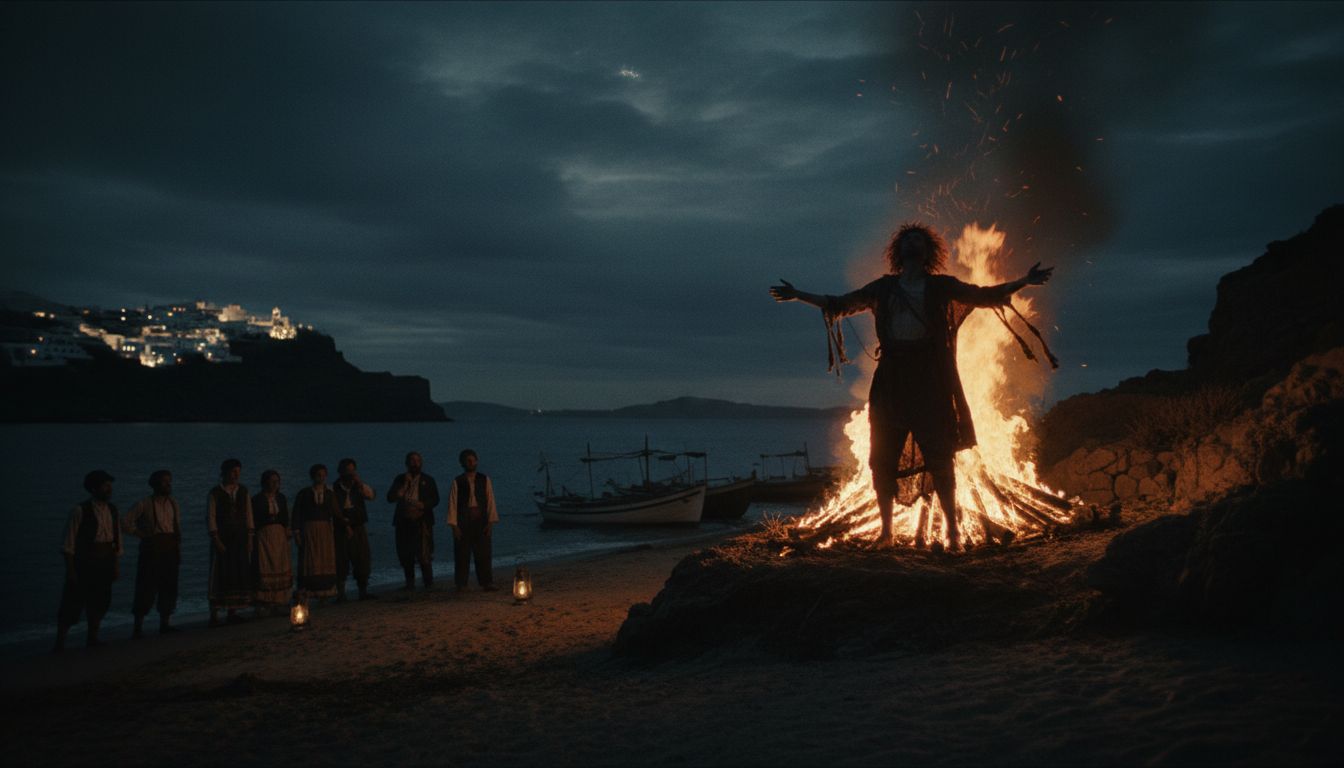
A centuries-old Greek folktale from Patmos and Santorini is drawing renewed attention to the enduring place of the vrykolakas in Aegean folklore. In the account preserved by Jesuit priest François Richard in Relation de l’Isle de Sant-erini (1657), a merchant named Patino dies while traveling in Anatolia and is later linked to a series of disturbing events after his body is returned home. The story, as retold in modern summary, ends with villagers taking the feared figure to an inhabited island and burning him, but it leaves open a familiar folkloric question: did the ritual actually stop him?
The Merchant from Patmos
According to the account, Patino, a merchant from Patmos, had been on a business trip to the Anatolian coast when he died, though the cause of death is not specified in the source material. His body was placed in a coffin for the journey home. During transport, one sailor reportedly felt movement from inside the coffin and urged the others to open it. Inside, they found the corpse “perfectly preserved, with no signs of decay,” an image that would have carried ominous weight in an era when unusual bodily preservation was often interpreted as supernatural rather than physical. The sailors, however, said nothing to Patino’s wife, who received her husband for burial with full honors.
Vrykolakas in Greek Folklore
Richard’s account reflects how vrykolakas stories were understood in the 17th century: not as modern vampire lore, but as a blend of folk belief, Orthodox ritual, and theological interpretation. The Jesuit priest described the creature as “a special case of diabolic possession,” arguing that the devil could animate certain corpses. He wrote that when a village was visited by a vrykolakas, residents would gather in one house for safety and petition their bishop for permission to exhume the suspected body. That exhumation was usually performed on a Saturday, which the tradition held was the only day a vrykolakas might rest in its grave. If the corpse was found “fresh and gorged with new blood,” it could then be exorcised through prayer or cremated.
Why the Story Endures
The Patino tale has lasted because it sits at the intersection of history, religion, and local anxiety. Santorini’s landscape, shaped by volcanic activity and centuries of cultural change under Byzantine, Ottoman, and Orthodox influence, provided fertile ground for unusual burial narratives. Some later commentators have even suggested that the island’s volcanic soil may help explain reports of bodies that appeared unusually well preserved, reinforcing the sense that such cases were evidence of the uncanny. Yet the story’s real power lies in its uncertainty. Whether Patino was remembered as a restless dead man, a warning about improper interpretation of death, or simply a figure shaped by rumor, the account remains part of the broader Greek tradition that blurred the line between the sacred and the supernatural.