Overview
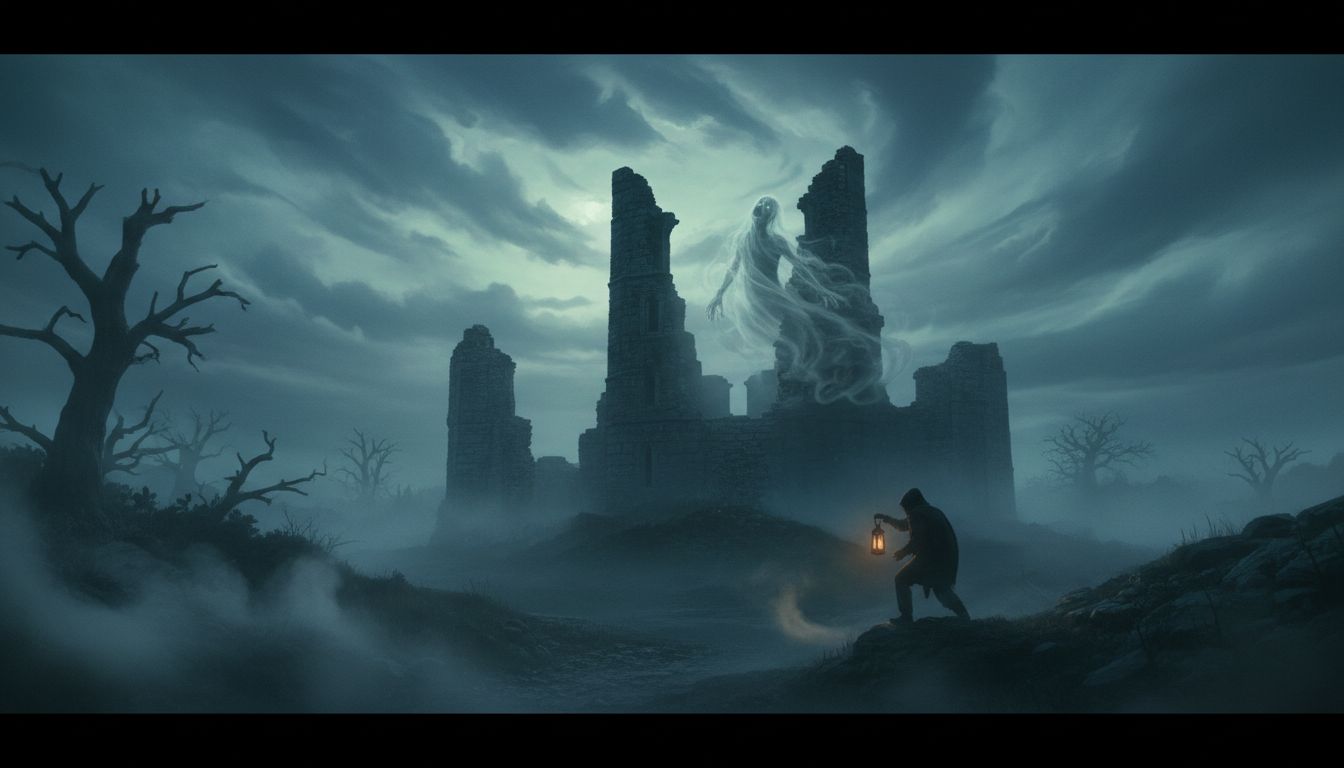
Old Beaupre Castle, the crumbling medieval manor on the outskirts of Cowbridge in the Vale of Glamorgan, has long attracted both heritage enthusiasts and paranormal investigators. Recent visitor reports echo Victorian-era descriptions of a mournful wail that drifts through the ruined arches, reinforcing the site’s reputation as the home of the Gwrach y Rhibyn—also known as the Hag of Mist—a spirit traditionally believed to herald death. While the castle’s stone walls date back to the 14th century, the legend surrounding the wailing entity has become an enduring part of local folklore, drawing attention from scholars of Welsh mythology and tourists seeking a chill of the supernatural.
Historical Background
Constructed in the early 1300s, the fortified manor served the Basset family as a regional seat of authority rather than a military bastion. Situated near a gently winding river, the estate combined domestic comfort with modest defensive features, typical of Welsh manor houses of the period. By the 18th century the Bassets had abandoned the property, and the once‑imposing structure fell into disrepair. Ivy‑clad walls and collapsed arches now mark the site, which is officially recorded as Hen Gastell y Bewpyr in Welsh heritage registers. Archaeological surveys confirm that the surviving masonry dates to successive phases of construction between the 14th and 17th centuries, underscoring the castle’s long‑term occupation before its eventual ruination.
The Legend of the Gwrach y Rhibyn
Folklorist Alvin Nicholas of Supernatural Wales documents the earliest written references to the Gwrach y Rhibyn in Victorian travel journals. According to those accounts, locals spoke of a “phantom tied to the ruins, a presence that made itself known at dusk and lingered long after night had fallen.” The spirit is described as a wailing woman shrouded in mist, whose cries were interpreted as a deadly omen—a warning that a death would soon follow for anyone who heard it. The name itself translates roughly to “the wailing hag,” aligning with broader Celtic motifs of mournful female apparitions who guard liminal spaces such as abandoned fortifications or crossroads.
Contemporary Accounts
Modern visitors to Beaupre Castle have reported experiences that parallel the Victorian narratives. On the mist‑laden evenings of October and November, several hikers recounted hearing “a mournful howl echoing through the broken walls,” a sound that faded as quickly as it arrived. One guide, who prefers to remain unnamed, told Moon Mausoleum that “the air turns cold, and you can almost feel a presence watching you from the shadows.” Although no scientific recordings of the wail have been produced, the consistency of these testimonies has prompted local heritage officers to add a cautionary note to the site’s information board, advising visitors to respect the “cultural significance and longstanding folklore” associated with the ruins.
Cultural Impact and Outlook
The Gwrach y Rhibyn legend contributes to a broader tapestry of Welsh ghost stories that blend history with myth, reinforcing regional identity and tourism. Scholars note that such narratives often serve as communal memory, preserving warnings about the dangers of neglecting sacred or historically charged locations. While the scientific community remains skeptical of any paranormal causation, the persistent reports keep the discussion alive in both academic circles and popular media. As preservation efforts continue to stabilize the remaining masonry, the wailing spirit of Old Beaupre Castle stands as a reminder that, for many, the past is not merely stone and mortar but a living narrative that still resonates—sometimes, quite literally—through the mist‑filled valleys of Wales.