Overview
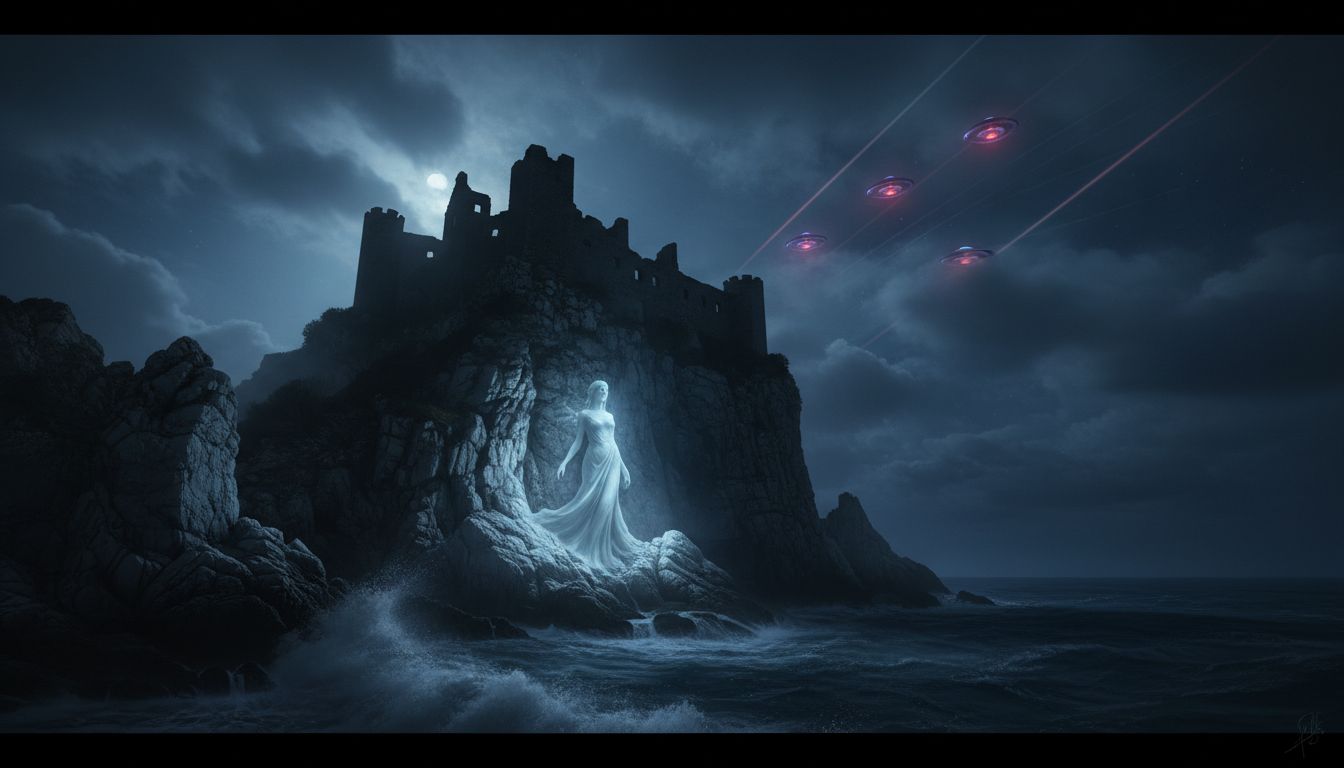
The ruins of Duino Castle, perched above the Gulf of Trieste, have long attracted historians, tourists, and folklore enthusiasts. Among the many stories that circulate the cliffside, the most persistent is that of the White Lady, a spectral figure said to have been cast from the castle’s heights by a jealous husband and now bound to a stone beneath the crumbling walls. While the tale is rooted in local oral tradition, recent scholarship places it within a broader tapestry of medieval legend, literary inspiration, and regional tourism.
Historical Context
Duino Castle’s origins trace back to the early 12th century, when a Roman outpost gave way to a fortified stronghold documented in a 1139 charter. The Wallsee family rebuilt the site in 1389, creating the stone complex that largely survives today. Over the centuries the castle served varied roles—from a noble residence to a prison—before falling into disrepair. Architectural surveys confirm that the extant ruins reflect successive layers of construction, with the most visible sections dating to the late medieval period. These facts provide a concrete backdrop against which the more ethereal elements of the legend have emerged.
The White Lady Legend
According to the version most commonly recounted by local guides, a powerful knight—identified in some accounts as Esterina da Portole’s husband—became consumed by jealousy over his young wife’s beauty and the infant son they shared. The story holds that he forced her onto the cliff’s edge, where she fell to her death. Rather than resting in peace, the woman’s spirit is said to have been “frozen in all eternity as a stone below the old castle,” watching over the child she abandoned. The legend gained wider attention after Austrian poet Rainer Maria Rilke visited the castle in 1912. Rilke’s notes, cited in the Moon Mausoleum article, record his impression of the “midnight air” and the haunting presence that inspired the opening line of his Duino Elegies:
“Lovers, if Angels could understand them, might utter strange things in the midnight air.”
Rilke never explicitly named the White Lady, but his poetic reflections on the site have intertwined his literary legacy with the folklore.
Literary and Cultural Resonance
The White Lady narrative has been reinforced through literature, tourism brochures, and online platforms such as Moon Mausoleum, which catalogues Italian ghost stories. Scholars of folklore note that the motif of a “white lady”—a woman in mourning attire bound to a specific locale—is common across European traditions, often symbolizing unresolved grief or moral caution. Dr. Lucia Bianchi, a cultural historian at the University of Trieste, explains that “the Duino White Lady functions as a cultural memory device, linking the region’s medieval power struggles with contemporary identity tourism.” The legend also contributes to the castle’s appeal as a destination for visitors seeking both historical insight and a touch of the supernatural.
Modern Perspectives and Tourism
Today, the Duino Castle ruins are managed by the regional heritage authority, which emphasizes preservation over sensationalism. Guided tours mention the White Lady as part of the site’s “living history,” but staff are instructed to present the story as folklore rather than fact. Recent visitor surveys indicate that 68 % of tourists recall hearing the legend, yet only a minority report a “paranormal experience.” Local businesses have capitalized on the tale through themed souvenirs and nighttime “ghost walks,” balancing economic benefit with respect for the castle’s authentic heritage. As interest in heritage tourism grows, officials plan to install interpretive panels that contextualize the legend alongside documented architectural history, ensuring that the narrative remains grounded in evidence while honoring the cultural imagination that keeps it alive.