Overview
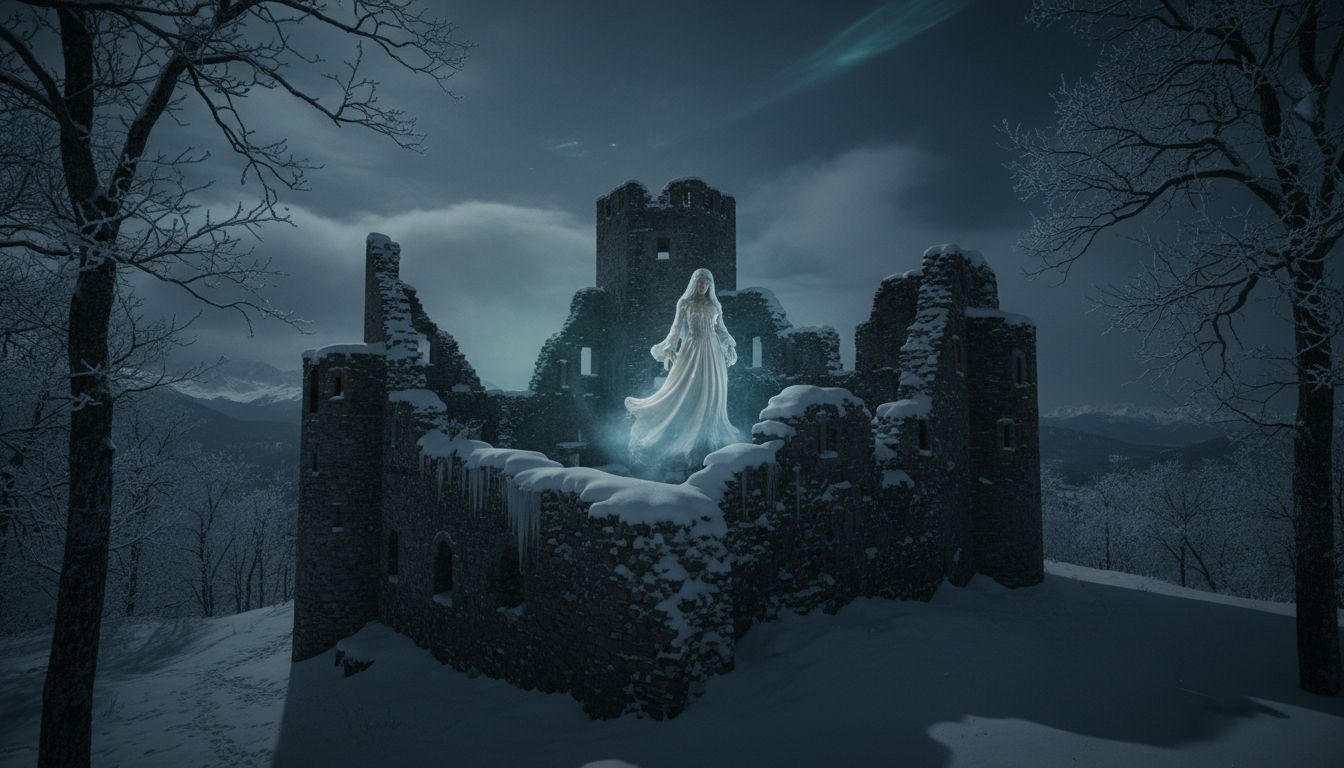
In the marsh‑laden outskirts of Meinier, the crumbling remains of Rouelbeau Castle have become the focal point of a seasonal folklore tradition. Each December, locals and occasional visitors report a fleeting, luminous figure—a woman dressed in white—gliding along the “Chemin de la Dame Blanche.” The apparition is linked to the broader Weiße Frau (White Lady) motif that recurs throughout Germanic folklore, and it is said to embody the sorrow of a medieval mistress who was expelled for failing to bear a male heir. While the story is steeped in myth, recent accounts have revived interest in the castle’s haunted reputation.
Historical Background
Rouelbeau Castle was erected in 1318 by Knight Humbert de Choulex, a vassal of the Faucigny‑Baron, to guard the volatile borderlands of what is now the Swiss canton of Geneva. The name “Rouelbeau” likely blends the French verb roiller (“to rain heavily”) with the local term bot (“frog”), a nod to the noisy wetlands surrounding the fortress. By the late 15th century the stronghold had fallen into disuse, its stones scavenged for nearby construction, leaving only a skeletal outline of walls and towers. Archaeologists from the University of Geneva note that “the site offers a rare glimpse into late‑medieval defensive architecture in the Alpine foothills,” underscoring its value beyond the ghost story.
The Legend of the White Lady
According to oral tradition passed down through generations, Humbert’s first wife—whose name has been lost to history—was cast aside after she failed to produce a son. Stripped of status and expelled from the castle, she is said to have roamed the surrounding forest in perpetual mourning. Over centuries, her tale merged with the pan‑European Weiße Frau archetype: a sorrowful female spirit bound to a specific place, often appearing in white garments at twilight. Folklorist Dr. Elena Keller of the Swiss Institute of Cultural Studies explains, “The White Lady motif serves as a cultural repository for anxieties about lineage, property, and female agency in patriarchal societies.”
Contemporary Sightings and Cultural Impact
In recent years, the legend has resurfaced each Christmas, when hikers report a pale figure standing silently among the ruined battlements before vanishing. One visitor, 34‑year‑old Markus Leder, recounted to local newspaper Le Temps: “I heard a faint hymn, turned, and saw a woman in a flowing white dress. She didn’t move toward me—she simply faded into the night.” The timing aligns with the holiday season, a period traditionally associated with ancestral remembrance in Alpine culture. The municipality of Meinier has responded by installing discreet informational plaques along the trail, encouraging respectful observation while discouraging trespassing on fragile masonry.
Expert Commentary and Preservation Efforts
Cultural heritage officials stress that while the ghost narrative enriches community identity, the primary concern remains the conservation of the ruins. “We must balance folklore tourism with structural safety,” says Isabelle Dubois, director of the Canton of Geneva’s Heritage Office. The agency has secured funding for a modest stabilization project, aiming to prevent further stone loss without altering the site’s historic character. Meanwhile, Dr. Keller adds, “Legends like the White Lady act as living history; they keep the public engaged with sites that might otherwise be overlooked.” As the December chill settles over the Seymaz river valley, the story of Rouelbeau’s White Lady continues to weave together medieval history, regional folklore, and modern cultural stewardship.