Overview
The Yeti, also known in Western lore as the Abominable Snowman, remains one of the Himalayas’ most enduring mysteries. For centuries, accounts from Nepal, Tibet, Bhutan and neighboring regions have described a large, elusive, humanlike creature said to inhabit remote, snow-covered mountain terrain. While the modern image of the Yeti is often reduced to a single fantasy figure, local traditions are more varied, referring to different kinds of wild beings rather than one universally agreed-upon monster. What ties the stories together is a recurring theme: a powerful presence in the high mountains that is seen rarely, if ever, and leaves behind more questions than answers.
Origins of the Legend
The creature’s name and reputation were shaped as much by Western curiosity as by Himalayan folklore. Variations of “Yeti” appear in local languages, though the meaning and spelling differ across communities. The more dramatic English label, “Abominable Snowman,” emerged after British expeditions in the Himalayas during the 1920s, when reports of strange tracks and local accounts reached newspapers and captured public imagination. According to accounts circulated at the time, a mistranslation or loose rendering of a local term helped cement the sensational phrase. Once it entered the press, the Yeti quickly became an international sensation, blending indigenous belief, exploration-era storytelling and global fascination with unexplained mountain phenomena.
Footprints and Field Reports
A major reason the Yeti legend has persisted is the recurring claim of large footprints found in snow or mud. Explorers and climbers in the Himalayas periodically reported tracks that appeared far larger than those of an ordinary human and that seemed to stretch across isolated alpine landscapes. Yet footprint evidence in mountainous terrain is notoriously difficult to interpret. Snow is a shifting medium: melting sunlight can broaden the edges of a print, overlapping steps can distort shape, wind can fill or reshape impressions, and freeze-thaw cycles can alter what remains. In other words, a track that looks extraordinary at first glance may be the result of environmental changes rather than an unknown animal.
A Creature Shaped by Culture and Geography
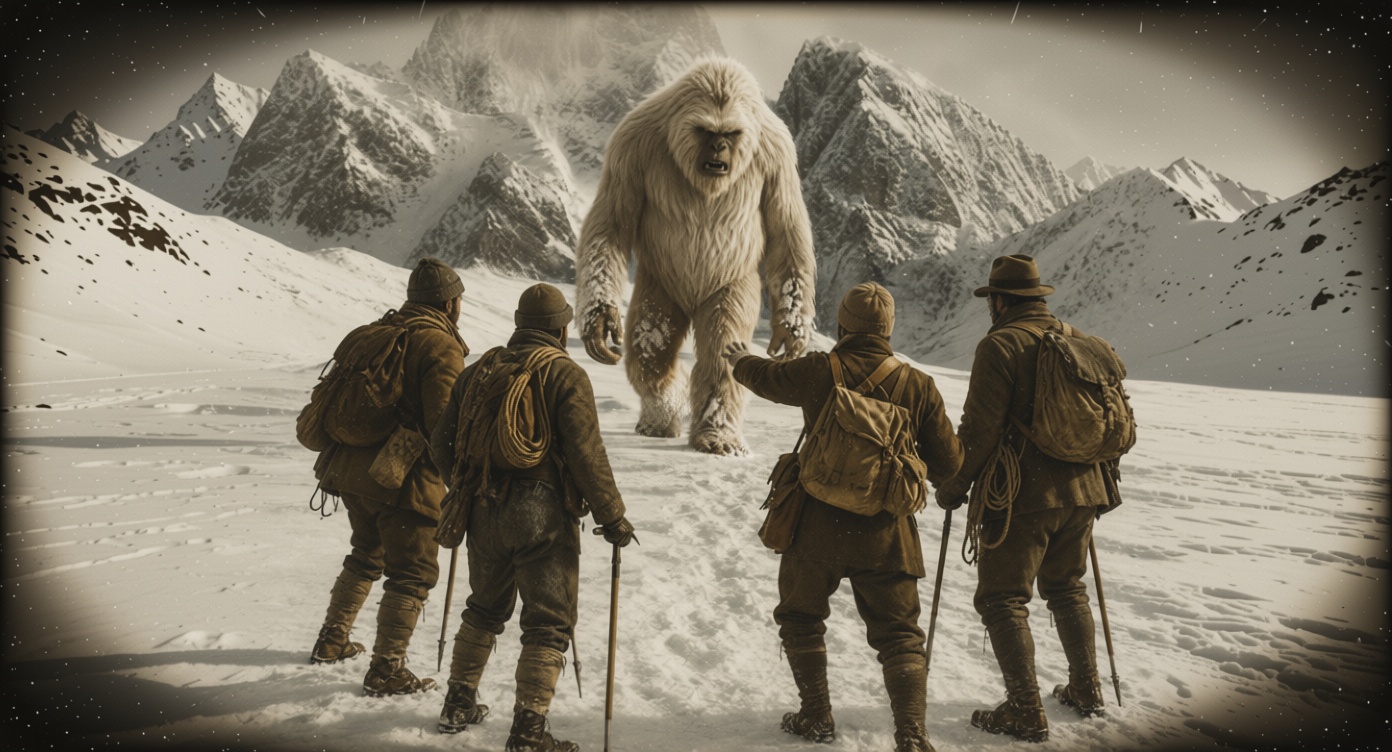
Descriptions of the Yeti vary widely, but the traditional version is often portrayed as a large, powerful, ape-like or humanlike creature with dark brown, reddish, gray or white hair. Some stories describe it moving upright; others suggest it can travel on all fours. It is usually characterized as shy, strong and adapted to harsh, high-altitude conditions. Western popular culture, by contrast, often imagines a gigantic white-furred figure permanently roaming deep snow, a portrayal that flattens the richer and more complicated body of Himalayan tradition. In many local tellings, the Yeti is less a single monster than part of a broader cultural landscape shaped by isolation, survival and reverence for the mountains.
Why the Mystery Endures
Despite decades of reports, the Yeti has never been conclusively verified by mainstream science. That absence of proof has not erased the story; if anything, it has strengthened the creature’s symbolic power. The Himalayas remain a place where extreme terrain limits access and observation, allowing legend and uncertainty to coexist. For researchers, the Yeti is a case study in how folklore, exploration, media and natural misidentification can combine to produce a lasting mystery. For local communities and curious outsiders alike, it continues to stand as a reminder that some of the world’s most famous legends endure not because they are proven, but because they remain just out of reach.