Overview
In a recent Q&A segment on NewsNation’s Reality Check, Special Correspondent Ross Coulthart and producer Meagan Medick fielded viewer questions ranging from Mars imagery and whistleblower retaliation to the long-running controversy surrounding UAPs and classified military technology. The discussion, which also echoed themes familiar in UFO circles such as the “zoo hypothesis” and alleged non-interference by advanced intelligences, blended established context with a number of claims that remain unverified. Coulthart framed the broader issue as one in which official secrecy and public skepticism continue to shape the debate over whether non-human technology has been recovered and studied by parts of the U.S. national security system.
Mars, Whistleblowers, and Official Resistance
One of the earliest topics was the enduring fascination with the so-called “Mars face” and other surface anomalies. Coulthart attributed the apparent changes in Martian features to sun angle, shadowing, and image contrast, noting that NASA generally explains such formations as pareidolia—the tendency to perceive familiar shapes in random data. He nevertheless said he remained interested in research that suggests Mars may once have hosted a prior civilization, including claims involving Soviet-era interference with Martian probes. Separately, Coulthart addressed allegations that the Office of the Director of National Intelligence (ODNI) has targeted UAP whistleblowers. While he acknowledged rumors of “treason threats” against figures such as Dylan Borland and Matthew Brown, he said journalistic standards require more than hearsay. He reiterated support for whistleblowers including David Grusch and Jeff Nocetelli, and argued that the “national security state” has shown a pattern of resistance to disclosure.
Reassessing the 2004 Tic Tac Incident
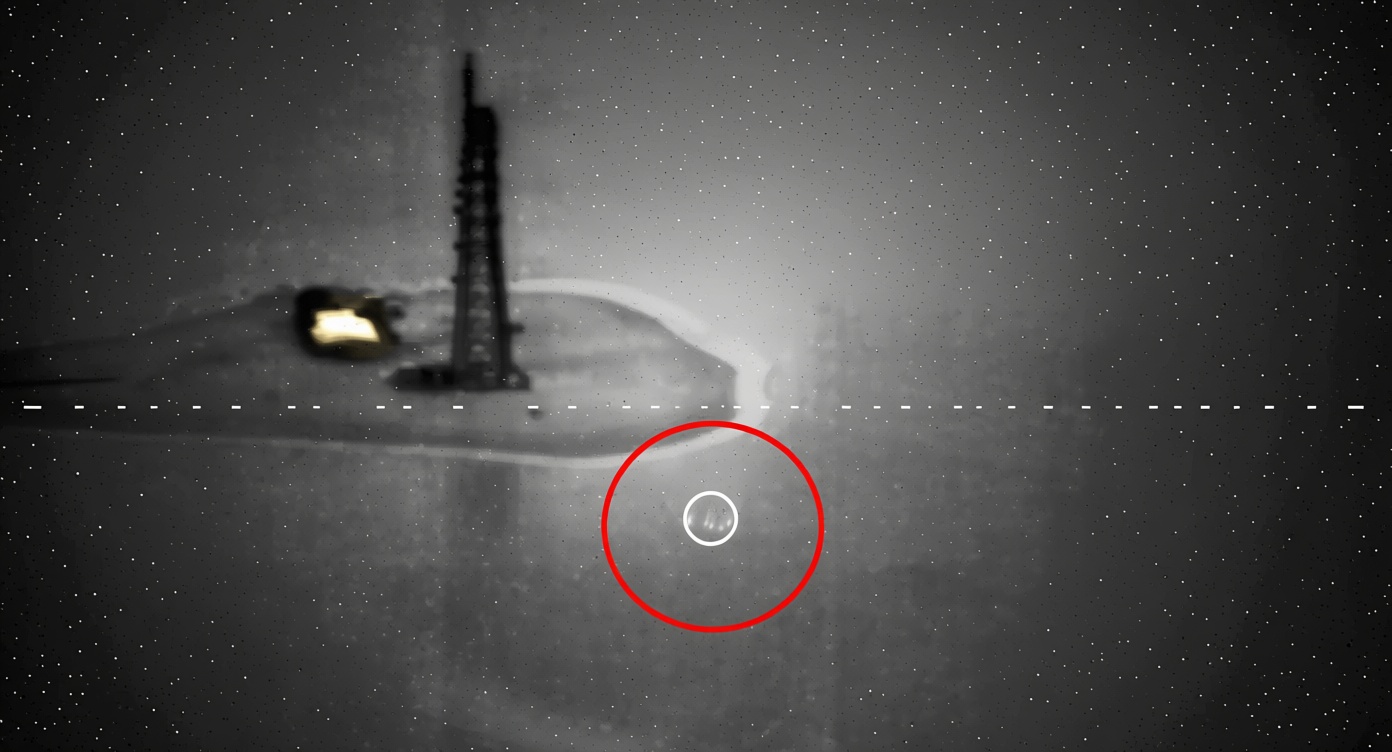
Coulthart also pushed back on a recent claim attributed to Jacques Vallee’s Forbidden Science 7 that the 2004 Tic Tac UAP may have involved drones launched from a U.S. submarine. He said that assertion did not hold up because the USS Alexander Hamilton had been decommissioned in 1993, years before the incident off the Southern California coast. According to Coulthart, the submarine actually present, the USS Louisville, detected no acoustic signatures or anomalies consistent with conventional drone activity. He said he remains convinced that the Tic Tac object was not a known U.S. platform, and repeated his belief that it was tied to Lockheed Martin, a claim that has not been publicly verified.
The “Legacy Program” and Classified Weapons Claims
The segment then turned to what Coulthart described as a deeply compartmentalized “UAP Legacy Program” stretching back to the 1940s. He said the alleged program exists across government and private aerospace networks and is intended to recover, analyze, and reverse-engineer non-human technology and biologics. Coulthart argued that the consistency of accounts from unrelated witnesses amounts to “multiple corroboration”, though the underlying evidence remains largely anecdotal. The discussion also touched on directed-energy systems, including the Navy’s HELIOS laser and claims linked to “Havana Syndrome.” Coulthart referenced Donald Trump’s past remarks about a “discombobulator”—an alleged classified weapon used in a 2020 operation in Venezuela against Chinese and Russian-supplied defense systems—while noting that the most troubling claims involve reported effects on human health as well as electronics.
Historical Claims and Ongoing Questions
Coulthart closed by revisiting the 2007 Isaac/CARET documents, which describe reverse-engineered extraterrestrial technology at a Palo Alto laboratory and are widely dismissed as a hoax. He said he is still investigating the material and is not prepared to rule it out, citing the level of technical detail in the papers. Across the segment, Coulthart’s central argument was that, even if hard proof remains shielded by secrecy, the accumulation of testimony from whistleblowers and independent witnesses makes the existence of a “Legacy Program” highly plausible. For now, however, the claims discussed remain part of an unresolved and highly contested UAP debate, where historical anecdotes, classified programs, and public skepticism continue to collide.